Title: I held a private tournament, and this manga beat Grand Blue.
"Blood on the Tracks" is one of the most unforgettable stories you’ll ever read. (Results from my personal tournament)
I’ve been struggling with indecision lately, so I organized a private "Comics & Manga Tournament" to clear through my backlog. Eight titles entered the ring, representing both Japanese manga and Western comics (including Saga, Fire Punch, Grand Blue, Hellboy, and Alita). The rule was simple: I read one volume of each, and the winner moves on. The unexpected champion, defeating Grand Blue in the final, was "Blood on the Tracks" (Chi no Wadachi).
So, why did this specific title win against such strong competition?
What’s it about? (The Premise) The story focuses on Seiichi, a teenager living in the shadow of his overprotective mother. At first glance, their relationship seems normal, but the very first volume kicks off with a metaphorical "BOOM." A single incident shatters their daily life, dragging the reader into a spiral of toxic love and a desperate struggle to break out of the cage.
Why did it win? (Narrative and Style) First and foremost, the pacing is impeccable. The story flows with a rhythm that makes it impossible to put down, dragging you deeper into the abyss with every chapter.
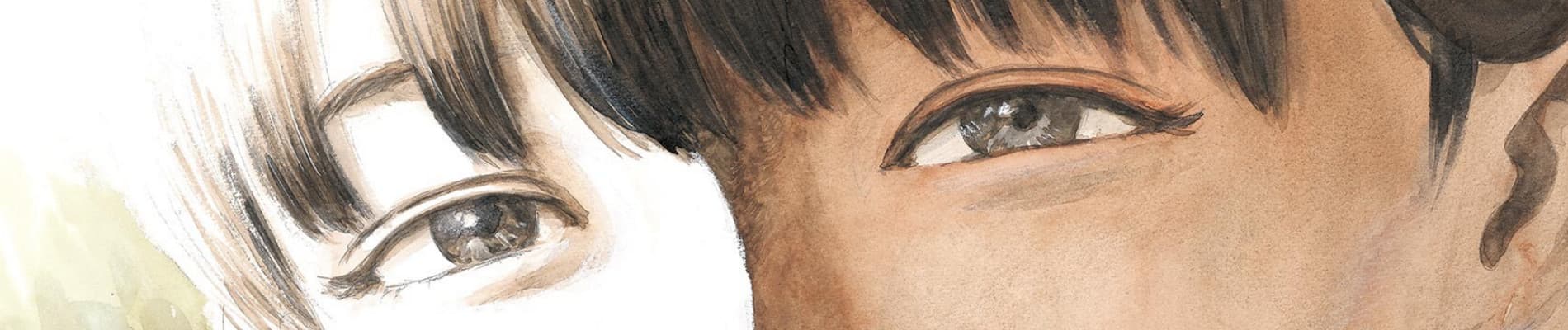
The strength of this manga lies in its minimalism. There isn’t much action in the traditional sense; instead, there is an incredible focus on the psyche. However, the author avoids the trap of over-explaining everything through walls of text or endless internal monologues. Instead, the story relies on visual storytelling. We understand the protagonist's turmoil through subtle gestures, lingering glances, uncomfortable close-ups, and heavy silences. It is a masterclass in "show, don't tell," using the art to convey emotions that words simply couldn't.
A Grounded Nightmare (Realism) Another aspect that sets this title apart is its sense of "humanity." Many psychological thrillers tend to exaggerate the hopelessness, turning the world into a caricature where every side character is a sadistic monster trying to hurt the protagonist. Blood on the Tracks refuses to do that. Even in the story's darkest moments—and it gets very dark—the world remains authentic. The author doesn't force unnecessary cruelty just to make the reader feel bad. Characters surrounding the protagonist, even in hostile environments, are portrayed as complex human beings rather than villains. This grounded approach makes the psychological horror hit so much harder because it feels disturbingly real, rather than like an edgy fiction.
The Manga’s Two Faces (Structure) It is worth noting that this series has two very distinct halves:
Who is this for? This is a title for mature readers. If you’ve felt burnt out on "standard manga" lately and are looking for something that lingers in your mind long after you’ve finished reading, this is for you.
A Fair Warning I have to be honest: Volume 11 is a make-or-break moment. The events depicted there are hard to believe and might require some suspension of disbelief. It’s also worth mentioning the tonal shift halfway through the series. In my opinion, this is an incredibly bold and original choice that makes the title unique. However, those expecting pure horror all the way to the end might be caught off guard by this new direction. Regardless, the finale leaves you with a sense of bittersweet satisfaction, and I believe the story is well worth experiencing in its entirety.
Check out my full tournament bracket here: https://imgur.com/a/cMQNbUF
16 out of 21 users liked this review