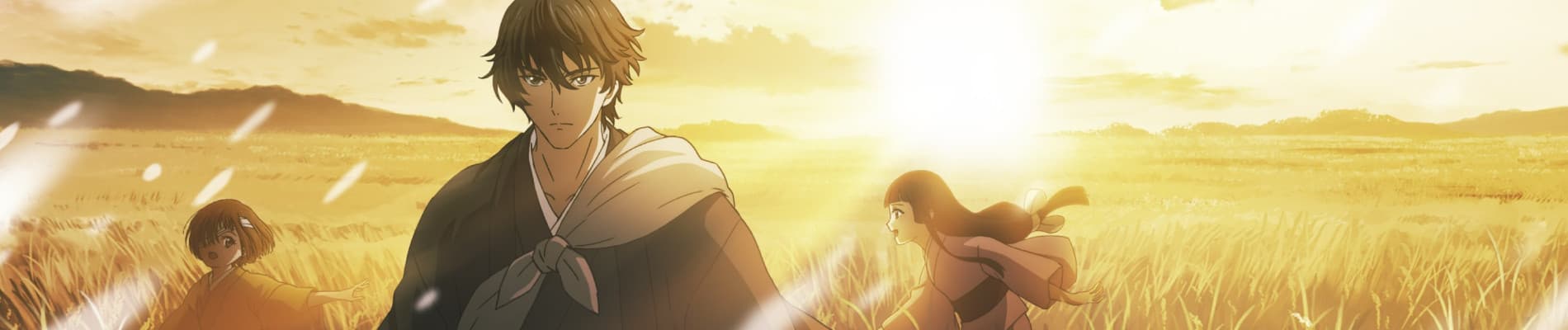
Upon first watching Kijin Gentosho, it's easy to be misled by the dense plot of the opening 50 minutes and the "Demon Slayer" label. However, if you calm down and overcome the initial setup, you'll discover that this work possesses a subtlety and depth far exceeding that of ordinary battle anime. While ostensibly about "slaying demons," it actually unfolds a Japanese-style panorama of obsession, bonds, and humanity through a cross-generational episodic narrative.

The most ingenious breakthrough of the work lies in subverting the established framework of "human-demon opposition." The "demons" here are never purely symbols of evil—there's the invisible demon waiting for his wife on the bridge, the hairpin-adorned ghost embodying longing. Their birth stems from unfulfilled wishes and profound pain, just as the saying goes, "In daylight, most people you meet are demons; at dusk, At dusk, when the light is dim and visibility is poor, if you encounter something that looks like a "ghost," upon closer inspection or after calming down, you may find that it is actually a person (rather than a ghost)." The nature of demons and humanity are inherently blurred and difficult to distinguish. The protagonist, Jinya is a demon slayer who has lived for a hundred years and is himself a paradoxical being, existing in a state of "coexistence between humans and demons." His journey is not simply about slaying evil, but about exploring the essence of identity and the possibility of redemption through encounters with humans and demons from different eras. This core theme is closer to the healing quality of Natsume's Book of Friends than the exhilarating thrill of action battles.

The plot unfolds like peeling back layers of an onion, revealing the legends of demon swords from the Sengoku period, the hidden past of mountain village of Kadono, and the destiny passed down through four generations of Saihime. Each foreshadowing subtly resonates in later chapters. The four "Yato no Kami Kaneomi" demon swords are not merely tools for combat, but also embody the swordsmith Kaneomi's aspirations for coexistence between humans and demons. Their circulation and inheritance connect the long period from the Sengoku to the Heisei era. Although the limited production budget is occasionally evident in the visuals, the delicate emotional portrayal and atmosphere creation more than compensate for this shortcoming—the tense back of the hand in the dimly lit forging room, the trembling eyelashes when fearful—these details, set against the dark tones, further highlight the characters' inner struggles and warmth. The most touching aspect of the anime is always the concept of "bonds." Whether it's the brother's passionate vow to protect his sister, "The sword I forged is only for you," or the brief yet profound connections Jinya establishes with characters from different eras, both speak to the idea that "love and understanding" are the ultimate power that transcends the boundaries between humans and demons. Those seemingly melodramatic early plot points actually serve to lay the groundwork for the complexity of human nature—there is no absolute good or evil, only the helplessness and perseverance dictated by fate.

Perhaps 《Kijin Gentosho》 isn't perfect. Its slow pace, complex setting, and even requiring viewers to patiently unravel it using the "three-episode rule" make it a niche yet precious work. It uses the ethereal ghost story to illuminate the most authentic aspects of the human heart: obsession can create demons, love can dispel evil, and true redemption always stems from gentle acceptance of others and oneself.
24.5 out of 28 users liked this review
