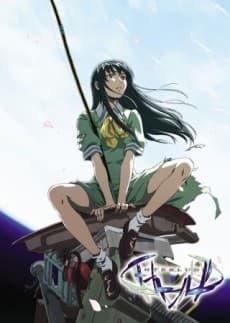

Heavy spoilers ahead!
I
So this is one of the types of anime that I really like.
It reminds me of the blend of Higurashi, Evangelion, Steins Gate, and a little bit of Sidonia, Pale Cocoon, and From the New World.
First of all, because of the structure itself. Main pillars that we have is: character that uncovers global conspiracy; time rewinds without memory loss. That’s really juicy things that can create a reaaaly tasty plot if they are done properly.
Second of all, the message and its delivery. We have: confrontation of the opinions, resulting in clash in which the “righteous” side emerges in victory; the self-reflection of the characters.
II
The main gist of the meaning, as I see it, is such:
Main character and Aya accept their losses and eventually they stop living by the past. That's why they won so easily as if they were hard cheating. Because they were the only ones who started doubting living in fantasies. Because the mere coping became inadequate for them.
Thus, the hope they had was based on the hope in the better REALITY. While others' characters hopes all were based in ephemeral nothingness, in their memories, and that weren't enough.
So Shujinkou and Aya were cherishing the memory of people they loved, but they also were ready to start living in the present and moving towards the future. Also, as indirect quote from the protagonist states, he refused to trifle with deceased ones (Tama in particular). Because this attempt to recreate deceased was nothing less than trifling with their life and memories of them.
Aforementioned position of the main duo made them the “righteous” ones.
III
That is why it doesn't matter with which girl protagonist had better relationships and chemistry. The point of the anime exactly in the fact that even if relationships with Tama were better, she is already dead. So protagonist should move forward in his life, refusing in living by past.
So there is no point in being mad or frustrated with the “wrong” or “lame” writer’s choice in this regards. The frustration here can be only from harsh philosophy of reality that writers are chose instead of escapism.
Although if to expand on this matter - I, for example, can understand, why main character cannot feel the same for Tama as what he feels for Aya.
First of all, there is difference between love as if people are siblings (which protagonist was feeling towards Tama) and romantical love (which protagonist was feeling towards Aya).
Second of all, protagonist has seen in Aya the same questioning human being that wasn't sated with living in false-land. And this sole fact, while everybody else in the world indulges into fantasies, already is reasonable enough for these two to feel some special connection that they haven't felt towards any other human being before.
IV
Basically wishing that protagonist would stay with Tama is the same thing as siding with the “antagonists” of this story. Although basically this story doesn’t have antagonists, it has only different people with different worldviews.
And, as I can understand, writers chose the side of the main story’s duo. The side of the realism, materialism.
So yeah, this anime, as I can see it, is pretty realistic and materialistic in its message throughout the story. The same type as “From the New World”. Such types of anime, in my opinion, are often misunderstood and overlooked, while for me they are unique gems.
The state in which “alternative reality capsules” and whole facility is just remind once more, that fantasies cannot escape reality and sooner or later they either will be crushed by it. Fairies and their lore are, basically, the exact same reminder of it.
I personally really interested in writer’s choice of the plot. They had suffered losses and had to accept them? And now they share their experience and wisdom? Or there is different reasonings?
Anyways, the message they deliver is mature and will be useful at some point of the life. Well, at least I don’t doubt it.
V
Also considering this title’s length, I must mention, how rich this anime in characters, developments, lore and story, and how competently it’s developing throughout the story.
Although you can say that, for example, main character’s acceptance of Tama’s death and him leaving her on death is “out of the blue” - at the same time you can see him struggling with memories of her death throughout whole series.
The same can be said for the Aya. Even though for a lot of time she was just docilely trying to live her life as before. But we also can see her path of transformation and acceptance - first when she starts to risk her life looking for the protagonist, then when she feels the taste of the life again with Shujinkou making breakfast for her and spending time with him in the amusement park.
While we can see inability to accept reality and losses most clearly in Mutsuki’s (main character’s little sister) example, which is, although, understandable.
5.5 out of 6 users liked this review
