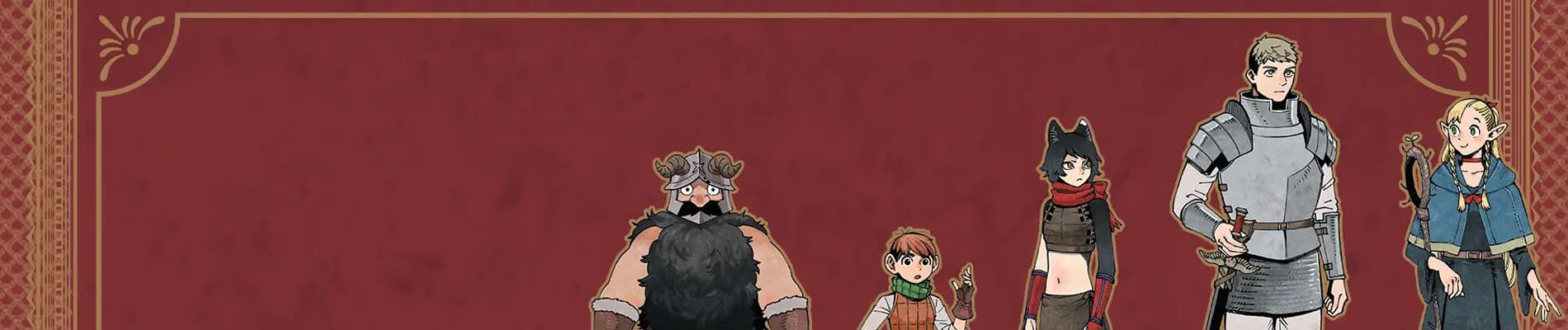
Dungeon Meshi is a manga that first appears as an amusing variation of the old-style fantasy fiction. A group of explorers explore a dungeon and makes a living by preparing and devouring the creatures they slay. It would seem like a joke set-up on paper and be there to get through a handful of laughs and pass. The only difference with Dungeon Meshi is that it takes only a short time to find out that even that assumption is inaccurate. The food is not the gimmick used in the series, it is a glass through which it examines the survival, companionship, curiosity and silent emotional burden of moving on when all is uncertain.
Even at the onset, the dungeon is represented as a genuine and operational space instead of an obstacle course. Monsters are not simply there to get experience by killing them. They possess customs, food, frailties and positions in some greater ecosystem. This method shot the setting of this fantasy world in a disturbingly realistic manner. Cooking is one way of getting to learn the dungeon itself. How to make a monster is also to know how it lives, why it is in the way it is. These details make the story look like it has its own inner logic where even the most bizarre ideas seem like a possibility.
Dungeon Meshi comes alive where the characters are concerned. The interest of monsters by Laios is used humorously, however, it also foreshadows something. His obsession seems a kind of coping process, how to remain concentrated and interested rather than succumb to fear or loss. Marcille is very much opposed to dungeon food and this gives her a constant conflict which is not overdone. She is a symbol of push back against the unfamiliar and the inability to live as oneself when endurance requires sacrifice. These differences gradually compose themselves as the group goes even deeper not because the characters suddenly turn different, but because mutual experiences compel them to learn each other.
The work of Ryoko Kui supports this down-to-earth tone so well. The words are unobtrusive and emotionally direct, and small moments are meaningful without dialogue. The dungeon settings are very deliberate and inhabited, never haphazard or overly chaotic. Scenes of cooking are done with unexpected delicacy, dwelling on preparation and service. Cooking is warm despite the grotesque ingredients. These pauses make a rhythm that is balancing the danger and tension of the dungeon exploration.
Dungeon Meshi slowly starts to expose a far more emotional center to the storyline as it unfolds. Hunger is no longer a practical issue. It becomes a symbol of emotional obsession, loss and the peril of running forward without a thought. Characters do not only have to deal with physical exhaustion, they have to deal with emotional limits. The comedy is there all through in the show, however, it is well balanced with the real discomfort and depression. This balance is never forced. Rather, it is a sign of how individuals tend to live by humor in order to cope with hard times.
At its core, Dungeon Meshi is of the silent humanity in mutual routine. Dining together in the environment of death turns into a caring and bonding gesture. Dinners are the times when the characters take a moment and breathe and remember the reasons why they continue. The manga realizes that survival is not about toughness or tactic, but also about holding on to oneself when things seem to take everything away.
Dungeon Meshi is successful as it does not doubt its readers. It lets its world and characters evolve without haste over emotional beats or simply having to use spectacle. What starts out as a witty concept is transformed into something very sincere and quite touching. It is a tale of monsters, food and dungeons, yet above all, it is a tale of remaining human at the time when it is only survival possible.
21.5 out of 24 users liked this review