Angels of Death
a review by CaptainZaimon

CaptainZaimon
5 months ago·Jan 9, 2026
100
/ 100
a review by CaptainZaimon
5 months ago·Jan 9, 2026
Angels of Death/Satsuriku no Tenshi was originally a pretty neat RPGmaker horror game with a uniquely odd artstyle. Despite the story going some interesting places, most of it - not counting environmental storytelling and scenery, naturally - was delivered in a pretty straightforward way you'd expect from games in this vein; y'know, long textbox exchanges, maybe the occasional full-screen image in a key moment, all sorts of faces made by the characters, oftentimes a very tense OST or suffocating scenery.
So, how does an adaptation that isn't bound by the limits of a game engine fare? I'll attempt to keep this largely spoiler-free, as I'd love to encourage you to give this a shot, but the short answer is - amazingly well.
I mean, don't just take my word for it - the dev himself praised this manga, remarking it expanded on a lot of things he himself wishes he could've elaborated on were it not for his time constraints, inherent limits of the medium (plenty of things that happen in the manga adapt actions that the player has to take in order to progress, and yet, without knowing it was originally a videogame, I doubt you'd be able to tell "this was a game mechanic"), etc. and even canonized an OC the mangaka came up with. But even without taking the source material into account, this is just a fantastic, if grim, story by its own merits. So many scenes had me emotionally invested to a point where even re-reading it years later still makes me tear up.
Allow me to preface this by saying that, plot aside, the art of it is fascinating; the first couple chapters are largely straightforward and only have a few random pages with this "oomph" to them, but the longer the manga goes on, the more the author experiments with clever speech bubble composition and lots of chiaroscuro. Even the pages with the table of contents get some mesmerizing artwork on them here and there. It's truly a shame that most of my favourite scenes are major spoilers. But believe me when I tell you it's worth witnessing just how many times the artist managed to convey a scene's intended emotions just by arranging the speech bubbles a certain way. Or when a particularly unpleasant scene is drawn with such chaotic lines it makes you want to puke, and yet the emotions it gets across make you want to continue. And a certain scene where the only word spoken is "bang".
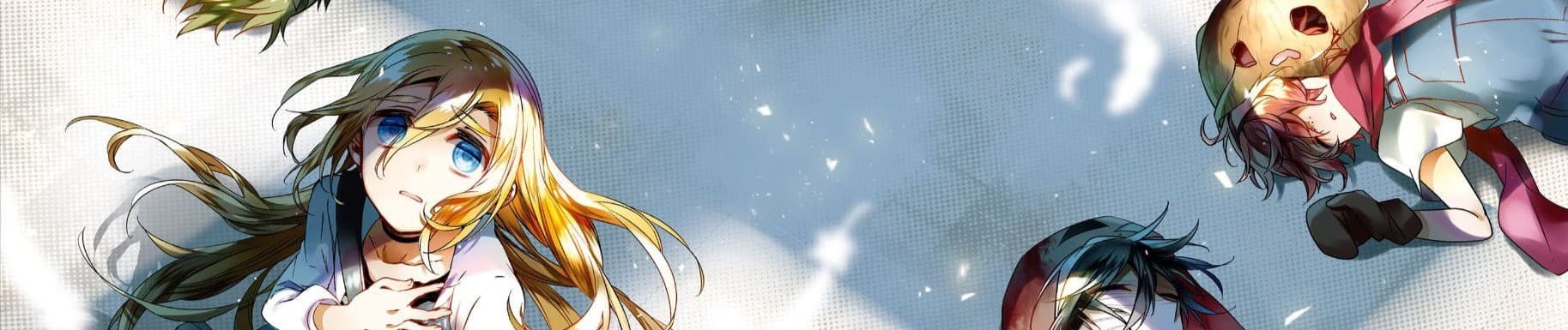
The plot largely follows our main heroine, Ray - a little girl who doesn't remember why she found herself in this mysterious, overwhelming building. All she can recall - or, well, all she tells you, the reader, she can recall - is that she was going to come see her therapist for some sort of appointment and she should really hurry back to her mom and dad already. And that's what she does.
However, as it quickly turns out, despite the apparent solitude she finds herself in, she's not actually alone in the building; there are multiple floors to it, each occupied by a different kind of bloodthirsty freak with unclear intentions towards her. It's these circumstances that push her to team up with one of such freaks - Zack, a deranged serial killer with a body so burnt and disfigured that he has to constantly wear bandages, with the goal of getting out. There's just one catch - she asks him to promise to...kill her? Why? Because she believes she committed some sort of sin and God is angry at her.
What ensues is a mix between a dark comedy and genuinely goosebumps-inducing exploration of what pushes people to believe what they end up believing and even basing their entire life philosophy around; but much to my surprise, at no point does the contrast between some of its funnier moments and more serious ones feel jarring. In fact, I'd say as the art gets progressively more impactful and visually interesting, the plot does too.
Most notably, AoD's plot puts a lot of emphasis on questioning what exactly does one consider "God" - an incomprehensible force of judgement that watches your every move and will descend unimaginably harsh punishment the moment you stray from some sort of rules that you think said force demands you follow, or a symbolic reminder that maybe, just maybe, there is always some sort of hope on the horizon? Our main heroine ponders this for a large chunk of the series and it's very enjoyable to see just how non-banal the author's thoughts on the matter seem to be - even if they're mostly expressed through our main heroine's (appropriately, given her age and backstory) childish way of thinking about it.
Speaking of the main heroine's backstory - I don't want to spoil it completely, but I thought it was a fascinating spin on the trite "the character who does something odd is mentally ill and that makes them A CRAZYYYY PSYCHO KILLER ERMAHGERD!!!!!111" trope. See, the author confirmed in one of the afterwords that she's always been the way she is, that is, something was not quite right with her head.
The weird things she does, her obsession with a certain procedure - it seemingly stems from kindness. An extremely misguided variety; but kindness nonetheless. And the way it's explained why it matters so much to her is as sad as it is dark. And yet so human. She is just a little girl who wanted something very simple in life after all.
It's also worth mentioning there's a major side character who's a priest himself; the way this whole "God as this nebulous entity who punishes VS God as he who symbolizes hope and something real" dilemma is explored within the confines of his own spirituality is also pretty interesting. Without spoiling too much - he, himself, is fascinated as to WHY people choose to believe in some sort of higher force. The way the experiences of an actual member of the clergy are interwoven into this overarching narrative seems pretty banal on paper - a disillusioned priest fascinated by why people choose to believe in some sort of god - but trust me when I say it's executed really, really well.
Despite the manga dealing with some pretty heavy themes, it's worth noting that it's not despair porn. Nothing happens just to yell at you that the world sucks and people are garbage - no, while there is indeed a lot of emphasis put on stressing that it's people (and not paranormal entities, as was the case in the same dev's previous game; interestingly, with a manga adaptation done by the same author as this manga, too) that can be the worst monsters of all, an underlying message present in it seems to be that people don't just become monsters for no reason. And that deep inside, what a person wants and feels are both pretty simple. This stings particularly badly in a certain scene that begins with the words my ideal puppy. You'll see. I hope.
And it's not banal in this regard, either; it's not the usual schematic of "oh, this bad guy had a sad backstory. All he needed was a hug!". Instead, more emphasis is placed on the fact that some people were dealt a terrible hand in life and chose to play it terribly, which only made them even more broken. I'm not saying that every single character introduced fell victim to self-sabotage; but it's hard not to feel like many of them tried working with what they knew (and lacked proper help) and it ended up dooming them.
That's another running theme in AOD - that you can't justify every single thing in your life with your sad backstory. At some point, you have to simply accept something terrible has happened and stop letting it define you. And most importantly - be honest with yourself and your feelings.
Cry. Yell. Tell others what hurts.
12.5 out of 14 users liked this review