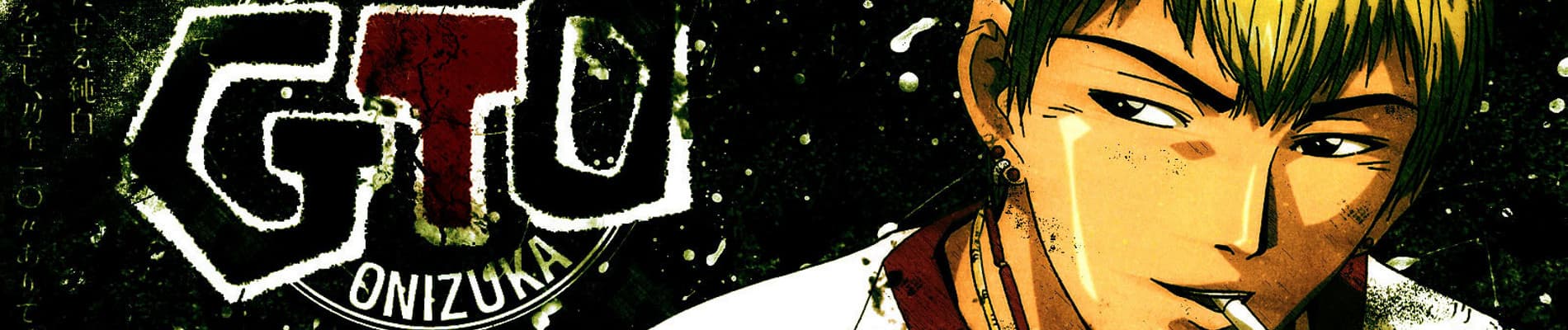
It is with this famous phrase spoken by the protagonist that, I introduce the central theme that, in my opinion, this work addresses: The difference between "being an adult and behaving in an adult way," and the anime leads us to this reflection at every moment, because being an adult is precisely being able to do what we boast about one day being when we are young. And this is masterfully demonstrated here by the actions of the main character, who flirts with the almost childlike innocence of his thoughts, as well as the firmness and maturity of his actions based on his successes and failures; this is the threshold of being a genuine adult.
Despite being an anime more focused on humor, Great Teacher Onizuka, or GTO for those more familiar with it, has much to teach us, as much as anime with more introspective plots. The mature and gentle way the story touches on sensitive themes such as sexuality, bullying, and its consequences, brings to light how our actions and reactions can transform people's lives and the example we can give to future generations about being ourselves and thinking outside the box, regardless of what and whom we may please or displease. This work invites us to reflect on what we want to be as individuals and what legacy we will leave as an example for the future through our own example, determination, and above all, our authenticity.
The plot revolves around Eikichi Onizuka, 22 years old, a virgin, karateka, and former motorcycle gang member, a delinquent who decides to change the course of his life and, after several job attempts, finds his great chance for change as a teacher. The harsh reality of the training and the liturgy of the position soon appears; it is not easy for society to accept a former delinquent as someone who will shape the future of its young people. But with a bit of luck and bad luck in a sort of chaotic waltz, he manages to overcome adversity and move forward with his dream of making school more fun at the prestigious Holy Forest Academy, leading the infamous 3-4, the worst class in the institution's history. This makes us root for the protagonist from beginning to end with each mishap, in a mix of secondhand embarrassment and absurd situations due to his somewhat peculiar way of solving things, which makes us identify with him in many aspects.
In technical terms, the animation is perhaps the point where the work leaves a little to be desired, because despite the time it was shown, with all the limitations of resources and budgets that we all know, there are many superior productions from the same period and even lesser-known stories, which makes us think it could have been much better in this regard. This doesn't spoil the experience of the anime at all, but it might be a nuisance for a more demanding viewer.
The animation's greatest strength lies in its characters. Both the original voice acting and aspects of framing, expressiveness, and color contrast give each character their own conceptual independence, bringing unparalleled dynamism and depth to each one, even those with less screen time. You can find yourself perfectly immersed in their drama, almost as if each one has their own "anime" within GTO.
The sound quality is another strong point to consider in this work, not only for the aforementioned incredible work of the original voice actors, but also for the exceptional individual soundtracks, with an excellent range of effects, as well as the opening and ending themes. Everything is very tasteful and perfectly timing.
Final Considerations: GTO is the kind of work that ages like fine wine, even with its temporal setbacks, continuing to live on in its message and proving that every minute spent on all 43 episodes is worthwhile. Whether you're younger or older, this is an essential work for any self-respecting anime fan.
30 out of 31 users liked this review