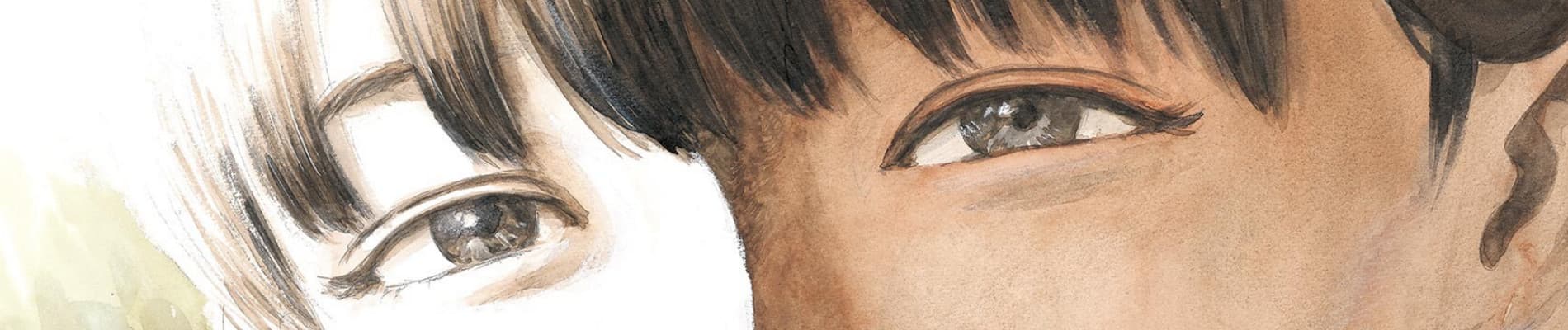
The nuclear family is an implicitly oppressive institution; among many purposes it serves for social reproduction (the physical continuing of the species) and as an ideological state apparatus. All of this in service of the continuation of the current order that mediates our existence in current society, acting as its cellular unit. As such, it should not be surprising that if such order functions based on an unequal distribution of power, the bricks of which it is made of present similar characteristics. Blood on the tracks very explicitly shows how our current familial relations allow for trauma, mental health, and abuse within a family unit to go unchecked.
At no point is it explicitly stated that the nuclear family is as I just described, and this is at least in part a reading I am making, but a very clear description of the nature of “family” as it currently exist is made by Oshimi. This description is not a positive one. It is very clearly shown how within one’s family abuse and trauma can be perpetuated, not by accident, but by the nature of how families work in the past few centuries til nowadays. This is not to say that it always happens and family is an overall negative, but that the way family and social norms work, they allow for such situations to continue and worsen when they do happen.
Societal norms and expectations regulate our social activity, to a very effective degree, but they can also act as prisons, making those unable to conform to them miserable to the degree of disastrous consequences. Both the nature of the nuclear family, and culture surrounding the characters of Blood on the tracks are to a notable degree the prime movers that set the tragedy of this work in motion. This was my main takeaway from this work by Shuuzou Oshimi.
As gloomy and pessimistic as these first paragraphs have been I thoroughly enjoyed myself when reading all 153 chapters of this manga. From a technical standpoint the art is excellent, every panel/scene that needs it could not be portrayed in a better way, Oshimi is a master of his craft. From the drawing skills in of themselves to composition, panelling, and variety in style, this manga was able to transmit to me one key emotion that pervades its pages.
Dread is something that one associates with horror, at least I do, that feeling before you know something scary and horrible is about to happen. Nonetheless, despite scary events occurring in Blood on The Tracks, it is not horror. This is a tragedy, a mundane, perfectly plausible tragedy, where you see dreadful events occur to people who do not deserve them whatsoever. The pacing, panelling, and art all work in conjunction with the plot to make you go through the sorrow written and drawn on the pages of this manga, dreading it both before, during, and after it unfolds. Oshimi knows when to switch from a more low key, or standard manga artstyle to an uncannily realistic one, to more abstract depictions of whatever is occurring in the plot, without it ever feeling jarring. Of course the plot itself is insanely upsetting, but it would have packed much less of a punch without such gorgeous and effective art accompanying it.
Nonetheless, I did not expect to finish reading Blood on the tracks and feel relieved in the way I did. Not because it was over, but because I found the resolution of this story to be one satisfying and full of meaning. Tragedy happens to all of us, some people are lucky, and the magnitude of such events is well below the threshold of permanent damage for a lucky majority of people, me among them. This work shows how misery, on a scale unimaginable to those privileged enough, does not necessarily have to fuck up your life forever. You might not be able to live as if these events never happened to you, but you can find peace in some way.
39.5 out of 47 users liked this review