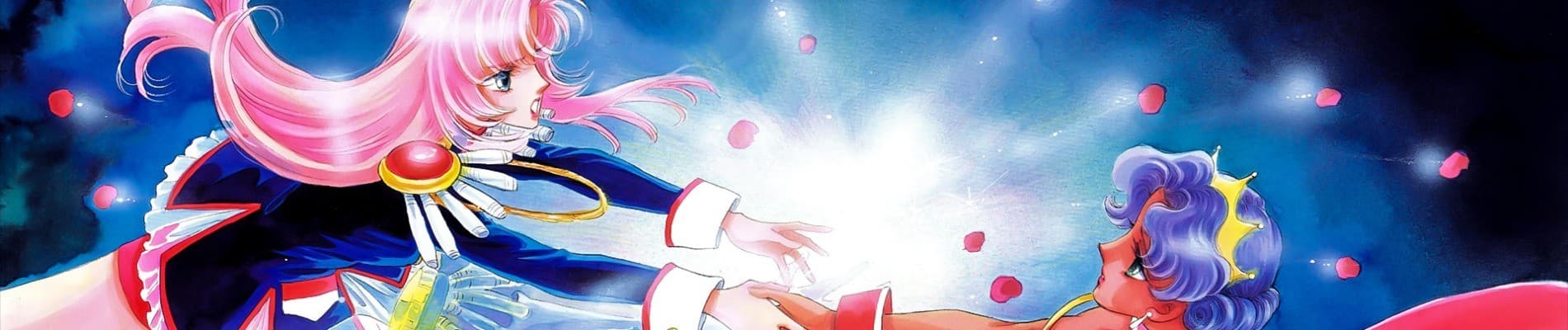
Revolutionary Girl Utena is an anime that offers a completely different viewing experience upon a second watch. Initially, you’re filled with confusion, fascination, and an inexplicable feeling that the show is speaking a language you’re almost certain you understand. However, upon a second viewing, you realize that the cryptic nature of the show wasn’t intentional; it simply was. As you begin to grasp the plot’s direction, all those repetitive walks to the arena, all those roses, and all those awkward pauses among the characters start to gain meaning rather than just appearing fashionable.
Upon a second watch, Utena herself becomes a more vulnerable character. The first viewing portrays her as fearless and almost untouchable in her self-confidence. However, upon revisiting the series, you realize how much she’s hesitant and how much she craves the concept of the prince as it offers her a way to explain her past life and her place in the world. Her strength begins to appear less like certainty and more like resolve as she makes decisions to continue believing in something kind, even as everything around her reminds her of her naivety in her benevolence. This makes her more human and, consequently, more heartrending.
Anthy is the character that undergoes a significant transformation upon a second watch. Initially, it’s easy to interpret her alienation or inaction based on the show’s portrayal. However, upon a second viewing, when you’re convinced of her true nature, all those little smiles and cordial replies seem to carry a weight. You begin to notice instances when she teases Utena, guards herself, or silently strengthens the system, as it’s the only way she knows how to survive within it. It ceases to be an enigma and becomes a tragedy that unfolds slowly before your eyes.
This also benefits the side characters. Initially, what seemed like melodramatic individual feuds gradually reveal themselves as various manifestations of the same phobia: the fear of being a normal person, the fear of rejection, and the fear that the part they’ve developed their entire identity around doesn’t truly belong to them. Their duels aren’t about competition; they’re more about having emotional breakdowns as a ritual. Being aware of their outcomes makes their previous scenes almost excruciatingly vulnerable, as you can observe their intense desire for something they can’t identify.
Even the repetition is effective with variations. At first glance, it may appear that the story is going in circles. However, on the second viewing, it becomes purposeful and almost reassuring in a strange way, as if it were a routine you recognize. And that’s what makes even the instances when the pattern is disrupted even more shocking. You realize how few people change in that world and how difficult it is for any of them to break out of the role they’ve been assigned.
The most memorable aspect to watch again is the extent to which the series is performance-based. Ohtori Academy is filled with people playing their roles, believing that they’ll gain popularity or relevance. Utena portrays the prince, Anthy is the ideal obedient bride, and the rest of them embody their own counterparts of maturity, brilliance, or control. As soon as you notice this, the surrealistic elements cease to be abstract and start to hurt, as that’s what growing up usually feels like trying out new identities, imitating what you believe you’re meant to be, and finally feeling whole.
It’s also different at the end, when you expect it. The first time, it’s overwhelming and disorienting. The second time, it’s not as loud, but it’s much more emotional. It stops being the shock of what’s happening and becomes the decision being made and the price. You can see the sensitivity in the moment of the end and how much bigger it is on the outside than it is for the characters.
It doesn’t offer an easier way to watch it again, but it makes it more intimate. It stops being a puzzle to be solved and becomes a tale of people struggling, in very clumsy ways, to be noticed and free. You actually spend less time analyzing the symbolism as something to be deciphered and more on the feelings behind it, and that’s where it stings the most.
The second viewing is not as much of an anime that you’re analyzing as something you’re sitting down to. You know how people are tempted to be comfortable rather than telling the truth or how they hold on to a position they don’t know who they are. And when Utena continues to reach out anyway, with hope still clinging to it, it doesn’t seem like such a heroic deed. It seems more like a very human thing to do, to insist on hope and cling to it.
20 out of 20 users liked this review