
Please note
#
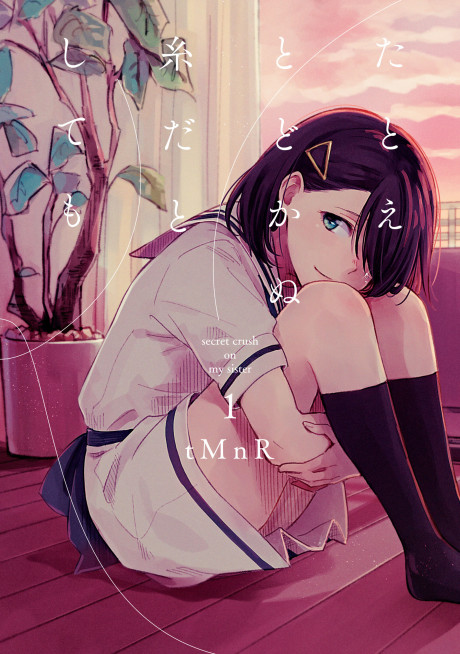
If I Could Reach You by tMnR details the story of Uta, a high school girl who has ended up developing feelings for her older brother's wife. A love doomed from the beginning, Uta must grapple with her unrequited feelings whilst exploring what it means for the relationship between her brother and his wife - exploring heartache and the different types of love people can hold.
#
This manga sure has a strong hook. A doomed, forbidden love with the protagonist's sister in law? I could only guess at how it would end. I was immersed into thinking about the potential conclusions this romance could reach; would the two come together in a problematic relationship, or would Uta find some way to move on from her feelings? It is this very curiosity that drove me to keep reading the story.
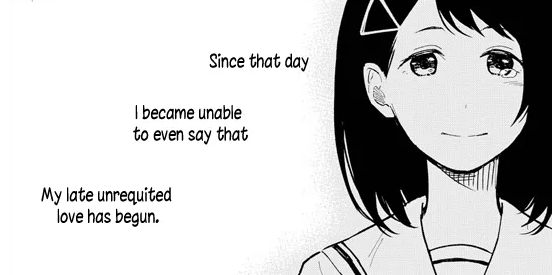
As expected, the unrequited love Uta holds in often focused on throughout the story, detailing the anguish it inflicts upon Uta and the difficulty she faces in trying to throw away the feelings of love. Initially going into this manga I was worried as to how the morally questionable relationship between a minor and an adult would be handled - namely would it brush over the issues of such a relationship and perhaps even endorse it. Luckily however this was not the case, instead the plot examined the hardships of holding love for someone that you know that they cannot ever reciprocate which is not something I have not come across in any other story that I have read.
As pointed out by lilybian's comment, the story explores "Uta's romantic love (恋) for Kaoru" and Kaoru's desire for an "affectionate love (愛) between sisters" which adds another layer of hardship to their relationship. This difference in desired love drives some of the obstacles Uta and Kaoru face in maintaining their relationship, leaving the readers questioning just what the resolution will be with the incompatible forms of love. Will one form of love win out, or will they be driven apart, even if they ultimately both want to be by each other's side; just for different reasons?
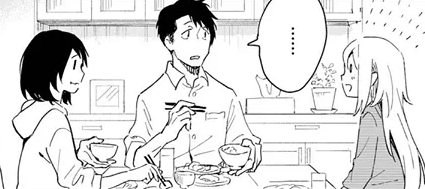
On top of this, the manga examines the family life between Kaoru, Uta, and Reichi and what kind of life follows after marriage. Clashing with the expectations of the love that comes with marriage is Reichi's commitment to work and resulting abscence from his relationship with Kaoru and the presumption that as a married couple they should be spending romantic momements together. Building off the previous theme of the difference of love between Kaoru and Uta, the love explored between Kaoru and Reichi focuses in on more the title marriage brings - along with expectation and desire for romance that may not always be fulfilled.
Although the themes I discussed above kept me thoroughly engaged with the manga, I was not without greivances with how it was handled. Most of it has to do with the latter half of the manga as well as its ending, so the following will have full spoilers for the story.
Spoiler, click to viewclick to hide
The ending and its additional epilogue chapter (which for some reason did not appear to be in the copy of the manga that I bought) exacerbated the issues with how the central conflict of the story was handled. Despite 7 volumes of chapters to go through and not facing pacing issues, somehow by the end the problems presented in the story fail to reach a satisfying conclusion.The chapters near the end is where the story starts to feel quite rushed, emphasised by the two time skips by the final two chapters. Whilst the resolution of Kaoru and Reichi divorcing was not an issue (and I think it was a sensible conclusion to reach with how the story framed their relationship by the end after it was revealed the reasons behind why they got married), Kaoru developing romantic feelings suddenly in the epilogue chapter felt so abrupt. As mentioned before one of the key themes the plot explored was the sisterly love Kaoru had for Uta and how that clashed with the romantic feelings Uta held. However, with this ending it just makes it feel like the romantic love came out of nowhere and that there was not much point to the anguish that came from the differences in their love. I cannot help that the chapter was made as fanservice for those who were wishing for more Yuri romance in the story and potentially the author chose to do it when they were both adults so that the relationship would not be problematic by that point. I would not have had an issue with this if there had been build up for Kaoru developing romantic feelings for Uta, but perhaps the author felt that was a line that they could not cross whilst Uta was a minor. In any case, this had the potential to add more interesting elements to how this would have conflicted with her marriage and how she might have pursued those feelings when she suspected Reichi of cheating.
There were also other more minor things like a lot of Konatsu's character not getting much exploration despite it being teased at the beginning.
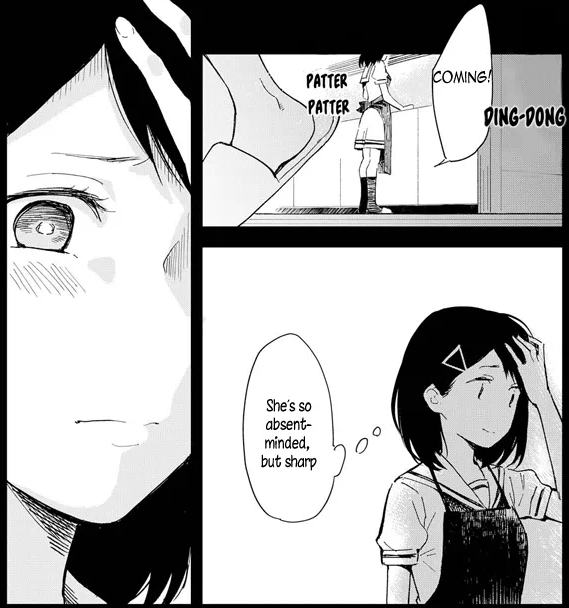
Indeed, the forbiddenness behind Uta and Kaoru's relationship is something that made me keep reading as I simply just wanted to know how it would end. Before I tended to avoid Yuri that depicted problematic relationships but now... I can see the appeal in them. Rather than endorsing such relationships, these stories can explore the unique obstacles and questions they raise, offering something that a 'regular' romance cannot.
#

Spoiler, click to viewclick to hide
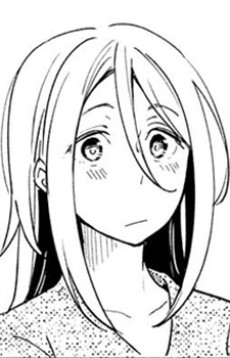
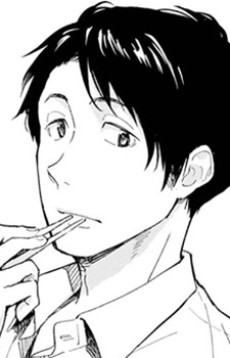
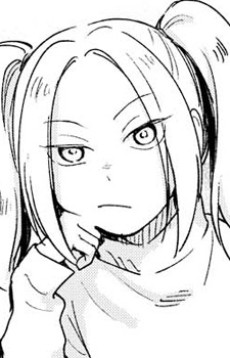
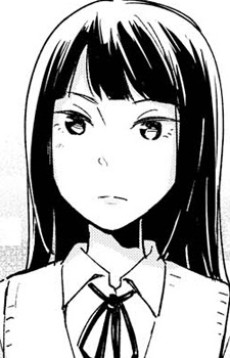
By the end of the manga Miyabi and Kuroe's relationship is the most cleanly completed parts of the story. Initially when their relationship was starting I thought that Kuroe was simply someone ill suited for romantic relationships but Miyabi allowed for her to grow and show more endearing qualities in herself which made for various wholesome moments that were greatly appreciated.
#
#
This brings us to the end of my review. I hope you were able to get something out of it, even if you do not necessarily agree with what I said. If you would like to give feedback or just say something in relation to my review, feel free to send me a message.