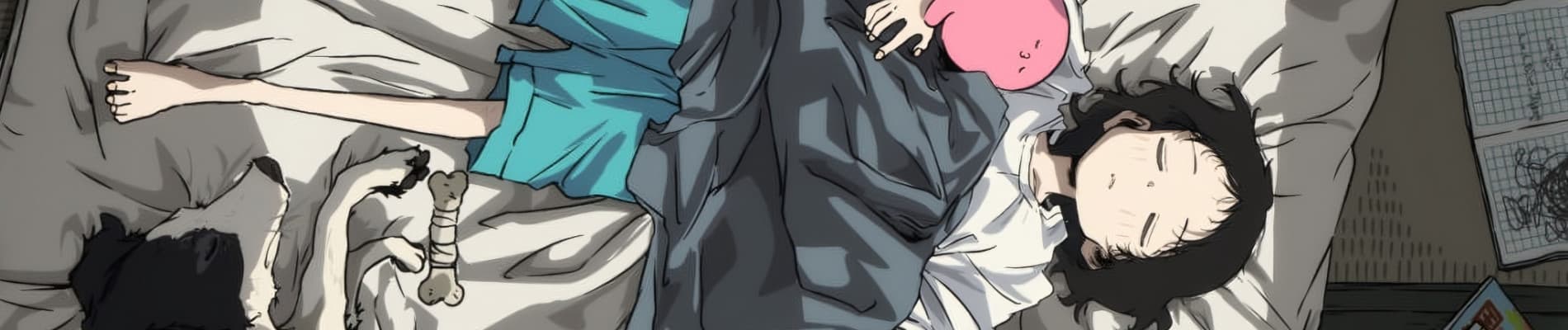
Takopi’s Original Sin is a short yet incredibly intense work, capable of leaving a deep mark despite its brief length. At the center of the story are three children, each burdened by suffering they never chose—pain that comes directly from the incapacity, absence, or indifference of their parents. Alongside them appears Takopi, an alien from the imaginary world “Happy,” a place where only positive emotions exist and where concepts like sadness or cruelty simply don’t make sense.
Takopi arrives on Earth with a pure, innocent gaze, completely unable to understand the negativity that surrounds the children he meets. For him, emotions like anger, fear, sadness, and despair are entirely new. Yet, through the experiences he shares with them, he eventually feels these emotions himself, discovering for the first time what it truly means to be sad.
The plot is tightly interconnected, revolving around these characters and the negative experiences that shape each of their lives. At first glance, the story might seem simple, almost straightforward, but it actually carries surprising depth. Every scene, every gesture, every silence contributes to a larger message that unfolds gradually and powerfully.
One of the most striking aspects is the portrayal of adults—especially teachers. Although they should be protectors, we see them remain passive even when the severity of the situation is painfully obvious. In this sense, teachers become a symbol of society itself: aware of the suffering, aware of the danger, yet unwilling to intervene. And so the children are left alone, forced to endure everything without support.
The work strongly reinforces a fundamental idea: children are not born guilty. They come into the world pure, innocent, without malice. It is adults, circumstances, and the environment around them that shape them, hurt them, and push them toward behaviors that do not belong to their original nature. Takopi’s Original Sin reminds us that the suffering of children is never their fault, but the fault of those who should have protected them and failed to do so.
In the end, this manga is a brief but incredibly powerful experience. It offers no comfort, no sugarcoating, but that honesty is exactly what makes it so impactful. It’s a story that forces you to look directly at pain, to reflect, to feel uncomfortable—and it stays with you long after you finish it.
Because of its emotional intensity and its references to suicide, I would not recommend this work to younger readers. It requires emotional maturity and awareness to be approached in the right way.
37.5 out of 41 users liked this review