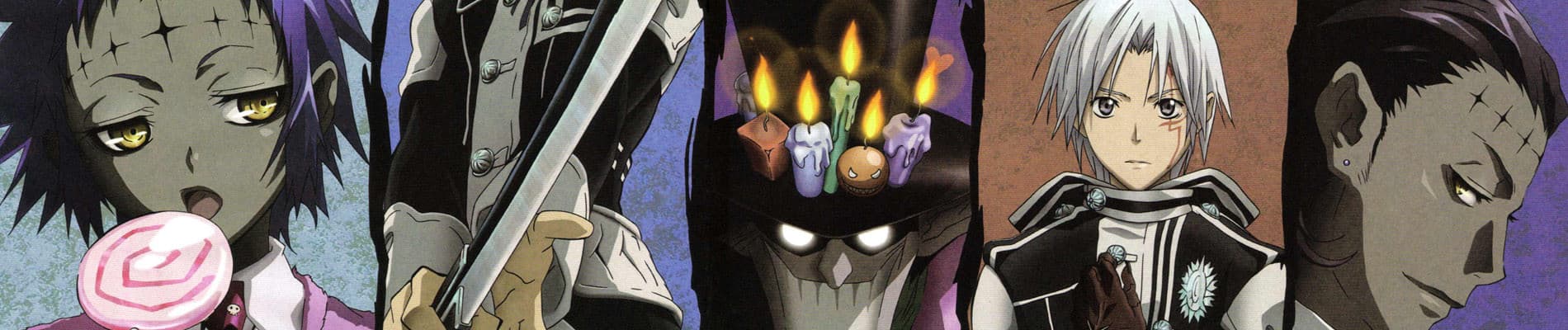
D.Gray-man
a review by NordySandwich
a review by NordySandwich
I remember the first time I started D.Gray-man, I wasn’t exactly excited.
I had just finished a couple of high-energy series—fast fights, dramatic transformations, constant plot twists. So when I clicked play on D.Gray-man, I expected something explosive right from episode one.
Instead, what I got… felt slow.
Don’t get me wrong—the gothic aesthetic was cool. The creepy churches, foggy towns, and cursed machinery had a vibe I liked. But the pacing? It dragged for me. Episodes followed a similar pattern: Allen arrives somewhere, an Akuma appears, someone has a tragic backstory, boom—fight, purification, goodbye. Repeat.
I kept thinking, Okay, when does it really start?
At that time, I didn’t know much about the creator, Katsura Hoshino, or how much worldbuilding she was setting up. I was just watching casually. And casually, it felt formulaic.
Allen Walker himself didn’t immediately hook me either. He was polite. Kind. Soft-spoken. Strong, sure—but emotionally restrained. I was used to loud, fiery protagonists. Allen just calmly said things like “I will save both the human and the Akuma,” and moved on.
I respected him… but I didn’t feel attached.
Then there were the early Black Order missions. Lenalee kicks. Kanda scowls. Lavi jokes. Komui drinks coffee and creates chaos. It was entertaining, but not gripping. I watched because I had started it, not because I couldn’t stop.
And then I hit what people call the Fallen Angel arc.
That’s when everything changed.
The atmosphere shifted first.
It wasn’t just missions anymore. It felt heavier. The stakes weren’t just about purifying random Akuma—they were about the system itself. The Black Order didn’t feel purely heroic anymore. The Exorcists weren’t just warriors of justice; they were weapons.
And Allen?
Allen started to crack.
That was the first time I leaned forward instead of leaning back.
The Earl wasn’t just some cartoon villain sending monsters. He became terrifying in a quiet way. The concept of turning grief into weapons hit differently. The idea that love and loss could be twisted so easily made the world darker than I had realized.
I remember thinking, Wait… this is actually deep.
The arc felt less episodic and more interconnected. Characters weren’t just side figures in mini tragedies anymore—they were part of something bigger. The innocence system, the mystery behind the Noah, the political tension within the Order—it all began weaving together.
And Allen’s internal struggle became visible.
Up until then, he was composed. But during this arc, you could see that smile strain. His “I’ll save everyone” mindset didn’t feel naïve anymore—it felt painful. Like he was forcing himself to carry something too heavy.
That’s when I stopped multitasking while watching.
That’s when I started paying attention to dialogue.
That’s when I realized I might have misjudged the entire show.
But I still didn’t call myself a fan.
I finished that part thinking, Okay, that was actually good.
Not amazing.
Not life-changing.
Just good.
Then I moved on to other anime.
Months passed.
And strangely, scenes from D.Gray-man kept replaying in my head.
Not the fights.
The quiet moments.
Allen sitting alone.
Lenalee talking about protecting her world.
The eerie smile of the Earl.
The slow burn of something bigger lurking beneath the surface.
It bothered me.
Why was I still thinking about a show I thought was mid?
So one evening, bored and scrolling through my watch history, I decided to rewatch it. Not because I loved it.
But because I wanted to confirm my opinion.
The second watch felt completely different.
From episode one.
This time, I wasn’t waiting for it to “get good.” I knew where it was going. And because of that, I noticed the details.
The foreshadowing was everywhere.
Allen’s curse. The hints about the Noah. The moral ambiguity. The emotional manipulation behind every Akuma creation.
What felt repetitive before now felt intentional. Each early mission wasn’t filler—it was reinforcing a theme: grief exploited. Humanity weaponized.
And Allen? I understood him more.
He wasn’t bland. He was restrained because he had already suffered. His calmness wasn’t lack of personality—it was coping.
When he smiles, it’s not because everything’s okay. It’s because he refuses to collapse.
And that hit harder on a rewatch.
By the time I reached the Fallen Angel arc again, I was already invested.
So when the tension escalated, it didn’t just impress me—it wrecked me.
Allen’s ideals felt fragile. The Order felt morally grey. The idea that Exorcists might just be pawns in a larger war suddenly felt tragic.
And the Noah?
They weren’t just villains.
They were ancient. Inevitable. Personal.
The conflict felt philosophical, not just physical.
I realized something important during that rewatch: D.Gray-man isn’t built for instant gratification. It’s built like a slow-burn novel. It layers emotion and mystery quietly until it all weighs on you.
The first time I watched it, I wanted fireworks.
The second time, I appreciated the smoke.
There’s a specific feeling I remember clearly.
During a quiet moment, Allen reflects on his mission to save both Akuma and humans. On first watch, I thought it was just typical protagonist kindness.
On second watch, it felt impossible.
How do you save both the victim and the weapon? How do you fight a war without becoming cruel? How do you protect your heart when everything around you is designed to break it?
That’s when I understood: D.Gray-man isn’t about cool fights.
It’s about endurance.
And endurance isn’t flashy.
It’s slow.
It’s painful.
It’s isolating.
I also appreciated the side characters more the second time.
Kanda isn’t just edgy. Lenalee isn’t just supportive. Lavi isn’t just comic relief.
They’re all trapped in expectations.
The Order feels like a sanctuary at first. But rewatching it, I noticed the cracks—the experiments, the secrecy, the pressure. The children raised to fight. The way Innocence chooses its hosts without consent.
It stopped feeling like a typical shonen organization.
It felt like a machine.
And machines don’t care about feelings.
That realization made every mission heavier.
By the end of my rewatch, I wasn’t just entertained.
I was attached.
I started reading discussions online. I looked up analysis videos. I learned about the manga’s hiatuses and how much work Katsura Hoshino put into her art. I rewatched certain emotional scenes just to feel that quiet dread again.
Somehow, the show I once labeled “boring” became one of the most atmospheric experiences I’ve had.
And I think the reason is simple.
The first time, I was impatient.
The second time, I listened.
D.Gray-man doesn’t shout its themes.
It whispers them.
It doesn’t overwhelm you with constant hype.
It lets discomfort simmer.
The Fallen Angel arc wasn’t just “where it got good.” It was where I realized the story had always been building toward something darker and more introspective.
And once I understood that, everything before it improved retroactively.
Even the early episodic missions felt tragic instead of repetitive.
Even Allen’s soft-spoken lines felt layered instead of flat.
Now when someone says they dropped D.Gray-man early because it was boring, I get it.
I was that person.
But I also know what they’re missing.
They’re missing the shift in tone. The moral complexity. The gradual unraveling of innocence—literally and metaphorically. The way Allen’s optimism becomes both his greatest strength and his deepest vulnerability.
Rewatching it didn’t just make me like it.
It made me realize I had misjudged it.
And that’s a rare feeling.
Usually when I rewatch something I didn’t love, I just confirm why I didn’t love it.
But D.Gray-man proved me wrong.
Now when I think about it, I don’t remember boredom.
I remember atmosphere.
I remember dread.
I remember quiet resilience.
I remember a boy with a cursed eye trying to save souls in a world designed to consume them.
And I remember realizing that sometimes, the stories that don’t instantly grab you are the ones that stay with you the longest.
If you had asked me after episode ten whether I’d ever call myself a fan, I would’ve laughed.
Now?
I recommend it carefully.
Not as “peak action.” Not as “insane plot twists.” But as a slow, melancholic journey that rewards patience.
I became a fan not because it changed halfway through.
I became a fan because I changed how I watched it.
And that made all the difference.
11 out of 13 users liked this review
