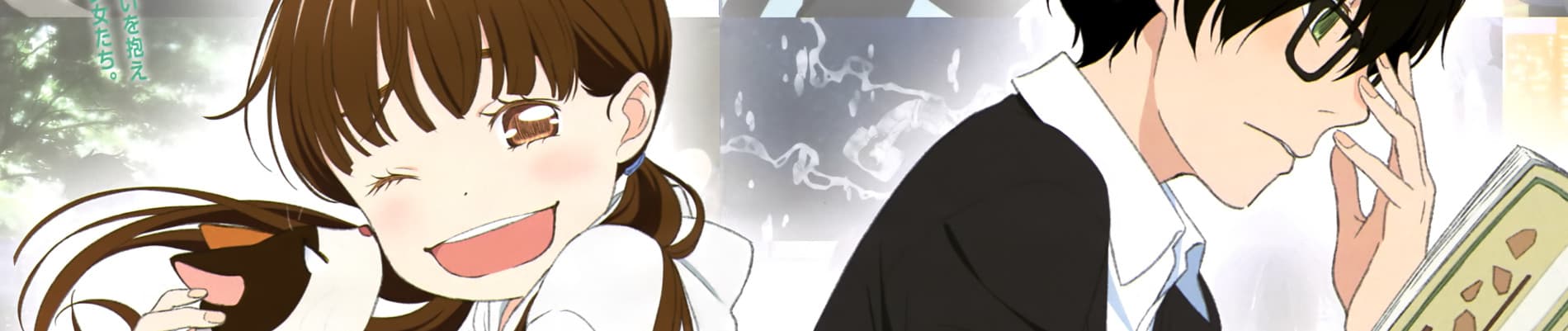
I wanted to write a review about this anime for a long time because I truly believe March Comes in Like a Lion is one of the most beautiful pieces of fiction ever written. It is supported by beautiful animation, a cast of extremely lovable characters, and an amazing soundtrack. I wouldn’t be lying if I said that this anime impacted me immensely. After watching it, I started appreciating everything around me a lot more.
March Comes in Like a Lion tells the story of a 17-year-old shogi player named Rei Kiriyama whose entire family died in a car accident when he was little. He was later taken in by a foster father who also played shogi. After his foster father adopted him, Rei became his apprentice. For a long time, Rei had nothing but shogi in his life, and he was so good at it that his foster “brother” and “sister” both came to resent him because of it. This made Rei believe that he had ruined their lives, and he started to hate himself for it. At one point, he even compares himself to the lifestyle of a cuckoo bird, which is known to intrude into another family’s nest and exploit them.
Rei becomes a professional shogi player at the age of 17, however filled with guilt decides to move out and live on his own in Sangatsu Town. At this point in his life, he is overwhelmed by many negative emotions: the grief of losing his family, the guilt of destroying another family, and of course loneliness caused by his isolated lifestyle.
One day, after being left wasted in a bar, Rei is found and helped by a woman named Akari Kawamoto, who brings him to her house so he can spend the night there. That is how he meets the Kawamoto sisters: the youngest, Momo Kawamoto (around 4 years old), Hinata Kawamoto (around 14), and of course Akari, along with their grandfather. The sisters had recently lost their mother, which creates an interesting parallel between Rei and the Kawamoto household. In both homes, there is a strong sense of loneliness and grief.
The first few episodes are extremely depressing. After experiencing so many painful things in his life, Rei does not want to become a burden to the Kawamoto sisters. However, because they genuinely want to help him, he slowly begins to accept their kindness, and it is a very beautiful thing to watch. Rei’s character development is also extremely well done and feels very realistic. He doesn’t magically heal after a single episode; instead, it is a slow healing process that continues throughout the second season and even further in the manga.
The shogi aspect of the anime is also very interesting. Before watching this series, I had never even heard that there was a Japanese version of chess called shogi. Despite not knowing anything about the game beforehand, the matches in the anime are presented in a very engaging way. They focus not only on the moves themselves, but also on the emotions, thoughts, and struggles of the players during each match. Because of this, even viewers who know nothing about shogi can still find the games exciting and meaningful. In my opinion, the anime does a great job of making the matches feel intense and important while also using them to develop the characters.
The Kawamoto sisters are also wonderfully written in my opinion. Akari acts as a mother figure to her younger sisters and, despite appearing strong, she has her own insecurities. Both she and Hina do everything they can to make Rei feel welcome, while Momo, still being a small child, is always excited to see him. Hina, in particular, receives especially strong development in the second season of the anime.
Overall, the anime is simply extremely pleasant to watch. It is incredibly heartwarming to see Rei slowly get better after experiencing so many painful things. The scene where Momo tells Rei to try his best in his upcoming match is, in my opinion, one of the most heartwarming moments I have ever seen in any anime.
If you are planning to give this anime a shot, just know that it can be very slow at times. However, it is definitely worth it — and by all means, make sure to watch the second season as well!
51.5 out of 55 users liked this review