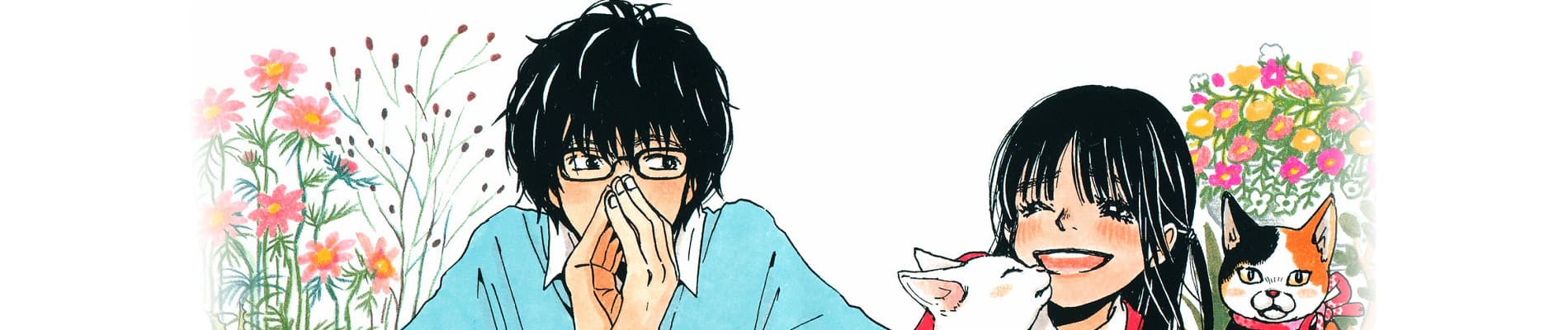
March Comes in Like a Lion by Chica Umino delves into the profound issue of loneliness with such sincerity that it’s rare to find a manga that captures it so effectively. While the narrative revolves around the world of professional Shogi, it serves as a mere framework for exploring the true essence of the series. The real subject matter is the silent, often agonizing journey of learning to coexist with oneself and others.
The protagonist, Rei Kiriyama, is a young shogi guru who leads an independent life. However, he carries a heavy burden of emotions that seem overwhelming for his age. Unlike a hero who inspires admiration through confidence and determination, Rei’s strength lies in his vulnerability. He navigates life as a person emotionally frozen for years, detached, isolated, and quietly frustrated by his inability to find his place in the world.
Rei’s believability as a character makes him a powerful presence. His struggles are not exaggerated for dramatic effect; they are genuine, internal, and deeply human. They encompass feelings of guilt about the past, fear of becoming a burden, and the silent thought that his presence may be a nuisance to others. The story is deeply personal, as we witness Rei’s journey through the professional realm of Shogi and his inner conflicts. It goes beyond simply depicting loneliness; it invites readers to experience it firsthand.
Rei’s loneliness begins to transform when he encounters the Kawamoto sisters: Akari, Hinata, and Momo. Their house is a stark contrast to the silence and emptiness that Rei has become accustomed to cozy, messy, and alive. Their role in the story is significant because they don’t try to fix him. Instead, they simply welcome him. Through small gestures, shared meals, casual conversations, and acts of kindness, Rei gradually realizes that this place is where he can finally feel like an outsider.
Besides Rei, there’s also the cast of shogi players, which adds another emotional layer. Opponents like Harunobu Nikaido, who loves shogi so fiercely despite his ailing body, or the legendary figure of an unknown champion, Souya Touji, whose unspoken, secluded nature is of another nature, make every game more than just a contest. Shogi is not just a game; it’s its identity, its pride, and the only thing that keeps someone together in this world.
This sentimentality is enhanced by the art style employed by Chica Umino. The illustrations in March Comes in Like a Lion are very expressive and tend to be symbolic. As Rei slips into depression, the panels may grow heavy, dark, and abstract, almost as if the world is closing in on him. Water imagery is regularly used to flood the page or surround Rei, serving as a visual depiction of the abundance of his thoughts. However, when warmth enters the story, particularly in the scenes with the Kawamoto family, the art becomes very dramatic. The pages become lighter and are saturated with soft details like food, laughter, and the warm noise of daily life.
These visual contrasts help make the emotional journey seem real. You don’t just read about Rei’s struggles; you experience them through the pacing, panel composition, and the overall feel.
What strikes me most is how truthful the series is about growth. Rei doesn’t develop dramatically in one way or another. It’s slow, delicate, and even frustratingly small. There are instances when he steps forward, and there are instances when he reverts to old suspicions. That’s precisely why his journey is so meaningful. The evolution of March Comes in Like a Lion mirrors the real-life experience: slow, uncertain, but incredibly meaningful.
Gradually, Rei begins to undergo a transformation. He starts opening up to others and becomes protective of those he loves, such as when Hinata is being bullied. He gradually realizes that he is worthy of kindness just as much as anyone else. These seemingly minor moments may appear insignificant in the story, but they hold immense emotional significance.
Rei Kiriyama is one of my favorite main characters because his journey is authentic. His victories are not about defeating enemies, but about learning to embrace warmth in a world that once seemed devoid of it.
March Comes in Like a Lion is not primarily about shogi. It delves into themes of isolation, interconnectedness, and the subtle ways people support each other in life. It serves as a reminder that healing is rarely achieved through dramatic and grand gestures. Sometimes, it may begin with simple acts like being invited to dine with someone.
41 out of 43 users liked this review