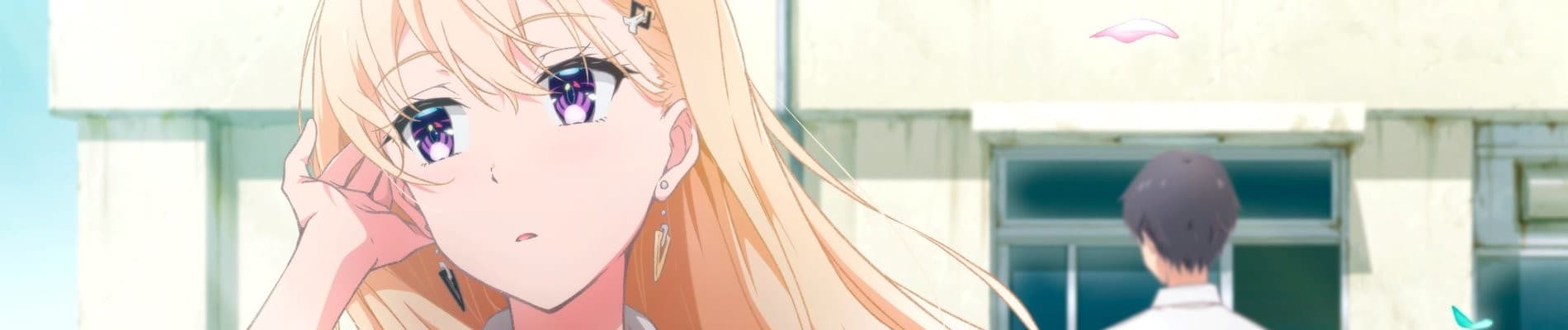
This rare gem of a series perpetuated a consistent train of thought for coherent storytelling, bountiful characterization and some of the most creative directing seen on this side of anime (Thanks Souta Ueno)
Gimai Seikatsu does take a considerable while for the author, Ghost Mikawa, to truly get the ball rolling. What Ueno has done is amplify the material's core narrative strengths to infinity. Even the most mundane aspects play a pivotal role in his visual aesthetic framework. It manages to subvert from the light novel industry's usual trappings for general audiences. It depicts a fine line between the usual suspects in cliché genre tropes and more grounded truisms, a realistic approach to interpersonal relationships. Same can be said for the romance subplot that takes center stage in the final half. The show obfuscates the otherwise quirky gimmicks that most stories utilize, and with a title like Days with My Stepsister, you'd expect it to too. But on the contrary it doesn't.
That fine-tuned focus on everyday life, the seemingly endless array of silent, meaningful exchanges, dialogue that stretches its weight because of the time and place. All these immaterial aspects are utilized to demonstrate the director's eye for gravitating flair. These apply to the show's demonstrative assets that speak for themselves: a wide berth of visual language full of thematic intent and perspective awareness; signature soundtracks, contemplative in nature, accentuating its most emotive scenes. All to nurture natural progression.
When pivotal moments occur they do as if they were a matter of course, as if their world and ours share the same perforated pages of a diary. It's in deep conversation with the topics it brings up, in contention with the polarizing angst it conceptually builds upon. From a sensory analysis alone, its captivating framing mechanisms of all manners of life as the characters, the setting, and the storytelling reach their own conclusions, irrespective of any stop gaps, is what sells this anime as a special existence.
Characters stress over simple things, bottle up complex thoughts behind a conundrum of teenage angst and resolve misunderstandings, as any respectable person would do. It's that truthfulness running on a rule of thumb that makes Ueno's directing shine in the most avant-garde way. Moments feel earned. Taking what could only be treated as a fairly decent, albeit not as universally praised, story, and highlight tedious details not even the author took into consideration shows a distinct passion and understanding of the story's down-to-earth atmosphere.
Even with subpar production values, what makes it succeed is a director whose ambitions veer on the auteur side of filmmaking. That self-realized vision adheres to the integrity of the original work and supersedes it exponentially. Genuinely a cathartic experience.
10 out of 12 users liked this review