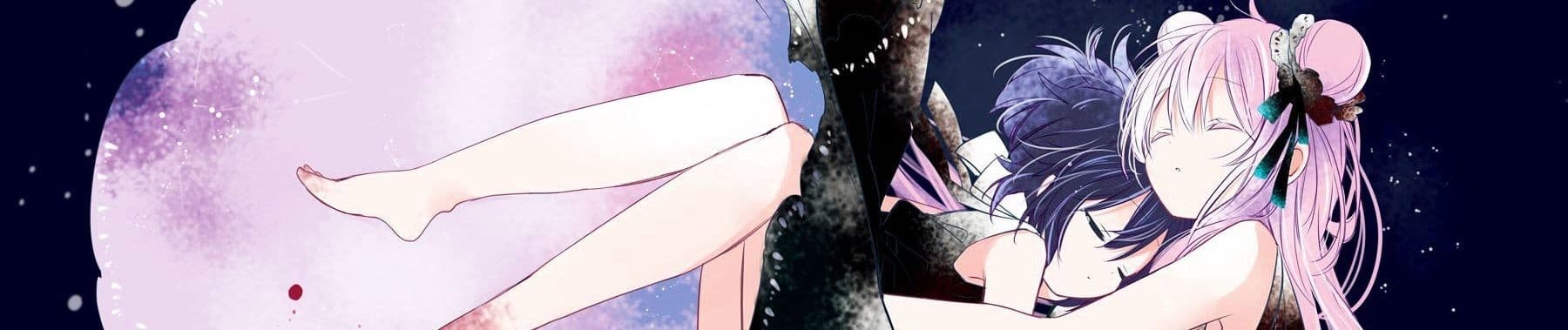
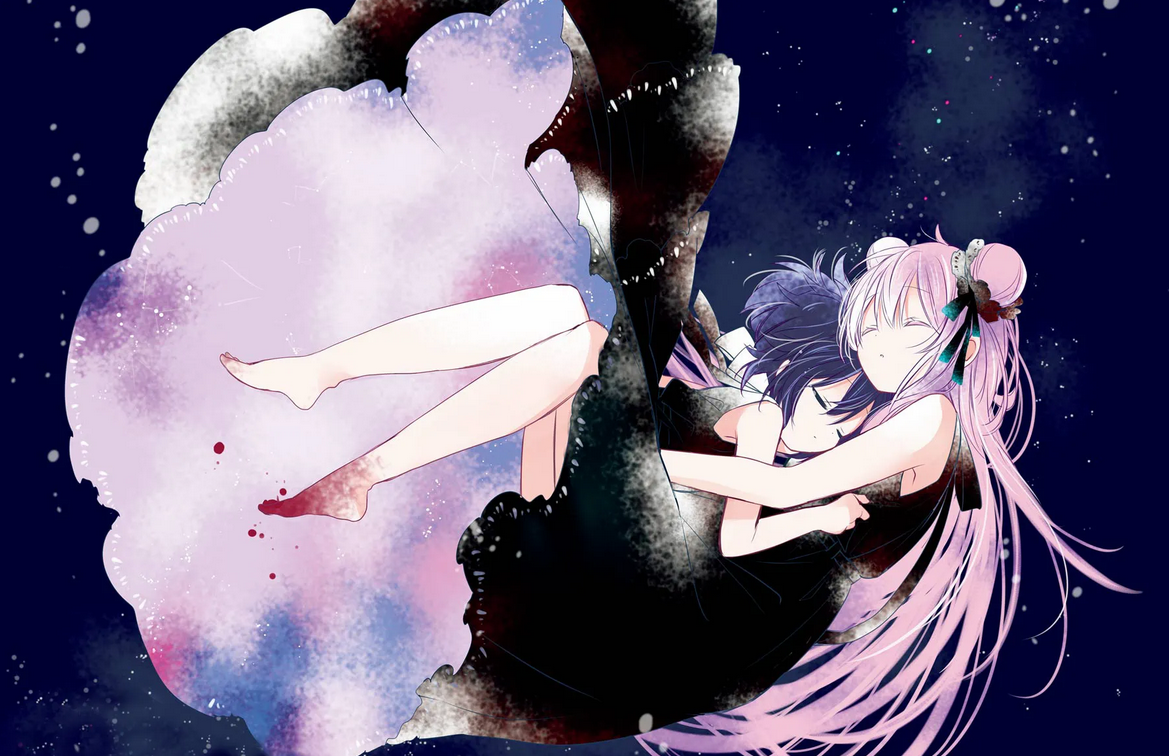
Happy Sugar Life
a review by Yukynaut
a review by Yukynaut
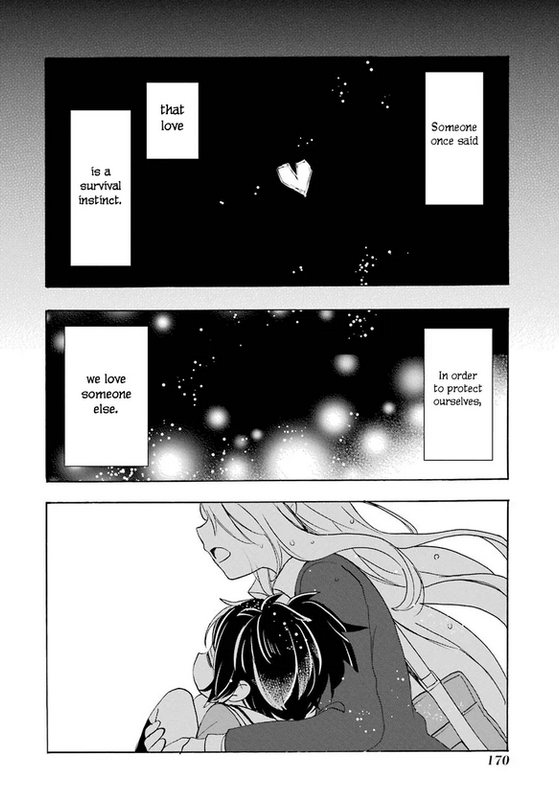
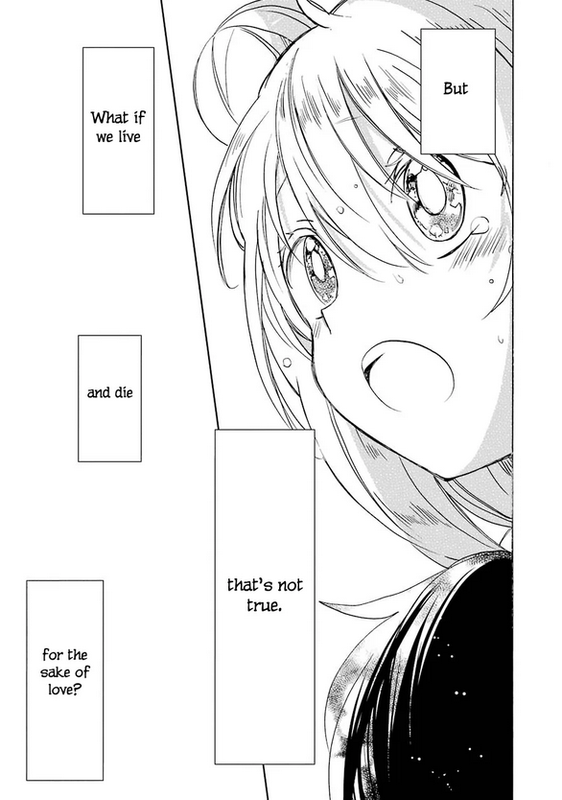
At its most basic level, Happy Sugar Life is a story about the relationship between 16-year-old Matsuzaka Satou — driven, ideological, lovestruck murderess — and Koube Shio, "pure", warm, yet suspicious and discerning child — and the people surrounding them that get drawn into their attempt to find happiness together. Shio has ended up in Satou's apartment under mysterious — at best extralegal — circumstances, and Satou is more than anything unwilling to let Shio go; Satou believes she has at last found true love after meeting Shio, and will do absolutely anything, no matter how morally bankrupt, to hang on to it. Lies, manipulation, theft, murder, anything goes for her. As of the first chapter, she already has multiple bags full of... someone's body parts sitting in an unused room: very literal skeletons in her closet. Unfortunately for her, she's not alone — and she's not the only person looking for Shio.
These are the central questions that Happy Sugar Life is fascinated with from beginning to end. In service of considering those questions and helping you answer them for yourself, each character represents a view on these questions as they clash throughout the story. The tricky thing about HSL's characters is that, among the main five at least, they are both viciously, diametrically opposed in their goals, and yet difficult to write off as irredeemable or purely monstrous. They all have their own circumstances, their own drives, good and bad qualities.
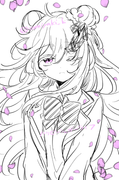
Satou is the series' main character, and undoubtedly the one we spend the most time with. She carries this story on her 13" shoulders from start to finish, and I hold her very near and dear to my heart.
She is a bitter, misanthropic, empty, neurotic overachiever who has been hurt or abandoned by every single person she was supposed to rely on or be taken care of by — this having severely warped her moral compass — who has, despite all of this, found purpose in her love for Shio. Her hatred towards the rest of the world causes her to engage in a form of borderline escapism together with Shio, playing out a fairy-tale-esque love together inside their apartment and shutting everyone else out as much as humanly possible. She puts up a polite and kind facade around most people, but is frankly a pretty cynical and hateful person that is only truly happy around her 'one and only'.
Up until the beginning of the story and her meeting with Shio, Satou had been known as highly promiscuous, but sex was never really what she was after (she's kind of aggressively sexless in the modern day, if anything). She was searching for the 'one and only' she believed would fix the emptiness in her heart by serially dating a bunch of different guys, as she had been taught to by a certain aunt of hers (who we will circle back to later). This didn't work for her, though, and she's only become the person she is now since meeting Shio under mysterious circumstances.
"Love" to Satou is this sparkling, pure, sexless, gentle, all-encompassing, all-powerful force that has irrevocably changed her life and saved her soul, something she can only feel for one person. She lives for this love alone, having endured a meaningless life of emptiness and abuse up until now, and treats the concept with such zealous religious deference and ideological fervor that — having rejected conventional morality a long time ago — her personal morality is entirely based around what serves and upholds her love.
Despite the less-than-legal circumstances of their meeting, the fact that Satou's love for Shio is partially because of her chasing purity, and the obviously questionable aspects of their relationship, Satou does everything she possibly can to give Shio a happy everyday life: treating her kindly, spending time with her, bathing with her, and working overtime to the point of self-harm at her maid café job in order to afford essentials and gifts for her beloved. Behind the scenes, she also works to blackmail and manipulate anyone threatening to take Shio away from her without Shio's knowledge (whether they're ill-intentioned or not, though she views most of them that way). She will do anything — absolutely anything — to ensure that she's allowed to love Shio in the way she was never loved, to give Shio the life she was never afforded, and to protect their 'castle' of love from any intruders.
She's not exactly perfect with Shio, though — although she grows and fights this impulse over time, she has a nasty possessive streak and an extremely high level of paranoia around losing her that means she really doesn't mind that Shio is forced to stay inside all the time due to her legal situation.
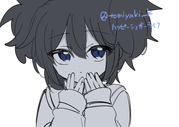
Shio is interesting in both a narrative and personal sense. On a narrative level, she is both the story's deuteragonist and the object of others' quests — her surface traits of kindness, warmth and innocence cause her to be sought after by multiple other members of the cast in order to fill the holes in their own hearts like some loli-shaped MacGuffin, from Satou to Taiyou to Asahi. She represents the innocence of a child that Satou and Taiyou hope to regain in some way by being close to her, and the ideal of family togetherness and happiness to Asahi.
At the same time, on a more personal level, this purity is a lie — she's a child of an abusive household, with

Asahi is Shio's brother, and is currently searching for her after she mysteriously went missing. Where Satou is a somewhat villainous protagonist, Asahi is a relatively heroic antagonist — he's the most straightforwardly moral character, and by far one of the easiest to sympathize with. I certainly know many people who finished the series saying they could only sympathize with him. He shares an unfortunate history of abuse with his sister; however, having not seen the darker sides of his mother as Shio did,
To this end, he works himself as hard as Satou — spending all of his little money on printing missing person posters of Shio and sleeping under park benches while he's at it so he can spend as much time as possible searching for her. Despite his drive, Asahi is deathly afraid to use violence in his pursuit of Shio out of fear of becoming like his father — at least at first. Throughout the story, his moral compass deteriorates as he sacrifices more and more of his principles on the altar of finding Shio.

Shouko is Satou's friend (as far as I know, the only real one) and coworker at Cure A Cute café. If I had to use one word to describe her, it'd be 'sheltered'. She's from a relatively affluent family and feels trapped by their stringent regulations, causing her to vent her desire for freedom through one-night stands with boys from around town. She used to go searching for guys to do this with together with Satou, these escapades serving a dual function of being the time they spent hanging out with each other and getting to know each other better.
As a result, since Satou's found her 'one and only' and quit serial dating, she's also begun to drift further apart from Shouko — something that bothers Shouko deeply. Despite her indecisive nature, Shouko knows well that she loves Satou as a friend (something Satou pays attention to and clearly values) and dearly wants to be a part of her life, pushing her to try and get more deeply involved with Satou's throughout the story.
She finds herself lost for much of the first half of the manga, lamenting how scared of everything she seems to be as a result of her lack of exposure to the darker sides of the world, as well as her inability to face things with clear conviction. She does indeed end up way over her head after meeting Asahi and beginning to assist him in his efforts to find Shio — but she views this stumbling around as a necessary step on her road to becoming a braver, better person, fueled by her desire to be strong enough to be trusted by and close to her only true friend Satou, and to help the boy searching for his sister that she's come to care for.
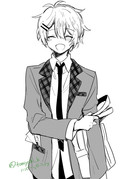
Taiyou was one of Satou's coworkers during her short-lived stint at Princess Imperial. He later begins working at Cure A Cute. Previously being a fairly average, popular ikemen, Taiyou stops being able to live a normal life once he's assaulted by his manager at Princess Imperial. After this, he gains a traumatic inability to be around older women.
He feels deeply dirtied and defiled by what was done to him, and becomes obsessed with the idea of becoming 'clean' and 'pure' again; specifically, he becomes interested in the purity and innocence of a specific missing girl he sees on posters around the town. After actually meeting Shio and being comforted by her in the Monochrome Night arc, his obsession with her becomes infinitely worse. In this way, he functions as a foil to Satou, reflecting her worst traits back at her. His desire to see Shio, his (imagined) angel, and be purified by her innocence draws him further and further into the high-stakes game being played by Asahi and Satou.
It's hard to talk about him further without putting this in a spoiler tag, so I'll have to do so.
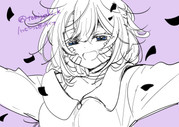
Nameless aside from her title. Perhaps appropriate would be "the root of all evil". She is a promiscuous sadomasochistic woman who was the orphaned Satou's primary caretaker up until she recently began living with Shio. She's described by multiple people in the manga as beautiful yet terrifying, with an uncharacteristically gentle voice that unsettles people. Satou lies about still living with her aunt to keep people from discovering her address, and therefore her secret.
Satou's aunt believes deeply in her own ideology of love; she believes it to be accepting the true selves ('the most precious parts of their hearts', as she says) of anyone she comes across. As Satou puts it, she'll accept violence, sex, anything and everything. She cares not if people are rough with her, use her, are gentle to her, want her to spoil them, or want to spoil her. Accordingly, her moral compass is more than a little cracked; she has no reservations about helping criminals or "satisfying the hunger for love" of children.
Satou holds a deep, personal hatred for her above anyone else; her lack of moral objection to pedophilia, her assertion that she attempted to "love Satou every way she knew", and
Either way, she's left an indelible mark on Satou — her teachings of the meaning of love caused Satou to seek love through sexual encounters with boys, and therefore delayed her discovery of the real thing (from Satou's perspective at least). Nowadays, despite Satou passionately rejecting everything her aunt stands for, she's more influenced by her aunt than she'd like to admit. Her undying ideological commitment to her ideals of love, her complete lack of inhibition towards criminal behavior, and her tendency to furiously judge others are all shared by her aunt.
Satou's aunt functions, in a way, as the principal representative of the 'filthy adults' the story's major characters often pin their troubles on or show resentment towards. She constantly lords what little status she's gained from her age and her past power over Satou whenever Satou condemns her; this most directly shown at a later point in the manga where Satou is forced to ask her for help, demanding that her aunt makes up for what she did to her. However, this is sprinkled all throughout their scenes together, with Satou's aunt often intentionally reminding her of traumatic moments or her status as a "powerless child" to get under her skin.
What caused Satou's aunt to be like this is unknown, and frankly irrelevant to the author. The story is first and foremost interested in the viewpoints of its underage characters and what has shaped them into the people they are now, not its adult characters. Two other characters (Kitaumekawa Daiichi, Satou's teacher, and the Princess Imperial manager that raped Taiyou) play rather similar roles of two-dimensional abusers as Satou's aunt does, but they're far less interesting minor characters that I'm not going to discuss here.
Normally this wouldn't require its own section, but HSL has a unique visual and spoken language to it that has to be covered for a proper overview of the series. I'll run down a list of major pieces to this language quickly here:
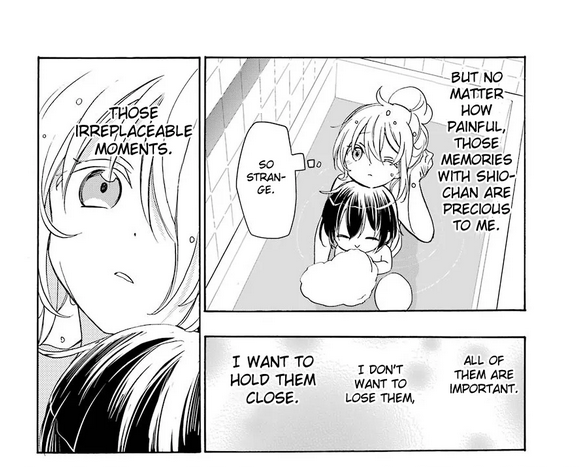
Much of this is down to personal taste, and I've already touched on it somewhat in the last section, but I adore the art of this manga to death. I have nothing to quibble about with it. It's heavily shoujo-inspired moe art with a somewhat ethereal feel; very light linework, high contrast between black and white elements, highly decorative pages, and skill in portraying both subtle and strong expressions. The mangaka, Tomiyaki Kagisora, is also extremely skilled in laying out pages. The whole manga is filled with creative uses of text and panel shapes that make it easier to follow characters' thoughts in a specific order. Additionally, when characters are in highly unstable emotional states or generally desperate, their linework will often become intentionally messy - this spans from everything to outlines becoming jagged and scratchy, pupils losing their perfect circular shape and becoming globs of scribbles, or entire characters being scratched out in black. The art manages to effectively communicate both sides of the emotional states of its characters in a super memorable way that gives the manga a deeply unique visual identity. Below are some example of everything I talked about, apologies for the wall of images:
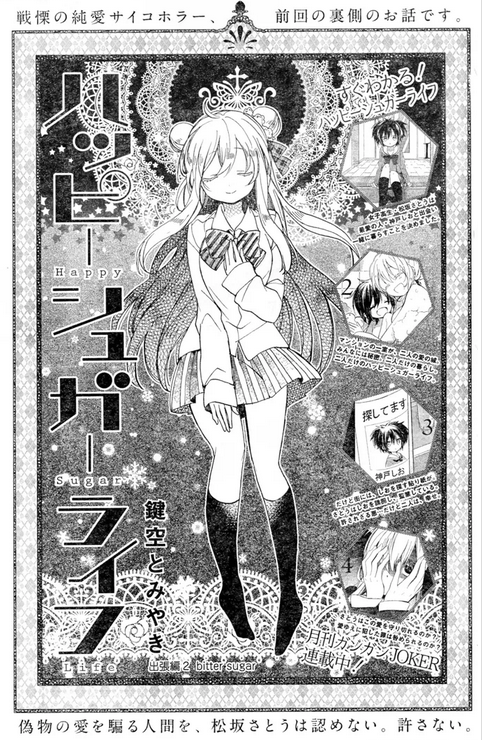
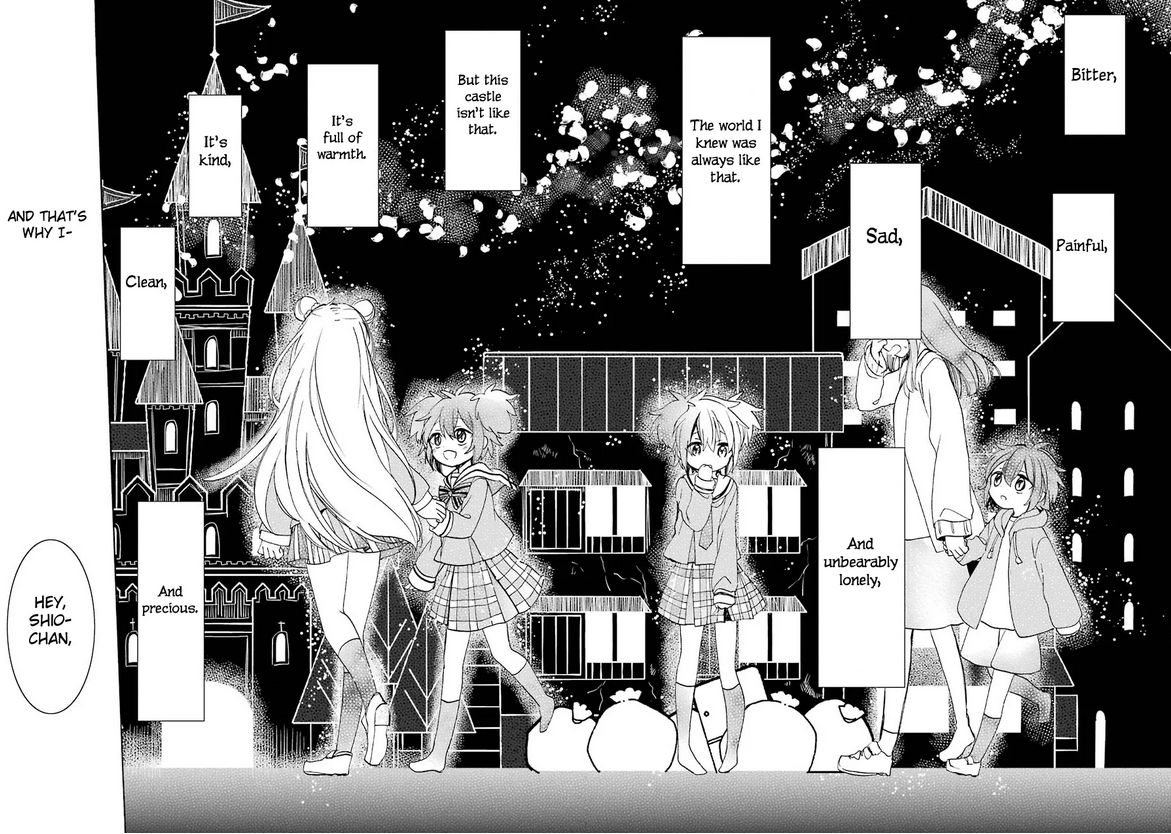
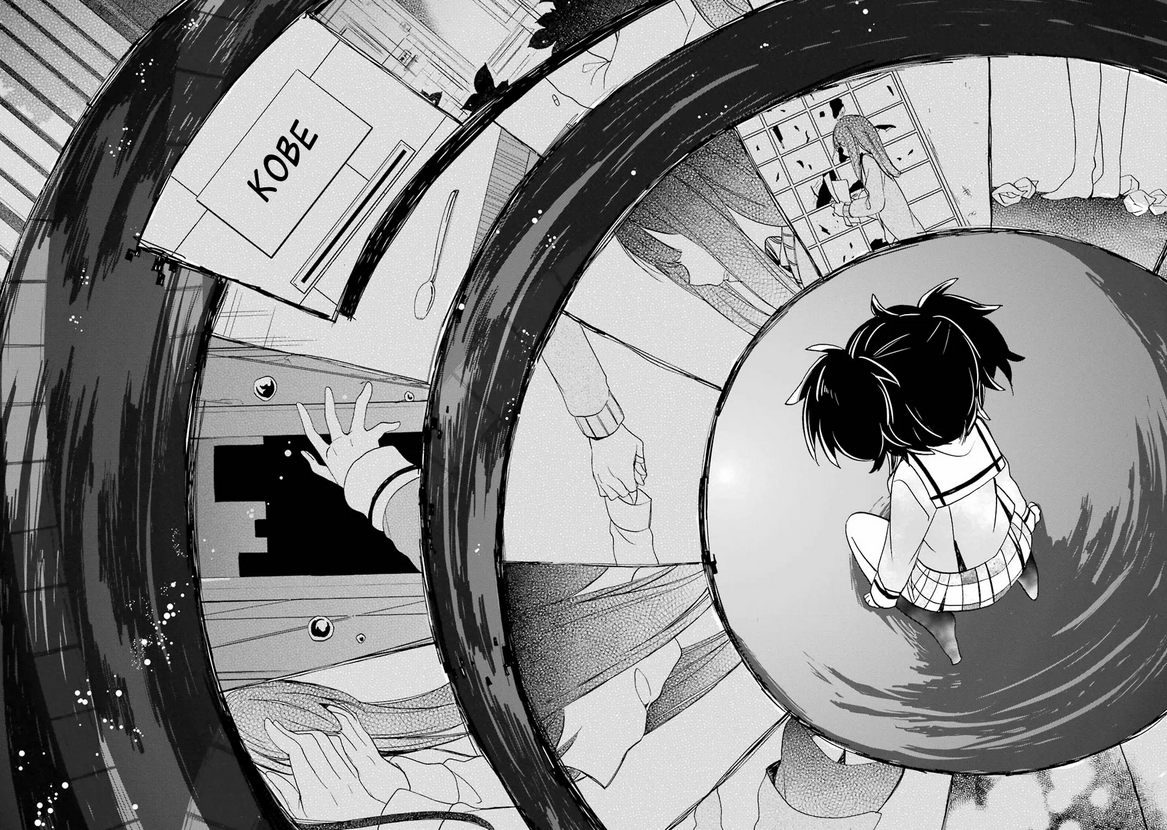
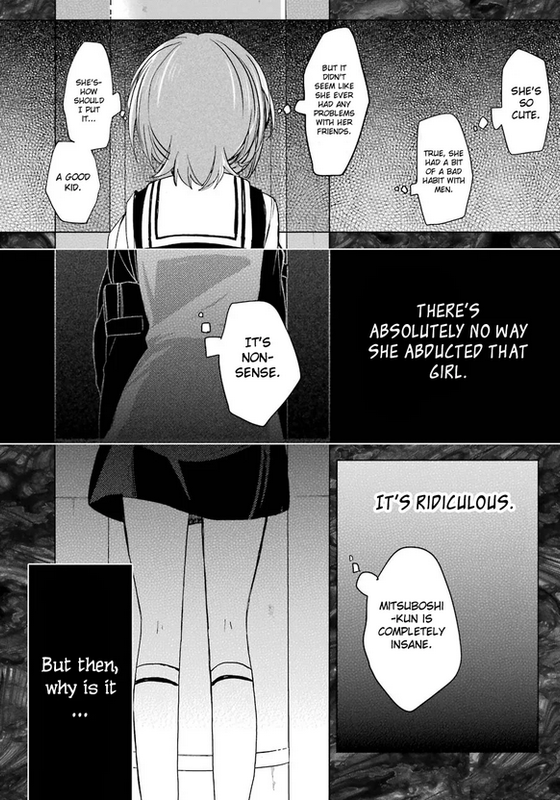
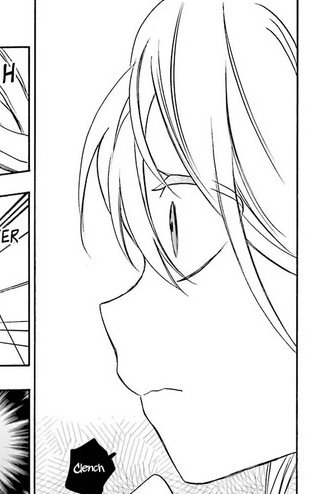
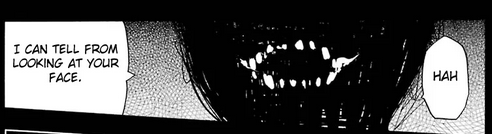
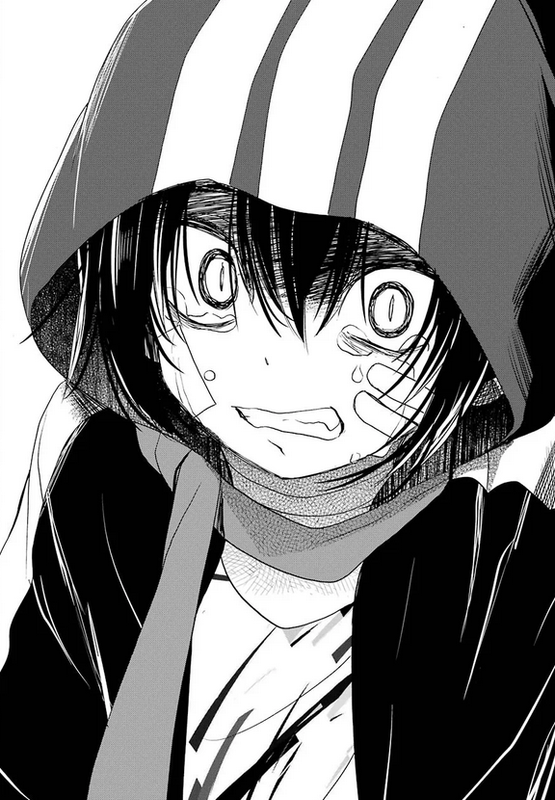
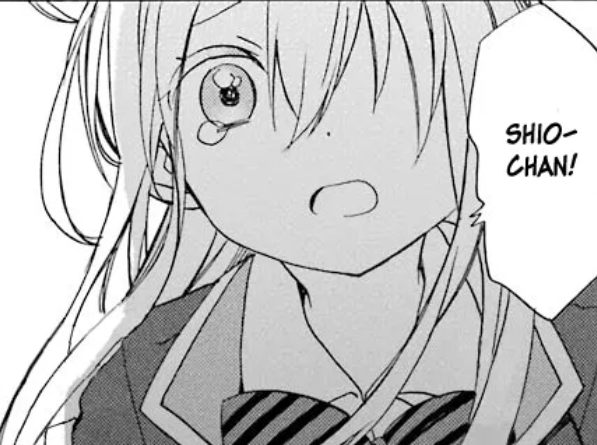
I think these should be fairly apparent after reading the rest of the review, but I feel I should codify them. Naturally this section will be FULL of spoilers, and tagging them all would be too difficult, so tread lightly. Skip if you'd rather stay ignorant.
Happy Sugar Life is, in my opinion, an incredible manga with extremely poignant things to say. It has, in some ways, a rough introduction — the first volume or two are structured in a way that can turn people off — but it's rare that I'll meet someone who finished the whole experience and didn't admit it was a cut above so many other series that try similar things, even if they didn't connect with it personally.
In my experience, you have to be a pretty specific kind of person to literally love everything about HSL. I happen to be one of those people — someone with a bitter childhood, someone who values love deeply, someone who desires to make something better out of themselves than the person they seem 'made' to be, and wonders if it's even possible.
Yet, the requirement for simply liking or loving it is not so high. All you have to be is someone who wants to be challenged. Someone who wants to understand more about themselves, or about people around them who have had less fortunate lives than them. Someone who wonders what love is. Someone who wants to be soothed by seeing people who were hurt and left for dead strive towards something better, messy as it may be. If any of these labels fit you, I'm almost certain you'll love this manga. Even if you're simply someone who loves beautiful art, or an entertaining story, or bold characters, you'll probably find something you like.
If you're still reading this review and uncertain about whether or not to read Happy Sugar Life, I would implore you to at least check it out. It improves linearly, so if you enjoy the beginning, you will probably love the end; and if you feel apathetic about the beginning, you may still like it by the end. It is a manga that will undoubtedly make you think, make you feel, and make you question. It's a manga that has entranced me for years on end now with its central idea, an idea that is probably best summed up by the musings on the back cover of the final volume:
|
|
|
|
|
|
|
|
|
|
I'm a warped, underdeveloped person who sees little hope in the future and is very immoral in a lot of ways. But so is Satou. And she tried to make something good out of her life for once - she tried so, so fucking hard. And she died for it. An uncaring world crushed her beneath its heels, never even trying to understand her or why she was the way she was, for the crime of fucking up really badly when trying to find her own way in making something better than she was given the opportunity to be.
But her efforts weren't in vain. She hurt so many people, ruined lives that would have otherwise been fine, honestly probably caused more harm than good from a utilitarian perspective. But she saved one person - Shio. She rescued Shio from a life of bitter pain and showed her that she could be loved, that love exists in the world, that the rare person will legitimately risk everything to just to help one other person. Maybe she didn't have a chance to begin with, and her body breaking against the cold pavement was the only ending she could have ever had. But, to take a page out of Franz Liszt's book, she turned the long, bitter suicide of her life into a sacrifice by faith. And that will stay with me for a long time yet.
18.5 out of 19 users liked this review
