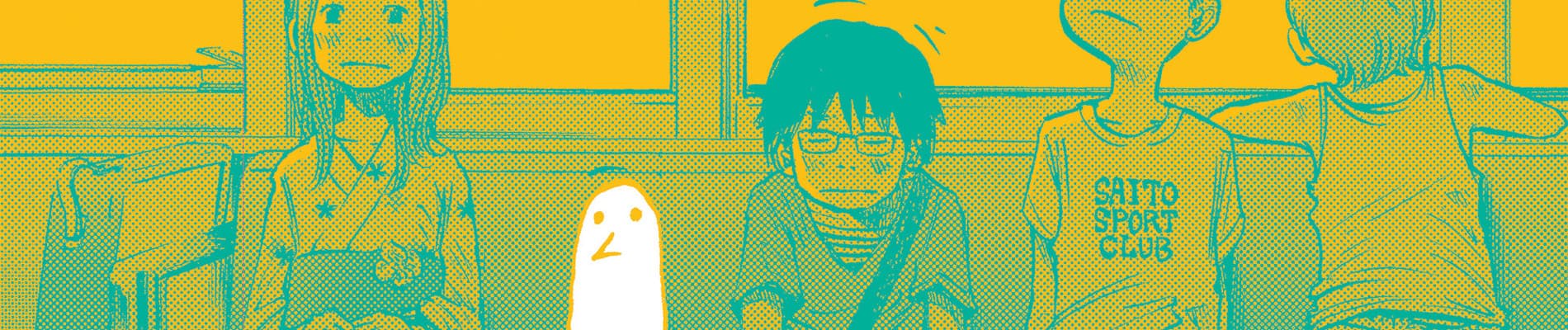
Oyasumi Punpun is not merely a manga; it is a relentless and harrowing descent into the darkest, most visceral corners of the human psyche. What begins as a seemingly surreal coming-of-age story, where Aiko Tanaka is perceived as a fragile symbol of innocence and a sole reason for the protagonist's existence, eventually spirals into a devastating trajectory of trauma, obsession, and moral decay. This work serves as a brutal, uncompromising reminder that life is rarely poetic or kind. It forces the reader to acknowledge a terrifying reality: protagonists are not always heroes, redemption is not guaranteed, and sometimes, acts of pure malice occur without a logical "why"—they simply exist as part of a broken world.
The experience of navigating this narrative is deeply unsettling and emotionally taxing. As a reader, you are forced into a complex relationship with Punpun Onodera. There is a profound, almost physical sense of revulsion toward him during his most depraved moments, yet Inio Asano’s genius lies in crafting a character that, despite being a literal caricature, feels uncomfortably human. You understand his void even when you loathe his actions. His bond with Sachi Nanjou serves as a fascinating contrast to his obsession with Aiko. Sachi represents a pragmatic "push and pull" dynamic—a chance at stability and a functional life—yet the tragedy lies in the fact that Punpun is too consumed by his past and his internal shadows to ever be truly whole, even when someone capable is reaching out to him.
Visually, the work is nothing short of a masterpiece. Every single panel is crafted with a level of detail that feels both hyper-realistic and dreamlike, creating a juxtaposition that heightens the story's inherent unease. The artistic evolution of the characters, especially the abstract representation of Punpun’s family, allows the emotional weight to hit harder than traditional character designs ever could. The final sequences, particularly the frame of him with a scarred eye crossing paths with a childhood friend as if they were total strangers, cement this as a perfect yet heartbreaking achievement in sequential art. It is a story about the scars we carry and the people we destroy along the way.
The narrative structure of Oyasumi Punpun meticulously deconstructs the "Manic Pixie Dream Girl" trope through Aiko, turning a childhood crush into a haunting, co-dependent nightmare that ends in the most tragic way possible. It explores themes of isolation, inherited trauma, and the desperate search for meaning in a godless universe. By the time you reach the end, you don't feel "satisfied" in a traditional sense; you feel exhausted, changed, and perhaps a bit more aware of the fragility of the human mind. It is a mandatory read for those who seek to understand the limits of empathy and the consequences of a life lived in total emotional darkness.
26.5 out of 27 users liked this review