Ending a long-running comedy anime is one of the hardest things to do in the
medium. Gintama ran for over 360 episodes, built its identity on relentless
self-parody, fourth-wall demolition, and toilet humour, and somehow also
became one of the most emotionally resonant anime ever made. The Very Final
had an almost impossible brief: be funny enough to honour the comedy, be serious
enough to honour the drama, and send off a cast of dozens with dignity. It mostly
pulls it off — though not without some cost.
The film adapts the final arc of Hideaki Sorachi's manga, condensing it into under
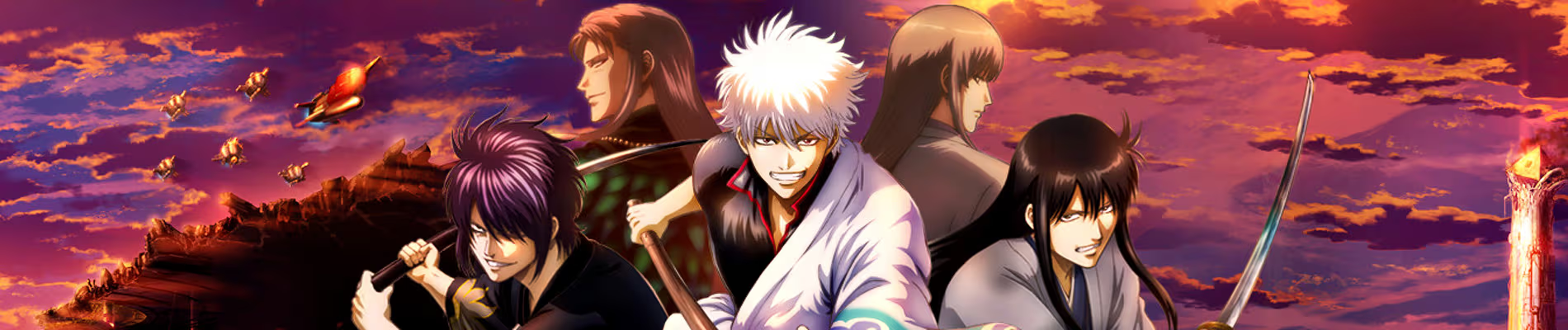
two hours. Gintoki, Takasugi, and Katsura — the three former students of the
revered and tragic Shoyo — must finally confront Utsuro, the immortal, world-weary
dark half of their teacher who has grown so tired of living that his endgame is
essentially extinction. It is a fittingly Gintama villain motivation: grandiose and
absurd on the surface, quietly devastating once you sit with it. The Shoyo thread
has been the series' emotional spine since the Courtesan of a Nation arc, and
watching it finally resolve lands with real weight.
The film opens with a Dragon Ball-style recap narrated in Gintama's signature
self-aware style — Gintoki commenting on his own summary — which immediately
establishes that the comedy has not been sacrificed at the altar of finality. This
tonal balance is the film's greatest achievement and its most precarious act. When
it works, the shifts between hilarity and heartbreak feel earned in the way only
Gintama can manage — because you have spent hundreds of hours with these people,
their absurdity and their grief exist in the same register. A scene involving Sadaharu
that should by all rights be pure slapstick ends up being genuinely moving.
The action is a step up from the TV series — fluid, kinetic, and staged with real
scale. The involvement of Toei Animation lends the fights a polish the show rarely
had, though Crunchyroll's critics noted it sometimes feels more like a Dragon Ball
film than a Gintama one, which is a fair observation. The DNA of the series is
present throughout, but the visual grammar occasionally slides toward a more
generic shonen blockbuster register than the chaotic expressiveness of Sunrise's
original production. SPYAIR's theme "Wadachi" is quietly excellent.
The film's real weakness is compression. A cast this vast cannot be fully served
in 104 minutes, and fan favourites like Tsukuyo and Hasegawa receive little more
than cameos. For newcomers, the film is borderline impenetrable despite its best
efforts. But for the devoted — and Gintama rewards devotion like few series do —
this is an emotional, funny, and deeply satisfying farewell that sticks the landing
where it counts most: the Yorozuya, together, one final time.
40.5 out of 44 users liked this review