

Neon Genesis Evangelion is a remarkable show that combines a gripping plot of giant robots fighting aliens and a captivating message about the human psyche. Two decades have passed since it aired back in 1998 and it is still subject to praise and recognition. The show (and its movies) sparked an immense amount of discussion and countless reviews and analyses. It is because of Evangelion's legacy and its story filled with meaning, symbolism, and interesting characters that I recommend it to anyone slightly interested in anime.

Story and Characters
The show, as it is iconic of the mecha genre, isn't really about giant robots fighting giant aliens (Angels). However, as it is still an essential part of Evangelion, I feel it should be mentioned. The whole premise of Tokyo 3 and NERV being humanity's last stand, and the sub-plots concerning SEELE and other world organizations, was pretty solid. The universe the show is placed in makes sense, even if it is confusing to comprehend in its entirety the first time watching, and makes for brutal fight scenes and an intriguing science-fiction story. It isn't just an excuse to have our characters to participate in cool action scenes, an example of this strategy utilized poorly would be Darling in the Franxx (mainly due to its terrible world building).
Evangelion has some of the most complex and interesting characters I have seen in anime. Even when the cast of characters was pretty large, Gainax was able to give every single one some form of individuality. It felt like most characters were main protagonists. For example, even if the three children and Misato were technically the main characters, other characters such as Ritsuko, Fuyutsuki, or even Touji, were given enough development so they weren't just part of the supporting cast; they were much more than that. To accomplish this the writers made sure to give each character personal motivations, strengths, flaws, a reason to be in Tokyo 3, and most importantly, a form of connection to the core theme of the show: loneliness.
Loneliness, depression, and a lack of purpose are all recurrent traumas our characters undergo. Some characters find their answers and are able to move forward, and others are not as lucky. However, by the end of the series we have a clear view of what Hideaki Anno wanted to convey to his audience through his work. I will leave it up to you to understand what you will of its last two episodes and The End of Evangelion; as I feel like this is the most complex part of the show and is more of an experience than an absolute solution for depression. These core themes are what made Evangelion the masterpiece it is today, for they sparked discussion and allowed every member of its audience to interpret it differently.
Animation and Sound
The animation quality of a show is a topic with divided views. It is true that the show cannot be compared to today's standards and the lack of a remaster makes it a difficult viewing, however I had no problem with it and was still impressed.
The fight scenes are brutal and exciting. They are filled with dynamic movement and well-crafted facial expressions from the pilots.
The soundtrack is very well done. It didn't stick with me unlike other shows, but it is able to set a tone and portray emotion to the viewer with ease. The opening is iconic and for a good reason, in a few minutes we know through the music and cryptic imagery what the plot and characters are about. The ending, even if it doesn't use an original song, makes good use of its simplistic visuals and Frank Sinatra's Fly Me To The Moon to establish a tone consistent with the events of its respective episode.
I should quickly mention my opinion on the christian symbolism. I appreciated it because it demonstrated the effort the creators put into the show. They used real world imagery and terms to tell its story in an unique style. Although some might consider it was ham-fisted and unnecessary, I do not think Evangelion would be the same without it.
The shows undergoes various tone shifts throughout its run-time, however the animators and voice actors do a good job of accommodating the scene to fit the tone of the episode. We feel happy in the slice-of-life episodes, we feel fear when faced by the feral Eva Unit 01, and we feel sad when characters dies.
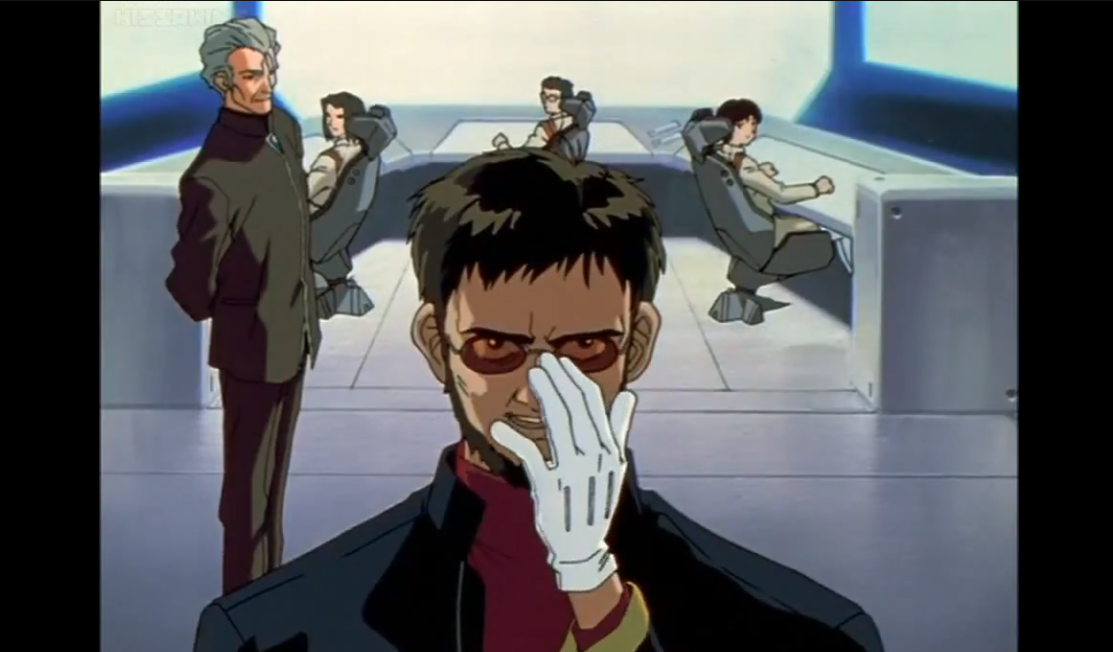
From an audiovisual standpoint, the show excels the most in its shot composition and visual directing. Almost every scene is crafted with care for the viewer to understand the emotion, tone, and what is happening in the scene only from looking at it.
The opening scene is a good example of that. The alien enters the view of the soldiers by emerging from the now-underwater Tokyo, we get the idea that this is a post-apocalyptic world. We understand the severity of the situation as we see a barrage of missiles unable to scratch the invading Angel and the many cigarettes found in the commanders' desk add to the tension of the scene. However, the day is bright and the landscape is filled with green, as if fighting Angels was common practice for humans. Lastly, the faceless military officer's descend and are out of frame. We are presented with the new man in charge, Gendou Ikari. A menacing figure, one that uses gloves and orange glasses to separate himself from the outer world, almost like a hedgehog.
Conclusion
I understand that at this point the quality of Evangelion might have been blown out of proportion as there is no such thing as a flawless show. However, it is undeniable the effect the show has had on the industry and its work in popularizing anime as a whole. Almost every single anime fan should be able to watch this and enjoy some part of it. As there is a lot of stuff to enjoy here, ranging from best girl Asuka to robot battles that will decide the fate of humanity.