Tokyo Ghoul:re
a review by Makaveli
a review by Makaveli
Tokyo Ghoul:re, a sequel that refuses to tread familiar ground, redefines the narrative into a fragmented, introspective, and occasionally incomprehensible version. This approach, while its greatest strength, also presents its most significant weakness.
Instead of immediately introducing familiar faces, the story introduces Haise Sasaki, a composed and stern investigator leading the Quinx Squad. On the surface, he appears to be a stark departure from Ken Kaneki. Calm, business-like, and even kind, he contrasts sharply with Kaneki’s previous chaos. However, beneath this facade lies a profound turmoil. His identity feels fragile, as if a creation rather than an experience. This conflict serves as the emotional foundation of the series, gradually unveiling Haise’s true nature.
What sets this approach apart is its perspective on identity. The story doesn’t view it as an immutable fact but as a construct shaped by memory, trauma, and choice. It’s not merely a journey of Haise recalling his past but a question of whether that past truly defines him. The series oscillates between this uncertainty, prioritizing internal struggles over external actions. It’s less about explicit responses and more about the unsettling feeling of not knowing.
This exploration is further elaborated by the Quinx Squad. Each member carries their own emotional baggage, and their relationship with Haise is built on trust, reliance, and unspoken resentment. Urie’s ambition, Shirazu’s need for purpose, Saiko’s aloofness, and Mutsuki’s highly disturbing vulnerability all contribute to their unstable yet believable group dynamic. Their development is not perfectly balanced, and their moments of connection are not forced but rather given.
Meanwhile, the series expands its scope significantly. The human-ghoul war becomes more intricate, with shifting alliances and motives that are harder to discern. There’s no clear moral center. Previously heroic characters make questionable decisions, while previously villainous ones reveal more than just one side. This moral ambiguity has been a defining characteristic of Tokyo Ghoul:re, inviting readers to delve deeper into the labels and examine the context of each character’s actions.
However, this desire comes at a cost. The narrative may become overwhelming, especially given the large cast and numerous overlapping plot lines. Characters from the first series occasionally reappear, sometimes with significant modifications that may not always be fully developed. New groups and conflicts are introduced rapidly, creating a sense of constant change and indecision. This can evoke a feeling of richness in some readers, while others may find it disorienting.
Tokyo Ghoul:re’s pacing creates a tension that arises from the rapid progression of arcs. While the early chapters provide ample time to develop characters and establish the atmosphere, subsequent arcs move at an exponential speed. Major events occur one after another, leaving little time for emotional processing. Although the story strives to maintain a steady pace, it occasionally falls short of delivering those moments that should be devastating or transformative.
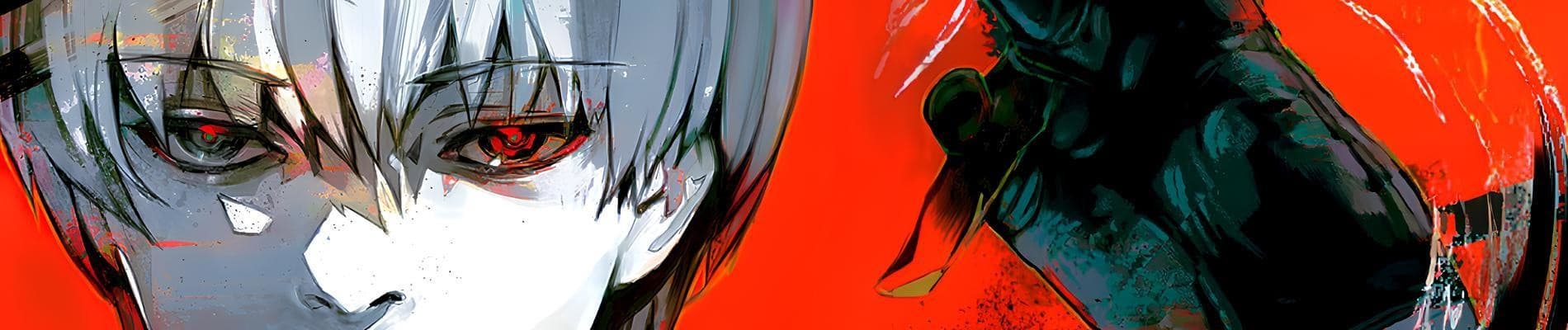
The manga’s visual style remains distinctive. As Sui Ishida’s artistic style evolves, her work becomes more abstract and expressive, blurring the lines between reality and metaphor. Symbology is abundant, with panels depicting the characters’ mental states, transforming the narrative into an emotional experience as much as a traditional one. While this style can occasionally complicate action scenes, it effectively supports the theme of confusion and the fractured sense of identity that permeates the show.
One of Tokyo Ghoul:re’s most impressive aspects is its handling of suffering. Unlike other stories, pain is not the driving force behind the plot. Instead, it lingers, affecting the characters’ perceptions and relationships. The narrative acknowledges the difficulty of healing, but it also suggests that it is possible. While the path to solutions may not be easy, there is room for growth and evolution.
Opinions on the conclusion of Tokyo Ghoul:re are likely to be divided. The manga reaches a resolution that attempts to reconcile its numerous storylines without compromising its core themes. Some viewers will find solace in the sense of closure and focus on the future. Others may feel that certain aspects are underdeveloped or rushed. Regardless of one’s perspective, the finale reflects the series’ overall approach, prioritizing emotional resolution over a meticulously crafted narrative.
Tokyo Ghoul:re is a sequel that demands patience. It may not be entirely transparent, straightforward, or easy to follow. However, it is undeniably ambitious. The series builds upon the concepts introduced in the original and extends them far beyond their original boundaries, even in cases where clarity is sacrificed for depth.
Tokyo Ghoul:re presents a raw and introspective story to those willing to delve into its complexities. It is not primarily about spectacle but rather the journey of self-discovery, which can be delicate and even painful. While not everyone will respond to it in the same way, its willingness to embrace uncertainty and imperfection leaves a lasting impression.
15.5 out of 17 users liked this review
