This review was written as part of the Anicord Contracts Season of Spring 2024, where a random person gives you several animanga to watch/read and review.
#This review contains spoilers up to ch 97.
_Contractor’s note:
A manga about ballet with an incredible story and characters with an emphasis on growth which is similar to Akane-banashi. Both of them are 10/10s in my book._
I love Akane-banashi. I know next to nothing about ballet, but I did read some sports manga (Haikyuu, Ao Ashi) and watched some anime (Ballroom e Youkoso, Ping Pong the Animation), so I’d like to think I was ready for this.
I kinda was, but at the same time, I wasn’t.
We’ve got a lovable protagonist in Kanade, who fell in love with ballet at a young age. We cheer for her and watch her progress on her way to become a professional ballet dancer. We also watch her rivals and friends competing alongside her, making their own progress and carving the path for themselves.
We watch her idol and neighbour, Risa, whose ballet performance inspired Kanade to start dancing in the first place, fail and quit.
Kenrantaru Grande Scène starts out like the token sports shounen, but gradually reminds you of its seinen demographic.
Much like in Skip and Loafer, you meet a character, think of them as a token archetype and quickly discover that there's a lot more to them than you initially thought. Every character feels human and real, and you end up cheering for all of the girls, even if they started out as antagonists.
In the arc where Sakura, the bitchy rival who at first outperforms Kanade in all aspects, gets her comeuppance in a competition, we also get a glimpse at her vulnerability. Kanade catches her in that moment, later discovers Sakura hasn't come to ballet practice and starts worrying about her until she learns that Sakura hasn't been idle, but rather training at other places to gain more experience and stay at the top.
We find a lot of heartfelt, raw, and emotional moments in the story. One of my favourite arcs is when Kanade’s best friend Shouko wrestles with her father's refusal to let her pursue her dream of going pro, as he was nominated for the Olympics as a weightlifter, overtrained, and suffered from a career-ending injury. Under the guise of protecting his daughter, while in reality not wanting to be confronted with his shameful past again, it takes a few family heart-to-hearts and of course a ballet performance to make him come around and fully support his daughter's dream.
It's especially around the (family-centric) bits of support and unconditional love where the storytelling excels. From the various wholesome moments where we learn about how Kanade’s family supports her mentally and financially, the lengths the ballet teachers go for their students to both advance their careers in the best way possible (and maybe protecting them from Abigail Nicholls’ vested interests), to the dark moments of failure, injury, or even fear for their own family in their home country during riots, while you are abroad at ballet school through scholarship (poor Andrea).
We live through the thrill of competition and triumph with the characters, we worry about them when various obstacles get thrown in their way. As with any sports manga, we get a few tournament arcs, such as the YAGP - Youth American Grand Prix (which is a real competition and you can watch a performance of the variation that Kanade performs on YouTube) and its payoff is as rewarding as you expect it to be. And we follow Kanade and her peers all the way from the Japan preliminaries to New York for the finals.
Yes, the manga doesn't stay in Japan, but takes place worldwide as the girls get to study abroad in France, Germany, and the UK.
Kanade gets to meet girls with the same dream from all over the world and gets to learn from them.
Cultural differences, language barriers, and the art of communication despite these obstacles play a central theme throughout the latter half of the manga. You'll read French, Spanish, and German dialogue (which, from the bits of French and Spanish I learned at school, and as a native German speaker, sound pretty accurate).
Thankfully, Kanade’s outgoing personality and her uncanny ability to make friends wherever she goes help her overcome such challenges with ease.
There's always the duality of cooperation and competition, especially when Kanade arrives at the Royal Ballet School, but she manages to build an astounding number of friendships despite that. No romance though; our girl's in love with ballet and nothing else.
It's the same with her growth as an athlete—as she lives, loves, and breathes ballet, absorbing every performance and genre of ballet and dancing she sees and imitating any athletes she takes an interest in, using any opportunity to improve herself, delving into the myths or stories surrounding the famous ballet pieces to understand her roles better, and learning and applying music theory to her dancing—there's continuous improvement and it never really stops.
This is true for her peers, but also for characters like Risa, who gave up on ballet but becomes a costume designer for the performances instead. Ballet might be everything for Kanade, but it definitely isn't for everyone else.
There's a lot to learn about ballet terminology, history, styles, and competition. The manga goes into amazing detail as we learn alongside Kanade what it means to make a true performance.
We also learn about what's going on behind the scenes through the lens of the teachers, judges, costume makers, and choreographers.
The author's love for ballet really shines through. It's the attention to research and detail that adds greatly to the immersion and might even get you interested in ballet.
One of my gripes with the manga might be how easy everything seems for Kanade; for some reason, even if she struggles, it never really feels that way.
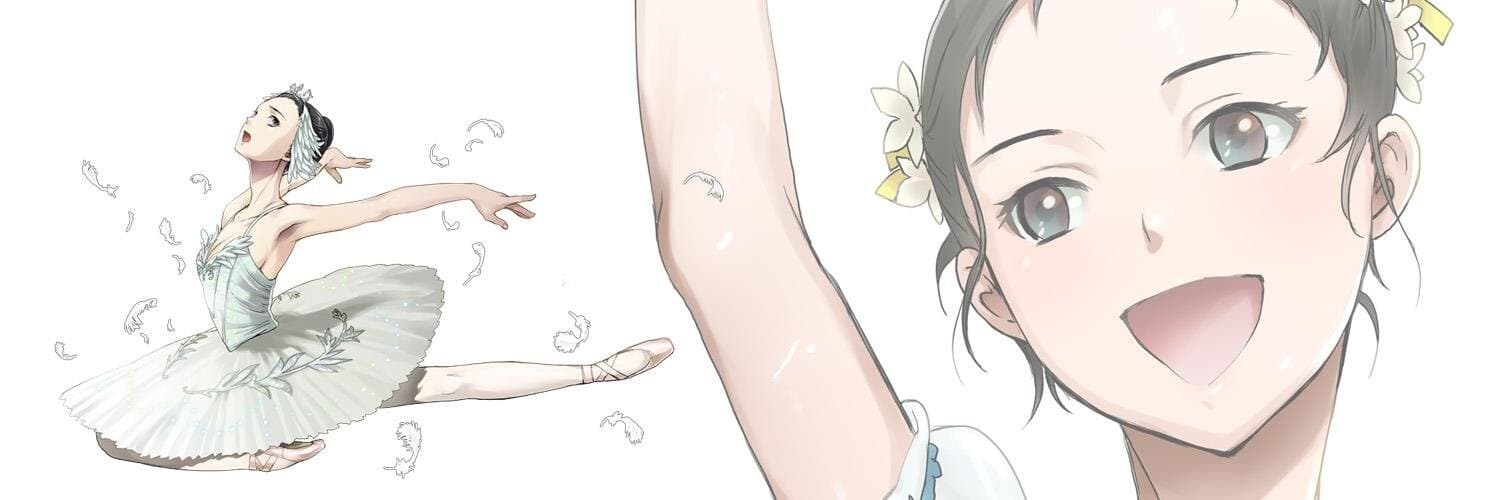
The art is fitting but not the main selling point. I might even call it lackluster at times. I've been told that the anatomy is rough in the first chapters and gets better as the story progresses, but I honestly never noticed it being distractingly bad in the first place. The facial expressions deserve a mention for truly delivering the degree of emotions the characters experience. The face of a happy Kanade engrossed in her dancing is infectious. The paneling, especially during performances, really helps in making the characters shine on stage.
But ultimately it was the story and the characters that gripped me and never let go, leading to a binge-read until there were no more chapters to read.
The Magnificent Grande Scène is an amazing manga that I enjoyed the most out of my contracts so far. I'm unreasonably happy it was suggested to me and I want to recommend it to everyone.
If you enjoy stuff like Akane-banashi, Haikyuu, Ping-Pong, Ao Ashi, or Ballroom e Youkoso, and just want a good story, no matter what the gimmick or exotic sport discipline is, go read The Magnificent Grande Scène.
And if you give it a chance, you might—if just a little—fall in love with ballet just like Kanade.
Score: 9/10
9 - Titles where the combined elements of story, characters, and art created a thoroughly immersive, enjoyable, and unique reading experience. _Personal favourites_with a few noticeable or minor flaws. Titles I consider to be the best of their genre. Titles that could be a 10, but didn't get in because I want to have a limited amount of tens.
5.5 out of 6 users liked this review