
The Greatest Estate Developer is an isekai starring Kim Suho as Lloyd Frontera, the son of a debt-ridden family living in a rundown county on the brink of annihilation. If you’ve heard of The Greatest Estate Developer, you’ll likely have heard of its comedy. Its comedy is crude, childish, and mean-spirited. Except, it’s all the greatest parts of the trope without bordering on the misery of overuse. Of course, comedy is subjective, and the humor might fall flat to different audiences. However, with its excellent ability to juggle comedy and heartwrenching emotional scenes, its knowledge in the field of architecture, and a cast full of memorable characters, this holds its place as one of my top manhwas.
Most importantly, he has money. His actions may come across as condescending, but why bite the hand that pays you salaries worth of meat? A devil with angelic intentions. A Heavenly Demon (not that kind).
Though for this review, I would like to focus on a quote of his:

“Friendship is about give and take.
What do you have to gain by sticking with me?”
The first time I read the discussion between them, I wanted to dispute the phrase. Growing up in an era of entertainment that encouraged community and friendship, I found it bleak. A sentence in which a businessman donning a suit remarks under the influence of alcohol. Perhaps it may be from the innate human feeling of learned helplessness, but I found it comforting to have without loss. In a world where most individuals live without becoming their Greatest Estate Developer, I was afraid my want held no value to those I yearned for community from.
However, on rereading, I find myself corrected. This statement is not portrayed as pessimistic. Instead, I find a growing optimism that propels me forward like the hand of a knight recalling me home. The Greatest Estate Developer develops the idea that true relationships matter not in the absence of mutualism, but a mutualism that covets the individual themself.
Lloyd was able to execute some of his finest successes because of a fundamental reason: his use.

“They just need someone with ability to toil for them.
Someone you can work to the bone.”
Lloyd’s deeds overshadowed the foul reputation accumulated by the former body of his host. Relationships are gained, and bonds stem from a tree constructed through greed and its vessel. In other words, are the benefits worth investing, especially in the pathetic Lloyd Frontera?
As blunt as the sentence alone sounds, Lloyd’s relationships in the beginning were determined by his successes: Javier plants the fate of the estate’s hopes in Lloyd’s hands, the queen desires his efforts for the kingdom, and his parents unknowingly encourage a fake over the real. Although it underestimates the love the characters develop for Lloyd, his efforts would fail without the mutualistic opportunities he endows. Even the iconic ‘Water is good, Water is Lloyd, Lloyd is good’ is mutualistic; the citizens surrender their loyalties to thrive.
Resembling a cycle, mutualism develops and reprises throughout the story. I fell into its humorous familiarity. Then, before I knew it, that familiarity was uprooted.

“...but now I want to know…what life did you lead in your world?”
Javier threw away his wants. Though idolization indeed is its own ‘want,’ Javier admitted himself panels prior that it once mattered little to him who possessed Lloyd. As long as his home was protected, the puppeteer mattered little to his dreams. However, he no longer wanted Lloyd for his protection. Having tenacity himself, he does not covet it. His protection does not stem from admiration.
Javier wants Lloyd…because he is Lloyd. His want in exchange for his devotion is tenacity’s personification. Mutualism isn’t abandoned. Protection is not granted for nothing; it is granted to protect the man himself, because of the man himself. It makes all the more for a heartwrenching narrative with Lloyd’s upcoming dilemma concerning the two.
This mutualism reformation applies to more than Javier. Lloyd’s citizens admit to Raphael that Lloyd held no reason to love them. Their relationship was divided by class and usefulness, with the scales of mutualism burdening one side. In an otherwise resentful setting, his citizens subvert the trope by conceding their liability. Trusting their lord, they were content with bathing in condescension to maintain the ability to dream. Once again, Javier breaks the cycle.

“Lloyd Frontera truly loves and cherishes every member of the estate.”
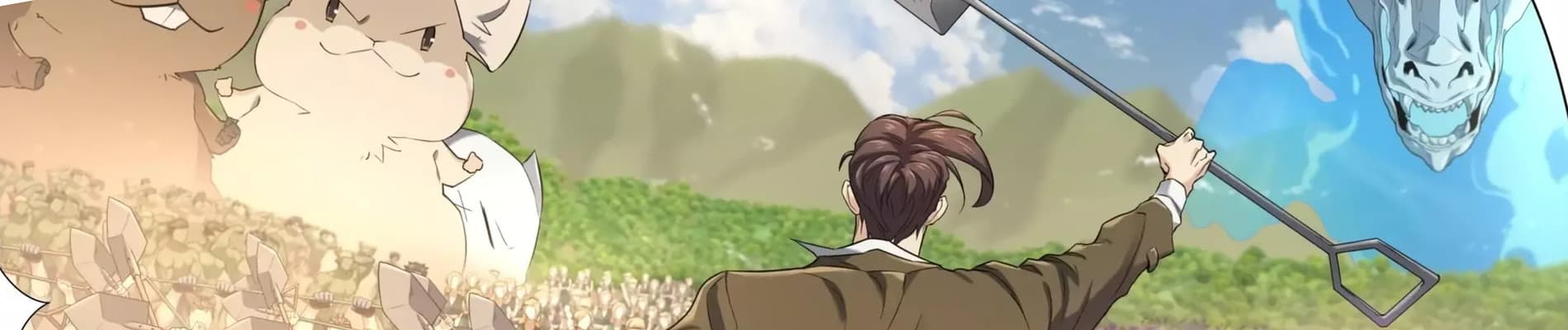
Lloyd was the first person to change; he would always be the first to love for the sake of the individual. The citizens chose to do the same. Each unnamed citizen, every human saved by Lloyd’s actions, was finally able to cherish the privilege to love their lord. Love their lord beyond his actions, but for the reason that they love the man Lloyd Frontera. It is this mutualism that empowers the people to bear arms in defense of the human they cannot bear to part with. It is this mutualism that has the world undergo sleepless nights yearning for his return. It is this mutualism that hangs banners and cleans a weapon as mundane to human life as a shovel.
Mutualism is a narrative that enables Lloyd’s return to feel utterly gutwrenching. Javier holds a calloused hand he would sever if it brought back his friend. His parents love not just their son Lloyd Frontera, but the chaotic imbalance of the world we know as the boring Kim Suho.
Alicia, the queen whose ideals grew from bloodshed, tenderly strokes her husband’s cheek. Not for his bridge, or his treaties. Not for his dragon, or his swordsman. Because Lloyd Frontera…

"...always came running whenever I wished to see him."
Hellkaros’ failure to acquire Lloyd arose from his inability to grasp the concept of mutualism. His strength from his role as king of the hell—a zenith only matched by a select few—isolated him from the basics of a relationship. When subjugation was as simple as a flick of the wrist, there was never a need to give or develop. Perhaps if his time wasn’t stolen by millennia of exertion, he would have understood connection as Verkis had. It was inevitable, as a cycle of nature, that Hellkaros would repeat his mistakes. It was his ultimate lack of understanding of mutualism that allowed Lloyd to stand on the monarch’s height.
The Greatest Estate Developer gives us an eternally old lesson: true friendship comes from true love. Hellkaros failed to hunger for anything more than Lloyd’s capabilities and lost to a crowd who desired one goal for their people. One goal for Lloyd Frontera:
Safety first.
Because Lloyd Frontera is wanted for Lloyd Frontera.
Because Kim Suho is wanted for Kim Suho.
Because the true people who love me wanted me for me.
Because the true people who love you wanted you for you.
Readers might think: Is this not a straightforward, uncomplicated fact? Is it not obvious that real relationships lie with people who don’t covet your use? To that, I respond in two ways:
The Greatest Estate Developer acknowledges that the people who hurt you are not free from sin. Everyone must accept the consequences of their actions. However, it demonstrates that all people can change. To rise and come together as a community. The world is not bright enough to allow all a redemption, but in a world where all of us struggle to become our Greatest Estate Developer? Perhaps a hand may be enough to discover a world of your own.

Secondly, sometimes it’s easy to drown in a world full of land. Sometimes, it’s easy to feel burdened by it all and forget. Forget that with betterment and hope, you will be loved. Someday, everyone will eat beef in a restaurant. Someday, everyone will be their Greatest Estate Developer.
And now I’m hungry.