(Discussed further in Episode 1 of the podcast I am in, Digitized Desperadoes. Here's a link: https://www.youtube.com/watch?v=vfrbf3pJ9dE )
One of the most mature and violent additions to the Lupin series, taking cues from the early anime and, from what I can tell, the source manga in general. Its style is impeccable, its music fantastic, and its writing as compelling and passionate as the woman thief herself.
This Lupin story functions as a alternate universe prequel, taking many mature and “adult” concepts and vignettes to explore the different headspaces of the Lupin cast. While it does clearly have a focus on Fujiko, it also delves into all of the other character’s motivations and backstories, twisting how they met and why. Considering that every character has had at least 3 different “how they met” scenarios, this isn’t much of an issue, and it works pretty well I think!
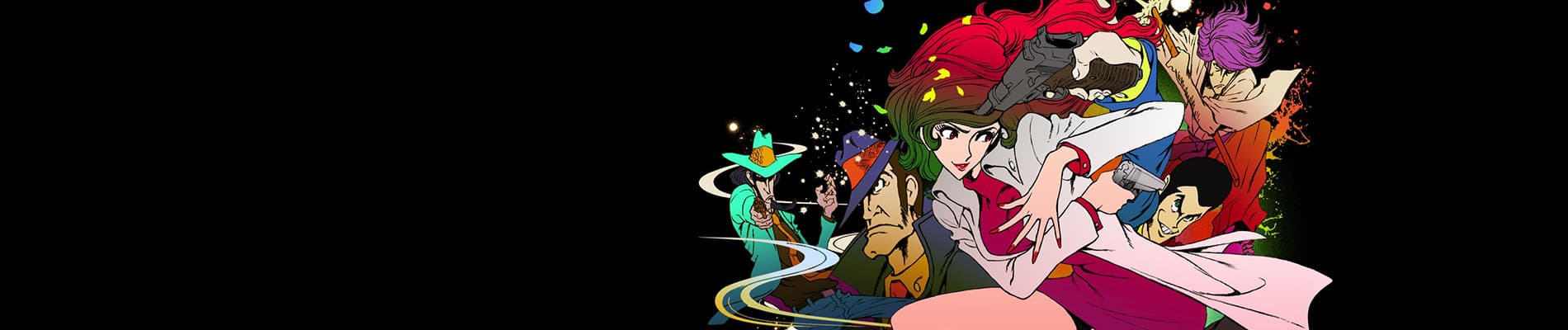
The character’s designs are pretty much exactly the same as the rest of the franchise, but the personalities differ. Jigen is a lot more stubborn, quick to shoot, and lonesome, Goemon is more sentimental and heroic, and Zenigata is basically a corrupt cop who doesn't care what happens as long as he catches Lupin. They are all, additionally, very infatuated by Fujiko at some point, especially Goemon, who actually asks her to be his girlfriend at one point. (Which is insanely out of character, but whatever, it’s a separate continuity)
The writing, however, is very compelling and tells very passionate stories of lust, loss, and identity. Most episodes are separate in terms of setting and conflict, but maintain the themes throughout. There is one overarching plot line that takes up, technically, 4 of the episodes, but they are paced very well and make for a stunning and concise ending.
The visual style and animation is where this series truly flourishes. With direction from people who worked on Michiko to Hatchin, the inspiration is obvious. Delectably grimy and sensual bodies, mixed with vibrant colors that grab your attention immediately. Motions from lanky and awkward bodies move smoothly, with guns and blood galore. It’s beautiful.
My only problems with this series are probably… the over-inclusion of character-original-to-this-series Lieutenant Oscar, and the over-sexualization of Fujiko herself. Oscar is an interesting character, and honestly gets some of the best episodes, but he himself is not that interesting. His personality is two-note. He’s a decent cop and he’s in love with Zenigata (aren’t we all?). Now, having a homosexual character is actually pretty great! Considering the eroticism and sensuality of the series, it makes perfect sense to explore and show examples of every single kind.
Fujiko’s status as a complete dude magnet is also slightly infuriating to me. In other branches of the franchise, there are many men that constantly refuse and denounce her. Jigen and Goemon are some of the major ones, even occasionally threatening to leave Lupin if he doesn’t throw away that nasty woman (see Secret of Mamo). But in this show, every single man is instantly charmed. Even old man Zenigata! I suppose some of them are less blatant (Jigen is always his stubborn self) but the twist on well-known characters doesn’t fly too well, even in a grimier world.
Anyway, Lupin III: The Woman Called Mine Fujiko is an artful ride, with plenty of surreal imagery and metaphorical messages. It’s a delightfully mature and violent tale of finding confidence in who you are, and discovering how far you are willing to go for your passions. Despite all the problems Lupin fans might have with it, it’s artful, beautiful, ambitious, and in my opinion, successful. 9/10.
6.5 out of 7 users liked this review
