
After the Rain
a review by AndoCommando
a review by AndoCommando
Love is like After the Rain. In the midst of stormy conditions you can either comfortably wait inside until the weather dies down or choose to face it head-on, pressing forward through the torrent and seeing where it takes you. Similarly, passion is like after the rain; once drowned out it can leave you confounded and lost with grey clouds hanging overhead. What once before had consumed one’s lifestyle is suddenly pulled away, no longer part of who they are and now must come to terms with this. In After the Rain we are shown two characters, each on the surface seem completely different to one another but upon closer inspection share a comparable suffering – they are both burdened with the feelings of a lost passion.
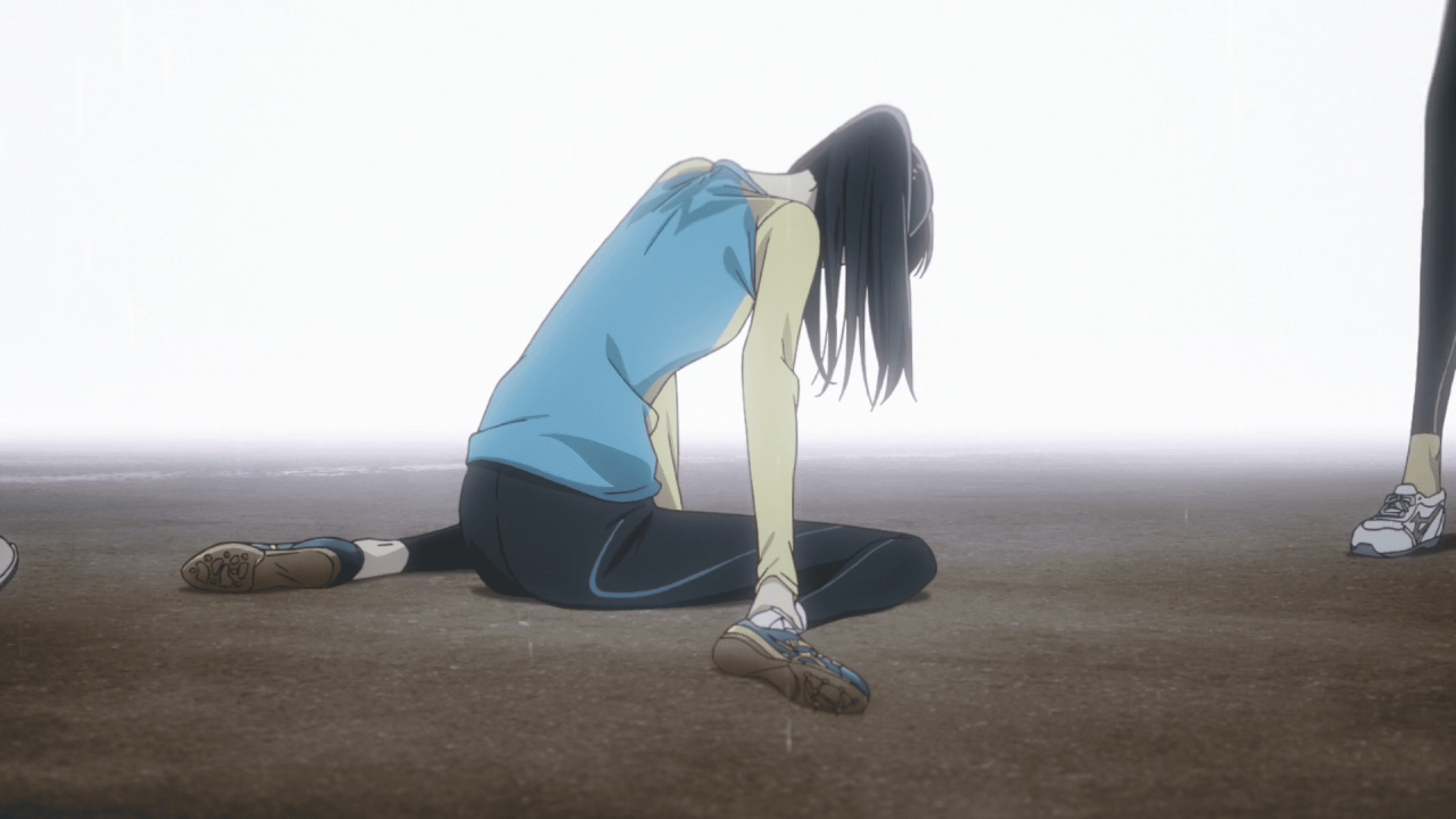
High-school sophomore Akira Tachibana is obliged to give up track-and-field after suffering a torn Achilles tendon. Up until this point, running had been part of her life since her earliest memories, almost becoming an instinctual part of her. Now having been ripped away from her passion she finds herself detached from her past world; stumbling along mere sidewalks by her lonesome self, enveloped in a constant downpour that doesn’t appear to let up anytime soon. Akira as shown on numerous occasions is very emotionally-driven, her feelings never bottled up and always fuelling her actions. Now facing the reality of her situation alone, she is at the lowest she has ever been. But one day, whilst sitting inside a family restaurant staring out at the rain, the manager approaches her with a cup of coffee on the house, performs a cute magic trick before saying to her:
“It’s boring when you’re just waiting for the rain to stop. I’m sure it’ll stop raining soon.”

This alongside his act of kindness captures her heart and results in Akira developing a childlike crush on the man, subconsciously filling the void her injury left with an almost unhealthy love for Masami Kondo, the manager over twice her own age. Going so far as working under him at that very restaurant, becoming more and more committed in confessing her feelings to the man. Considering the subject matter, this series walks on very thin ice with focusing on an implied romance between a young girl and a middle-aged man, even testing the waters at times with her confession leading to a date between the two. But where many other series would have faltered, After the Rain handles this relationship with a level of grace and tactfulness rarely found in anime. It evolves from a simple age-gap romance generally considered taboo to deliver on a tale that focuses on the couple as individuals, each having lost something integral to themselves in the past and are both still learning to cope with.
Masami Kondo may seem a typical kind man on first impression but his life up to this point has been far from what he once hoped for. He is constantly burdened by what could have been – an avid writer in his youth whose material unfortunately never gained popularity and coupled with a failed marriage, leaves him with an attitude of complacency. His adoration for writing heavily implied as the driving force behind his divorce and losing custody of their child, a tragic turn of events that left his family broken and eventually caused him to abandon his writing. Now whenever his past career work is challenged, he simply blames it on age and sees any serious attempt to change such is inconsequential. He is content in reminiscing about the love he once had bitter-sweetly, afraid of potentially tainting the memories he still cherishes.

Both our main characters have felt the pain their passions led them to, Akira physically with a severe injury and Kondo emotionally with his family fractured in the process. Both are pushed away from what they lost and have grown fearful of the hole left in their place, afraid of ever returning to them. Kondo is fine reading the words of others and scribbling down notes when working, but at his desk with pen in hand he can only stare at the sheet in front of him, his thoughts never put to paper. Alongside being reminded of his past failings in the form of his highly-successful college friend, he is unable to take that step towards rekindling his passion. Akira is still willing to talk with her friends on the track team, but now doing so is coupled with a feeling of disconnect and angst, stranded alone and forced to watch their practice from the sidelines. Every time she tries to run she’s left injured in the process by her lost love, akin to an abusive relationship she just cannot seem to overcome.
On that day when Kondo offered her coffee they were only strangers, unaware of what has happened in the other person’s life. What Kondo did know however was the look in her eyes; the longing gaze of someone who’s lost and mourning something important to them. He knows it because it’s the look he shows whenever alone. Staring into the rain at night with cigarette in hand, reflecting on what he once had, his position in life and how he ended up there. Despite the difference in age Kondo is able to empathize with Akira, birthing a stronger connection between the pair from the parallels of their situations. A crush from the teenage girl does initially result from this and while there are moments throughout the show that hint towards romantic feelings being returned by Kondo, the overall approach is cautious and thoughtful. Her fondness for Kondo is illustrated as simply infatuation born out of immaturity and never becomes a path to shape her future. Not only are her feelings never taken advantage of by the older man, but what began as a school-girl affection morphs into a deep mutual respect and understanding between two damaged people.

Love is like After the Rain, but not in a romantic sense. Instead it aspires to depict the rekindling of a lost love that has plagued both Akira and Kondo’s lives. Here lies a story of two people with their own problems that are able to help each other work through them. Allusions are a core aspect of the series used to convey the issues each main character faces, both visually and metaphorically. When referring to the short story “Rashomon”, Kondo suggests he is too far gone to try writing once again, claiming he does not possess the energy and determination required for it. In response Akira tells him that his regrets aren’t something to wallow in, instead use them as motivation to return to that love that constantly spurred him on. For Akira, her fears of running again are finally addressed when having a conversation around a swallow that had trouble leaving the nest. Asked if the bird could have been happy staying behind in the nest, Kondo asserts that while there might be happiness found, it would forever look up and long for the skies. These moments end up being the push both needed to take the next step forward in their lives. Both have realised they each have a lot to work on as individuals and neither are ready to give up on the dreams they hold dearly in their hearts yet. And so, they each go their separate ways.

As the end credits roll, a melancholic theme plays set to a race track flooded with rain, only to transform into a bright one as the sun breaks through the clouds whilst the tune meets its climax. It’s a gorgeous representation for how the series closes with both Akira and Kondo coming out of the storm stronger than before, ready to face their passions once more. No matter how long darkness and feelings of uncertainty loom over, there will surely be a light that follows. Amidst the rain seeds of romance were planted, but now that the rain is over do they have the chance to flourish. Whether their relationship still holds romantic love or not remains to be seen. But from a year praised as one of the best for anime, I know there’s at least one show from that year I still hold great fondness for.
27 out of 28 users liked this review
