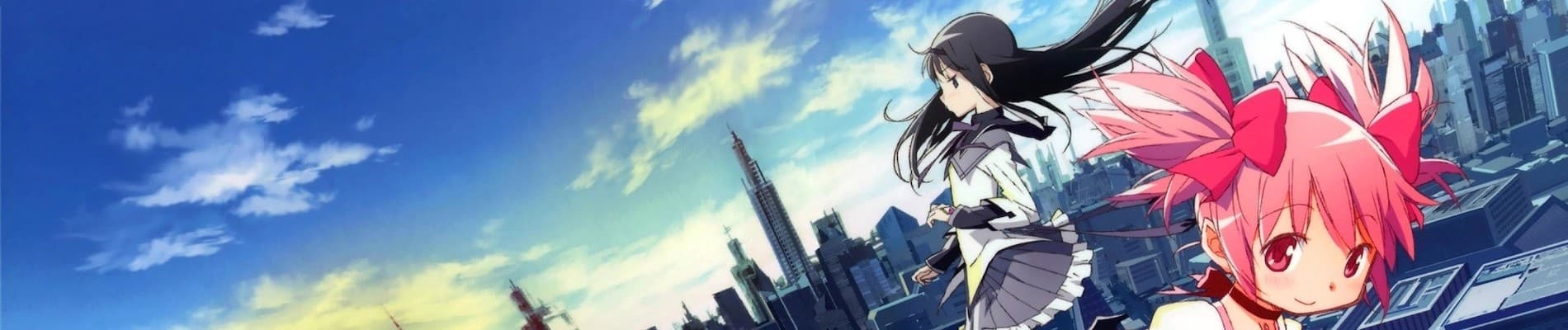
If you haven't heard of Madoka Magica, you might have suspected that it was a magical girl show. If you have heard of Madoka Magica, you probably know that it's a deconstruction of the magical girl genre... and a pretty damn grim one, at that. Don't let the happy, bubbly art style and cute little pink-haired main character fool you, because that's exactly what they're made that way to do. This is not the feel-good series you may have been hoping for.
Writing: Let's be frank. This series is written such that it's supposed to regularly throw you for a loop. If not for Netflix tagging the show as "dark" and "ominous," I would have been rather surprised by the twists, to say the least. The only reason I was able to consistently predict the story was because I jokingly started expecting the worst possible turn of events and was repeatedly proven right. ...of course, now that I've said that, you'll probably go through the same experience. But, it's still interesting to watch the deconstruction of a genre that's known for being totally feel-good and free of depression by nature. The plot is pretty well-written for the most part, the characters are varied--you'll probably end up liking some and hating others. All in all, a damn strong showing in the writing department.
Art: The show's art can be neatly divided into three categories: The characters, the outer world, and the labyrinths. The characters' art style can be a little jarring at first, due to the contrast between the super-moe babyfaced character designs and the dark colors that the plot often calls for, but you get used to it. The characters also have their eyes drawn in such a way that they look perpetually glazed over and "dead," but that's just another artistic quirk. The setting of the outer world and its backdrops are very... surreal... but in a conservative sort of way. The world of Madoka is a very interesting one in its futuristic but totally inconsistent architecture. It's very fun and artistic, priorities clearly placed high above its realism by the designers. If the design of the overworld were an artistic movement, it might be Cubism or Bauhaus. By contrast, the "labyrinth" areas, alternate spaces created by witches in the series, might be called Expressionism or Surrealism. It's in these witch encounters that the animation really shines. The setting changes drastically to a much grittier, more abstract style without defined boundaries, and the fluidity of the character movements doubles for the fight scenes... not a choice I particularly respect in anime production, but admittedly fun to watch in action.
Sound: The soundtrack ranges from ordinary to excellent, in my opinion. Most of the music is fairly mundane and not something I would listen to by itself, but every now and again you'll get a track that stands above the others and really brings the series to life for a minute or two--in my case, it's a theme that sounds reminiscent of Susumu Hirasawa's compositions (Paprika, Paranoia Agent, Berserk). I haven't spent any time with the Japanese dub of this series, myself, but the English is passable. Not fantastic, but certainly not bad. Character voices are very stereotypically "moe," a choice made intentionally to mislead viewers on the nature of the show... and one that does bring home the point of how out of place the characters eventually find themselves in the situation they've been placed in.
If you like things that are dark and morbid with a strongly-written storyline and a sound ending, Madoka may just be worth your watch. If you like magical girl shows with bubbly heroines and lessons about love and friendship, prepare to be let down. Perhaps my pointing out the show's dark nature has lessened its impact on some of you reading this, but I hope you give it a chance regardless--the plot is a spot above the rest, and the ending is truly memorable.
72 out of 84 users liked this review