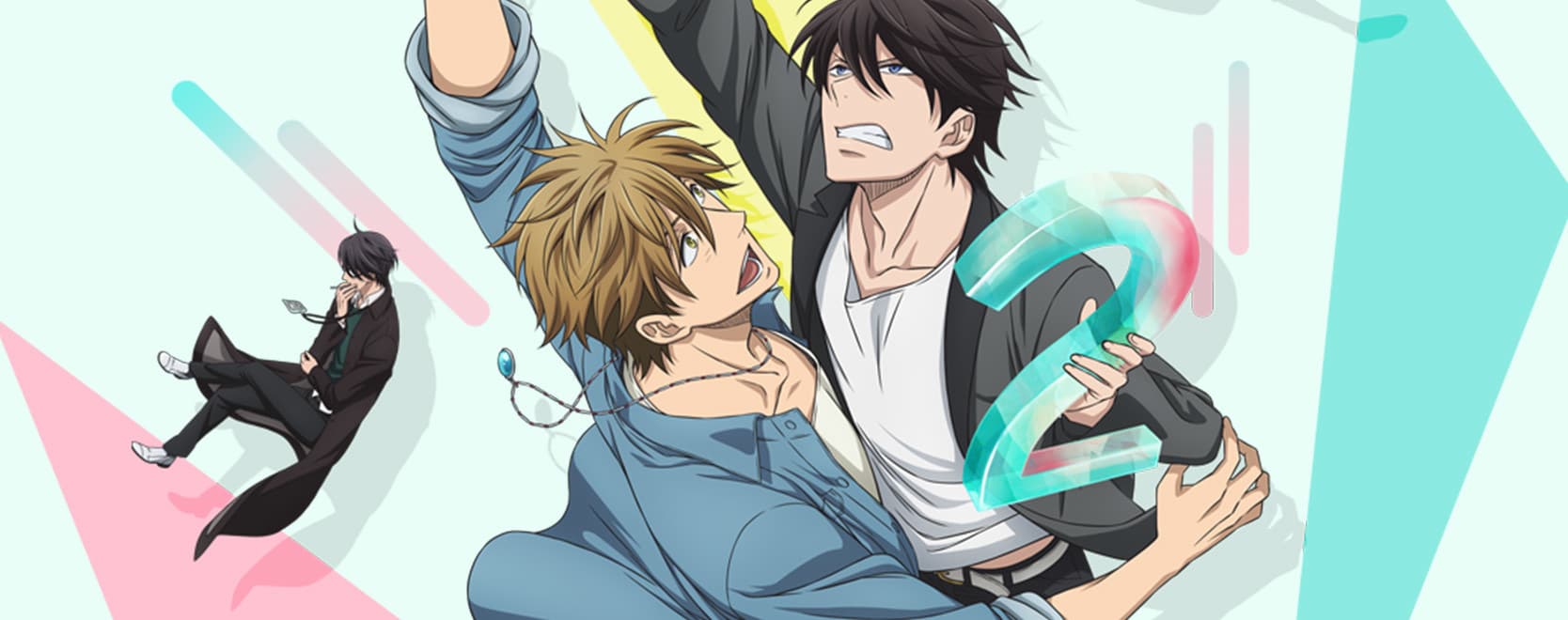
The plot summary for this show had me expecting a deeply problematic premise I probably wouldn't be able to sit around for. If you've seen almost any Boys' Love anime before, you know how creepily dubcon things can get (sometimes verging on or becoming full out noncon). It's...not comfortable...even when they eventually get around to confirming that yes, the Uke really does want the Seme. But actual Boys' Love anime is extremely rare, so I tend to give this genre more of a chance than I would otherwise.
And to my deepest surprise, that chance has finally (finally) paid off.
See, the plot summary is highly misleading. In the first episode, a deal for sexual favors so that compromising footage will remain hidden is brought up and, yes, the over-eager Junto pounces on the idea in order to get Takato into bed. But all of that ends there. No sex is had in that context, and it's not the overarching plot of the series, not even close. What emerges instead is a risky, fascinating, and surprisingly deep dive into dismantling the "Outward resistance to physical affection as a result from inward gay panic" trope.
They do this by subverting several other tropes and expectations, chief among them the Tsundere/Deredere roles. By flipping expectation on its head, we now have the sexually aggressive dominant as the sweet, adoring, sanguine, Seme Deredere, and the entirely submissive, please-god-top-the-hell-out-of-me Uke as the Tsundere. This makes for a compelling character and relationship dynamic that you really can't find anywhere else. (If you can, then I haven't seen it, and feel free to tell me.)
What makes the setup really shine, though, is the problem they give Takato, the Tsundere Uke: the core of his being does not want to be a Uke/Submissive. In his mind, he's supposed to be the suave, untouchable Seme/Dominant and dammit, that's exactly what he is. So when he's confronted by the truth, and it's as polar opposite to his expectations as it can possibly get, this triggers a long and significant internal struggle, and THAT is what makes up the series.
However, all of that isn't readily apparent at first. For an episode or three, it kinda looks like business as usual. The Seme doesn't really take no for an answer and the Uke protests and protests but doesn't really fight back so he must want it, yeah? But trust me, stick with it and you'll see them flip the script in real time. They turn what is unfortunately typical into a real damn love story with enough character exploration and legitimate romance to please anyone.
I realize this makes the show sound like a big, super serious drama. It is very much not. It's a shiny romantic comedy with just as many tropes they're faithful to as there are tropes they subvert. The overall structure is textbook. The twists and turns and Big Last Problem are all there. It's everything I've talked about before now that mixes into the old formula and really makes it something new, with more depth than a show like this has any right to have.
Another thing I appreciate is the presence of sex and sexual contact throughout this relationship. Not because I'm a pervert, but because anime has the distinct habit of either being all love and romance and feelings or all sex (which descends into perversion and consent issues). This series finally integrates the two so that we can get a fuller, richer depiction of this love story. And given the emotional ground they needed to cover with Takato, skimping on the sexual aspects would have harmed the story as a whole.
In terms of flaws and drawbacks: While they do contrast Junto's overeager thoughtlessness with a couple of actual intent-to-harm scenarios, the chief character who winds up almost crossing the line is given a 180 degree redemption arc in the blink of an eye. I'm not entirely sure why they chose to do that, since they could have just left him as an antagonist and pushed him into the background to save time. There's also a bit of intrigue that's dropped with a tertiary character late in the game that is never explained. It could have been a tease for season two, but I have no idea where they could take the show from here? In general, the supporting characters aren't as developed as I would have liked. But as far as storytelling crimes go, that's far outweighed by all the good that's here.
Dakaretai promised to be another shallow delivery of dubious intent, and wound up delivering on almost every single thing I've been dying to see from Boys' Love/Yaoi since I first found anime in my teens. I always appreciate a love story that starts out in genuinely risky, messy narrative territory, where you're left wondering how on Earth they could possibly spin a genuine romance with the characters involved. The Captive Prince trilogy was the first time I'd ever seen it done damn near flawlessly, and now Dakaretai makes the second.
***If you are particularly sensitive to consent issues or they're a hot button issue for you, I recommend watching episode seven first. It will give you a lot of foundation as to why Junta behaves the way he does in earlier episodes and in general.
19 out of 21 users liked this review
