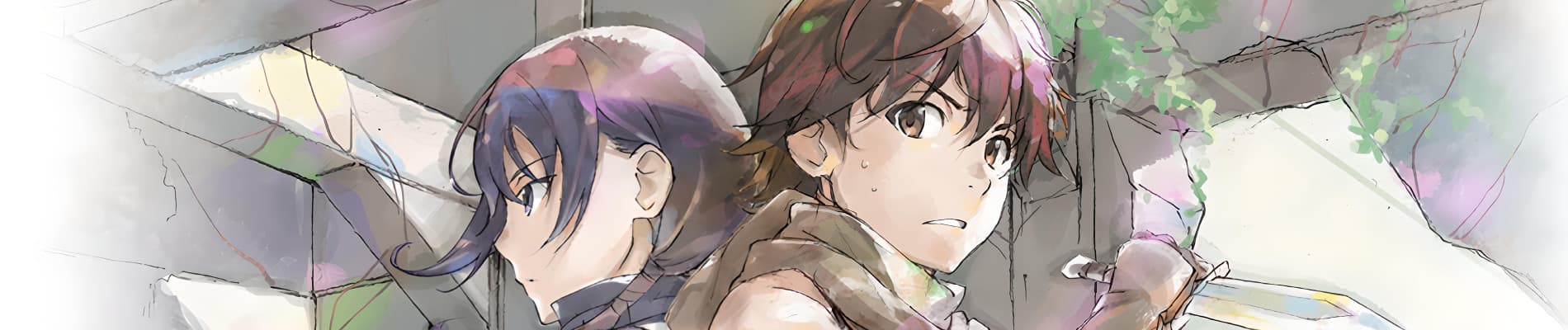
Hai to Gensou no Grimgar (Grimgar of Fantasy and Ash) is a fascinating morbid take on the issekai genre. The show strays from issekai, almost as if it is meant to poke fun at standards commonly associated with issekai shows. Grimar starts in the middle of a group of adventurers' journey, after they have already formed and speeds through their formation as a flashback so the viewer can concentrate on the important part of the story: the story itself. This was something I really appreciated, because it's very irritating to sit through the characters in the show learning how their world works and meeting other people in it and other world building. Grimgar's speeding through of this mundane part of issekai was greatly appreciated and this new strategy of characters having a decent amount of knowledge about their world before the story starts can be seen in shows today, most notably The Rising of the Shield Hero, which aspects of this show can clearly be seen in. Instead of delusions of grandeur and insanely overpowered main characters with amazing special abilities able to take on any villan they face, Grimgar has a group of adventurers fighting just to survive daily, initially struggling to kill the even the most basic mob, a goblin. The show deviates from other issekai shows further in this scene, in which the main character realizes that the goblin is also struggling for its life, desperate to survive and his group and the goblin's survival are in immediate conflict. As expected, their journey is not an easy one, morally or physically. As a group, they experience heavy loss and grief.
Spoiler, click to viewclick to hide
This is highlighted when their leader dies and another character, the thief, must take his place to lead his group. The grief the characters experience from this death is also unexpectedly realistic, with characters, especially the new leader, unable to come to terms with the death of their comrade, and the new leader conflicted about how he will be leading the group from now on, as he needs to grow into his new role as the group's leader and get his members to move on from their loss as well, while he is still struggling with it himself.
The characters are also incredibly real, with each character having their own faults and weaknesses due to their personalities which we get to see because the group members all get their own character development and are properly fleshed out, which is very rare to see in an issekai anime. The characters are all different, and this difference leads to a very unique relationship between the characters, with some having difficulty communicating with certain characters, occasionally leading to discord within the group that the characters struggle to resolve. However, when push comes to shove, the characters show their dependence on one another and camaraderie. Their reactions to one another after events occur in the story is also very realistic, with each character dealing with it in his or her own way. The show is a (possibly satirical) masterpiece, plot-wise and was unlike any other show in its genre when it was released, but shows similar have started to rise and have been met with praise (a pun on my example).
I do not consider myself an artistic person, but the artwork for Grimgar was incredible. As I said, I am not a very artistic person, so I cannot quite describe it or identify why I feel this way, but the artwork for Grimgar is truly unlike anything I've ever seen before in any other show and the scenery simply looks magnificent.
Sadly however, likely due to it being such an unconventional and unfamiliar use of the issekai genre, not many people know about it, and likely as a result, it never got a second season. Grimgar of Fantasy and Ash is an incredible show that not many people watched, a shame, because they missed out on something really great.
Thanks for taking the time to read my review, I hope you enjoyed it! I really hope you consider watching Grimgar, because it's really just a great show that I can't recommend enough and it's one of my favorite anime because of how it subverts most common issekai tropes and still makes itself into a exemplary anime.