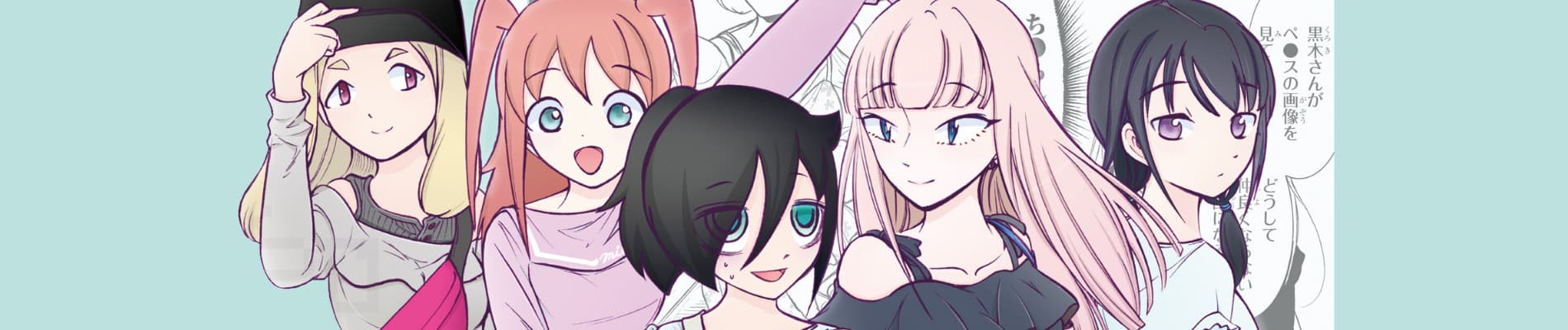
If you don’t find any of Watamote’s early antics vaguely painful or relatable, then congratulations, you probably had a good, un-regretful adolescence. But there’s a reason why Watamote garnered so much initial attention, and why its protagonist was welcomed into anime fandom with open arms, as Watamote began breaking similar ground to Welcome to the NHK, (except on a more familiar, and less tragic scale) it's easy to imagine oneself in Tomoko's situation and to recall one's own pains, though one of early Watamote's greatest weaknesses is perhaps that it's too content to wallow in its gag manga status. Its protagonist Tomoko is the embodiment of a socially anxious, unpopular girl who does her best to be popular, and you can imagine how well that goes. Initially, I found these antics amusing. After all, I’ve reached a point in my life where I feel like I could at least laugh at my past misdoings, but somewhere along the line it became almost painful to continue. Tomoko’s stark loneliness in the face of constant social defeat became almost distressing to read about. Small moments shared between her friends Yuu and Komi-something (basically the only other supporting characters worth mentioning) became sparse and dull, but worst of all, Tomoko herself stayed a deplorable pervert. It did not feel that Tomoko would ever achieve the needed introspection to realize why she was struggling so much to make friends. And I began to wonder why I wasn’t dropping the manga… of course, by now, you may have glanced at the score at the bottom and asked yourself, ‘Wait, what’s going on? This sounds terrible.’ But I’ll get to that in a bit.
Ultimately, your early experience with Watamote hinges on how much repeated cringe humor you can really take. Though, it is hard to talk about Watamote, or at least it’s manga counterpart without addressing the elephant in the room that makes up its genre shift. It happens so cleanly that some chapters afterward, I began to feel the strange possibility that it might all have been some fever dream in Tomoko’s head. Watamote doesn’t really hit its stride until volume 8, and so this review might mostly be for the people who would have considered dropping it before this point - though you can fairly argue that 8 volumes to get anywhere is a long investment. During Tomoko’s class trip in her 2nd year of high school, Tomoko is chosen as a group leader and naturally ends up with all of the other people who couldn’t be with their friends because their respective cliques had too many people for a group. And it’s in being with this group of people that Tomoko finally starts coming out of her shell, and subtly changing as a character. Tomoko tries harder to connect with her new friends, and despite various misunderstandings and Tomoko’s general attitude problems, it’s a change from how Tomoko has usually carried herself. As these other characters are given reign on the last day of the class trip to return to their respective cliques for their free day, Tomoko isolates herself. Though she wants to reach out and be friends with everyone else, realizing that they all probably want to be with their friends instead becomes painful and in a stunning display of character, for Watamote, at least, Tomoko pushes them away. And on this melancholic note, I thought the arc would end. But, Tomoko’s new friends seek her out. One of the new, and more interesting characters that gets introduced this arc, Yuri Tamura, has her own struggles with loneliness, and with this in mind, Tomoko’s reunion with her new friends becomes downright heartwarming.
It’s my own belief that Nico Tanigawa began to notice a decline in popularity in Watamote during its initial 8 volume run, and sought to drastically change it, because following this class trip arc, new characters are introduced, old, seemingly shallow, characters are revisited, and Tomoko is written to be a lot more likeable. I’d hate to spoil any more on these new and old characters, but the relationships and dynamics between these characters spring the manga into a new light, and really make me appreciate Tomoko’s climb from the school loser, to basically a center of attention. Tomoko’s initial cringe compilation is given meaning through these later interactions, such as her passing interactions with the student council president, and all of these events combined, make it easy to root for her as someone who struggled in loneliness for two whole years of her school life. Though to talk anymore on these new relationships would be spoiling what ends up making Watamote so special, and one of my personal favorite manga. It’s amusing to note that the older characters, like Yuu and Komi-something, feel very dry and one-note compared to the newer, more multi-faceted and sometimes just plain funnier characters that begin entering the scene. Though, at least Tomoko’s younger cousin, Kii-chan stays an amusing psychopath. But if you’re one of the few who have just started reading it and love the cringy stuff then uh, sorry, but it stays really good, at least!
49.5 out of 52 users liked this review
