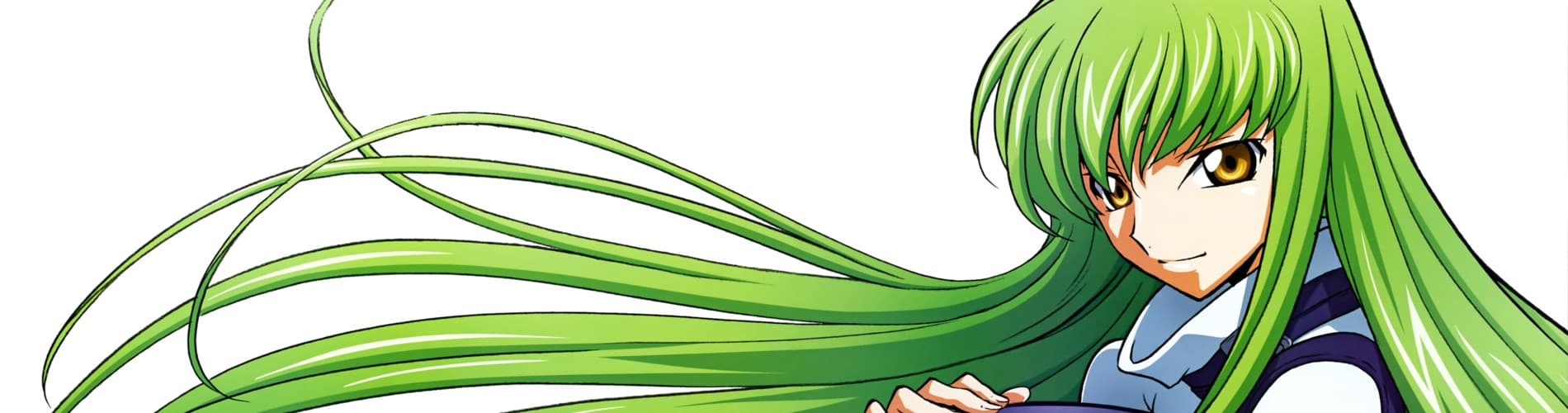
spoilers for Code Geass R2 and Geass Movie 3, and minor spoilers for this movie
And there I was, terrified. “There’s no way this could work,” I said knowing of Zero’s past oversights and inability to come up with decent contingencies and rewrites. I’ve witnessed imbeciles foolishly latch themselves onto his name and provide nothing of value, unless you count unnecessary complications as valuable. I’ve seen him redo ideas to mixed results, and tamper with the inexplicable. As the moment of truth came, I cast my fears aside and prayed for a miracle, as a fellow Black Knight.
Somehow, we made it, if not in one piece. Zero is the miracle worker, after all.
Revival sequels are a strange gamble. Often without the vision of the original team, these titles are put up against nostalgia. They’re confined by the rules and possible mistakes of their predecessors, as well as the expectations of those who cling to them. When looking at the likes of Diebuster or FLCL Progressive for example, I see nothing but mockeries of their predecessors and misunderstandings of what made them popular to begin with. Even the better examples I’ve seen such as the 2018 Halloween sequel and Star Wars: The Force Awakens are still decent at best, therefore still incapable of stacking up to their predecessors. When you consider the legacy of Code Geass, how monumental the series finale was, and how messy its second season was, it’s hard to see this film justifying its own existence, let alone living up to either season. While this film never entirely succeeds at either, the fact that it doesn’t fail miserably is a miracle in itself.
There are a few aspects of the film’s narrative that I must praise. For one, they finally tried explaining C’s world instead of leaving it as a convoluted nonentity connected to a bunch of disparate, inexplicable aspects of Geass such as the Thought Elevator and how most of the new Geass powers are tied to the insecurities of the characters that wield them. It makes just enough sense for me to not question everything about it. The way they use this to justify Lelouch not being dead mostly adds up when you consider what happened in R2. The revival aspect was the main thing this movie needed to justify, and it did so while fleshing out something that both demanded scrutiny and damaged Geass R2 so heavily.
The subsequent reunion scenes were generally solid, touching on the baggage most of the characters had with Lelouch in ways perfectly befitting most of these characters, even if the way they handled the major reunion and Lelouch’s character in the first leg of the film was questionable. Despite that and how the characters tend to stand around and talk instead of shoot, the film’s narrative is relatively functional. Most of the film’s setpieces work well, and every scene that touches on the former student council and most of the characters not heavily involved in the plot was handled in sweet and satisfying ways. It has a surprisingly decent final climax, and an incredibly interesting mental and supernatural chess match between Lelouch and the film’s gorgeous main antagonist, Princess Shamna. On the surface, the film’s plot is serviceable.
That said, it wouldn’t be a Geass narrative if it wasn’t a mess, and it all revolves around the antagonists and their nation. The kingdom of Zilkhstan apparently suffered as a result of the Zero Requiem, which was meant to help restore peace and unify the world. They’re a war-torn country who was so powerful they once took down a Britannian army twice its size, and the pair of main antagonists, Shanma and Shalio, want to restore it to its former glory using C’s world. There are three major problems that destroy this entire thing. First off, where were they during the main series? They didn’t even try to justify the nation’s lack of involvement given their supposed strength and how their specific powers would have thrown everything out of whack for all warring nations in the original series. Given that they fought Britannia once, why did they stop, and when did they fight? Perhaps answering all of this would have been too difficult, and I currently can’t come up with a good one myself, so this seems like a lose-lose situation.
Problem number two: the fact that the kingdom became war-torn following the Zero Requiem defeats the purpose behind the plan. Sure, this follows the film trilogy’s continuity, where the plan was only a step in the right direction towards world peace instead of an automatic win for world peace, but there shouldn’t be any signs of war. In fact, barring the fact that the kingdom started the conflict in the first place, there aren’t any. We don’t see anything resembling a war-torn, broken country. It’s literally just a third-world country. Where’s the chaos? Where are the casualties? Where is anything resembling compelling evidence that this kingdom was brought to ruin post-Zero Requiem? It’s the sole reason behind the villains’ motivations and we don’t see any of it, making us believe that these characters are just power hungry instead of the desperate souls they are. More on why these characters don’t work later, but keep in mind that this is one of the two main reasons the antagonists are less than the sum of their parts, and it’s the final reason the kingdom of Zilkhstan doesn’t work.
Note: Apparently, the idea of them being war-torn was a change made in the dub, as they were noted to have been a mercenary economy in the subtitled version. While that would ultimately justify why they were impoverished once the Zero Requiem kicked in, it still doesn't make the antagonists of the film any more compelling, as they merely tell the audience that "our kingdom is in ruins so we had to do this" without us actually seeing any kind of economic ruin. We can't get a proper view of their kingdom to help us sympathize with them and the extremes they go to in order to salvage their nation. I have no idea why the dub changed them from impoverished mercenary economy to a war-torn nation as that just makes things worse, but at the same time, it's not like we get to see their kingdom in ruins so it's difficult to care no matter what version you're watching. I just had to point this out after receiving comments from others who have seen the film in the sub format.
To go back to the film’s positives, let’s look at some of the characters. Lelouch himself, barring the questionable state he was in the beginning, is as charismatic a Char clone as ever. He carries this film, both in terms of personality, and in terms of how they deal with his errors and lasting impacts. He’s taken to task for the emotional turmoil he’s caused, and we’re reminded that underneath the mask of a magnificent bastard, he’s a tortured, petty soul whose ability to handle being forced to rethink his plans is still lacking. Surprisingly, in spite of having no new character arc to follow up his long, arduous, series-spanning character arc, Suzaku stands out as likable, and even consistent. He’s not the hypocritical douche he once was, but he’s every bit as emotional, and his hang-ups regarding Lelouch’s return are some of the most believable in the film given his character.
Sadly, it goes downhill from there for a variety of reasons. Simply put, barring the return of the hilarious, sassy and borderline sociopathic scientist, Lloyd Asplund, the series seems to have run out of charisma for its characters. This is most noticeable with C.C and Jerimiah Gottwald. The former was a sassy, sarcastic, snarky vixen whose banter with Lelouch and his allies made for some of the funniest moments of the show. The latter was a monumental ball of ham across both seasons. Both characters are robbed of these traits, and even though C.C is now more important than ever before, her attachment to Lelouch and the insecurities she would often guard are given infinitely more focus than anything else about her. Sure, some of the banter and antics of the characters kept entirely intact are some of the most charming and entertaining parts of the film, but it feels like they have a hard time writing the personalities of most of the other characters without at least a little bit of strange deviation. Most of the reunion scenes were still great, but a lot of the returning characters that are remotely active in the main plot don’t feel quite right. If nothing else, the student council and scientist characters from the show were kept intact.
The new characters are easily the worst ones in the film. The secondary antagonists are incredibly one-note and leave little in the way of charisma despite how much screen time they take up. The main antagonists, Shamna and Shalio, are their own anomaly. The film tries to make us sympathize with them and see them as broken, desperate individuals rather than bland, badly-written characters, but this fails for two reasons. Firstly, we don’t actually see their kingdom in a horrible, war-torn state. They just tell us that it is and that this drove them to take drastic measures. As a result, we can’t feel for them and how much they claim their people have suffered for them. The second reason they fail is that half of the time, Shamna and Shalio are simply portrayed as a generic, power-hungry ruler without morals, and an angry, bloodthirsty psychopath and cult lunatic. Those portrayals are at odds with one another. As a result, these villains feel like half-baked characters that don’t truly commit to being either kind of antagonist. Even if they’re not the worst main antagonists this franchise has, they’re honestly less than the sum of their parts.
The surreal, mixed bag quality doesn’t stop at the writing, as it impacts the visuals as well. I have one question to start with: why didn’t they use the updated art style of the remake trilogy? That art style was a perfect recapturing of the original, as it provided more detail and polish than ever before. The new style isn’t bad, but it isn’t as good as what was given to us this past year. To be fair, most people likely wouldn’t notice, as it’s still a functional update of the original art style. Still, if they were gonna make it less detailed than in the trilogy, they could have allowed the characters to move more. It’s not badly animated or distractingly limited like in most of the Akito films, but even the original TV shows had more 2D animation than this. That doesn’t mean the artwork isn’t pretty, even though it’s surprisingly inconsistent. However, it’s partially put to waste when the new character designs are a total mixed bag. Some of the redesigns look stellar, but barring Shamna, the new character designs look anywhere from mediocre to just awkward and practically overdesigned.
Another major problem is the CGI, as the sort of Gamecube cel-shaded CG machines look and feel borderline uncanny at the best of times, and horrendous at the worst of times. There’s even more of it than in R2. What’s all the more baffling is that the Akito films actually got this right with the later films, making the mechs look metallic. Why didn’t they opt for that look? It’s not like the mechs have that much movement anyway compared to the TV series. Hell, there’s only one breakdancing mecha action sequence in the film. Speaking of mechs, the new designs are god awful. The clunky, Mobile Armor-esque armors surrounding the iconic Lancelot and Guren units are just ugly, CGI or no. The antagonists’ mechs look ridiculous as well, and one of them is a scorpion mech, which damages the design philosophy of the franchise’s mechs in a way not seen since the spider and horse mechs of Akito back in the first half of this decade. The CGI doesn’t stop there as they decided to make C’s world CGI for most of its scenes, and that was a terrible idea. The production is overall subpar for a film release, and while not the worst the series offers in the visual department, is still not even on the level of the first season back in 2006.
The audio presentation is also a disappointment. Kotaro Nakagawa actually managed to disappoint me with the film’s new compositions, as not a single one of them stands out. None of it is bad, in fact, they’re serviceable. However, given how bombastic and magnificent the OSTs of both seasons of the original were, it’s a massive step down. It makes me glad they decided to reuse some of the original series’ tracks, as they were the most noteworthy pieces in the film. In fact, I wish they used more of them. As for the opening and ending credits tracks, they are also decent tracks, even if they’re not ones I would go out of my way to listen to. I also feel that the dub is weaker than it should have been. Most of the returning female voice actors sound off when you compare their performances here to the TV show. C.C is the most obvious example I can point to. Most of the actors voicing the new characters give subpar performances, with the only exception being Elizabeth Maxwell as Princess Shanma. As for the returning male characters, they’re also a mixed bag. Lloyd, Lelouch, and Suzaku are voiced just as well as they were originally, but the other male characters range from decent to mediocre. Even Crispin Freeman feels underutilized in his reprised role as Jeremiah Gottwald, as his scenes are limited, and he never really gets the chance to go full ham. No one does, in fact, not even Lelouch, who still shines in spite of that. Frankly, it feels like a lot of the returning cast were out of practice and the new actors weren’t up to snuff. That’s the modern dubbing industry for you.
I feel like I’m being harder on this film than I intend to be. In spite of the film’s glaring problems on the writing and audiovisual aspects, and how disappointing certain hallmark aspects of this franchise were here, I had a good time watching this film. I appreciate how they handled the return of one of the most iconic anime characters of all time and how the other characters interacted with him. I loved seeing the character interactions, including some of the interactions of the antagonists. I reveled in Lelouch dawning the mask of Zero and coming up with insane, 4D chess match plans once again. I’m amazed they didn’t entirely fuck up the supernatural elements which seemed impossible to make function. I wasn’t dissatisfied with what I got, even if the writing had glaring issues to fix and the audiovisual presentation wasn’t up to the series’ standards. It’s not even the first time this franchise failed to meet those particular standards thanks to the Akito films. Above all else, this film had to justify its own existence without destroying the monumental ending of R2. Given that it’s set in the continuity of the film trilogy, that makes this task easier than it could have been. The fact that it worked at all is a miracle in and of itself, even if I’m still a little wary of the inevitable installments that this film sets up. All things considered, this was a decent way to revive the series, and that makes me happy.
Written and Edited by: CodeBlazeFate
Proofread by: Peregrine
36 out of 46 users liked this review
