The second season of One Punch Man has several problems. Most people have no trouble pointing the problems caused by the animation filled with cost-cutting techniques and the pacing that seems to be so compacted that it almost seems like the storyboarding and script for each episode was done by cramming as much content from the manga as possible as can be animated. But the biggest problem of all is that One Punch Man, adds nothing to ONE's work.
ONE is the author of One Punch Man, and in order to get some context for what I'm about to criticize, I'm going to talk about him as well as the other works of his that have been adapted, and even the previous season. ONE is pretty unconventional, not only in regards to the content he creates, but also in regards to the circumstances through which he became successful. For those that are unaware, ONE aspired to become a manga artist but his circumstances didn’t allow him to follow on the goal he had intended, so he eventually has started drawing a webcomic of his own on his phone. Not only did ONE not have the proper tools for his trade, he also did not have the talent. You see, ONE, sucks at drawing. While it is true that he has gotten much better as an artist since he has started, and even that if he is given enough time he can pull off a decent drawing, ONE is just unable to draw at a consistent enough level to be even mediocre in the industry, especially at the pace which a magazine would require off of him. But despite this, ONE’s work was found entertaining just the way it was by his readers, and he managed to get a large enough following to be noticed. Eventually, he was forced into a hiatus by him getting a job that limited his schedule, and he no longer had enough free time to do what he has wanted, and not continuing One Punch Man was a possibility that he has warned his readers about.
One of his readers was Yusuke Murata, enjoyed the webcomic so much that he has offered to partner up with ONE when he heard this news, with the intent of helping him continue what he enjoys doing and what he has always aspired to do, as well as improve on his work, by drawing better designs for his characters, as well as adding a lot more detail and dynamism to the story that was being presented. By doing just that, One Punch Man was launched as a manga, and has reached the attention of many. ONE's work was improved by the fact there was someone that saw potential in his work and they wanted to add more to it.
Eventually, One Punch Man is picked up by MADHOUSE. As an adaptation, MADHOUSE has managed to knock One Punch Man off the park, using every action scene as an opportunity to choreograph each fight in a way for them to be able to demonstrate how much fluidity and detail their animation can bring themselves, but also to make each hit and attack despite their often underwhelming result, look impactful and distinguishable from anything else you have seen so far. While the enemies cannot achieve impressive feats due to the overwhelming odds they have to face, the animation manages to further accentuate their strength, as well as identity through how much impact their attacks have on the environment or the characters nearby that surrounding. ONE's work was once again improved by the fact there was someone that saw potential in his work and they wanted to add something to it themselves.
Then, there is Mob Psycho 100, another work of ONE's that has been adapted. As an adaptation, their approach was slightly different. While not as condensed and bombastic as the animation of One Punch Man, Mob Psycho's approach to adapting ONE's work has a lot of its own merits, as they focused on bringing ONE's style to its highest potential, making sure they get rid of the rough edges in it. Then with what was left, rather than changing it to be more impressive looking, they opted to keep the designs as close to what ONE has drawn as possible, and instead they focused on making the show more impressive by focusing on how the animation looks during movement rather than focusing on the key frames. The animation seems like it is meant to be in perpetual motion and it is almost never sitting still. This gives Mob a very distinctive look and it is a sight to behold that is distinct from One Punch Man as far as style is concerned. Another studio that once again, improved ONE's work through adding something they themselves saw value in.
Everyone that has adapted ONE's work so far has aspired to do something with it. To make it something more entertaining for the audience they were presenting it to. However, this does not seem to be the case here. What the case here seems to be, is that a studio got stuck with a major project that needed to be done as fast as possible because of its popularity and high probability for profit, but they had no way to uphold the expectations of the audience, so rather than having a project that had some ambition behind it and was aiming for success, the circumstances behind the second season seemed to concentrate on getting it on screen so that it can sell, because someone made a business decision and they were tasked to create it. The project clearly lacks passion. Every single adapter focused on making the intellectual property that they are using to in some way profit off of the fact that they are working on it. Instead, it seems like a clear business decision to just get it done, and just focus on the quantity so that it can sell, with little to no regards to the actual quality, which at this point is something common.
What makes me believe this to be the case?
Well, it is actually the very reasons the people watching the show complain. To go into detail that would be:
• The animation. The studio animating it has used a bunch of cost cutting animation techniques such as: Removal of backgrounds during action scenes, or replacing the background with a single colored background with a bunch of lines that indicate movement, zooming on the same frame to indicate a character is talking rather than drawing a new one for when they are talking from that angle, chopping off as much detail as possible during the movement of the characters during action scenes, still frames with a few moving visual effects to simulate movement/impact and that’s only what I’ve noticed. These cost cutting techniques are consistently used every episode and almost every action scene abuses these techniques in order to make sure the episode can be done as fast as possible. There's nothing wrong with using cost cutting techniques, hell, I have noticed some moments in the first season where the monochromic background was used there too. But if your animation is strictly comprised of cost cutting techniques, with maybe a 5% of actual content, what quality do you expect of the product?
• The pacing. As I have said in the very beginning, the episodes do not seem properly storyboarded and scripted and instead they seem as if they crammed as much material from the manga as possible, and then tried to speed through as much of the scenes until there was a monologue or an opportunity to use a still frame. At best, they have restructured it to cram in the content in a way it can be compacted further. This results in this very awkward pacing where a lot of events happen in an episode, but they finish just as soon as they start, and they seem to lose their significance. The show really doesn't seem focused on telling a story here, but rather, on the most cost efficient possible way to cram in the content from the manga. What is the bare minimum for this scene? We will do that. So for a vast majority of the show, each moment just presents you with information about what is happening, and then quickly finishes any action pieces by the presentation, and just keeps on moving forward.
Surely, however, if ONE was able to hold the attention of his audience with choppily drawn drawings, there should be no room to complain in this situation either, right? I mean, these guys are just moving his content into a different format. If he has done a good job, regardless of how the show looks, it should continue to be enjoyable, and cramming in everything he has pushed into the series is just gonna showcase more of his genius. Am I and everyone else just being a hypocrite for criticizing this season?
No. It is one thing to put in your best effort to create something entertaining and it is another thing to meet a standard so that you can present to an audience for a commercial need. One focuses on quality, while the other focuses on pushing out quantity. However, considering these two major causes that spiral into causing problems for every element of the end result, criticizing them is more than warranted, regardless of what is being adapted from.
So how do these elements impact everything else?
Let's begin with Garou.
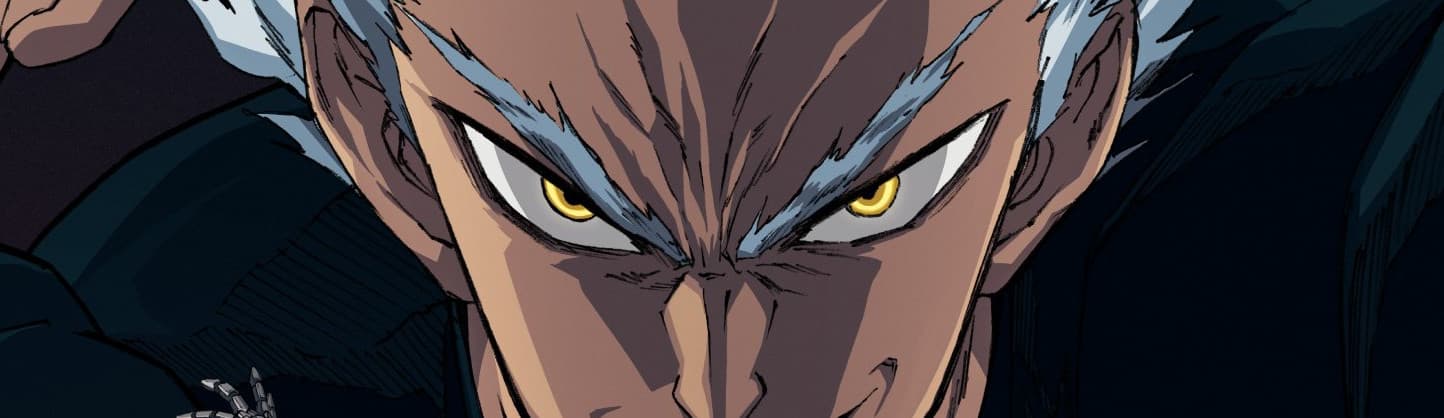
Now, Saitama doesn't do much in this season so the best goal you could set for yourself is focusing on presenting his foil and who he is, with that being Garou. Garou presents some very distinct opportunities, since, while Saitama is the strongest hero that has reached the peak of his strength, Garou is a villain who aspires to become the strongest monster in existence, who is still following his journey for power. Unlike Saitama, Garou is just as likely to win as he is to lose and he has limits. This means that while most fights in the series are filled to the brim with results that are highly expected, there are a lot more opportunities with Garou to present evenly matched fights, and to develop a choreography for the fights, so you don't just have to focus solely on animation and have options in your approach. Additionally, Garou presents a different perspective to the show, and provides some criticism to a very specific trope in media. The fact that the hero always wins, because they are popular. Despite the possible intent and depth of any of the characters presented, the popularity of the characters dictates that the audience is just gonna be delivered more of what they want. Garou is a not so subtle argument against that very notion, as is most of the show. He challenges that quite well and his confrontations center around this theme. While Garou was used for this purpose in the adaptation and his fights had some choreography and thought put into them, there are some moments where once the moments where there is a distinct action happening in the script ends, Garou just uses his blue wavy hands to hit an opponent until the action set piece ends, if he is not getting hit himself. There are some distinct opportunities that you can take a shot on to highlight exactly how the confrontation is evenly match and choreograph a fight that looks interesting and seems evenly matched. I think that this could've been used to take advantage of the fact that you cannot exploit the animation, by planning Garou's fights to be entertaining rather than just presenting exactly was what drawn in the manga. Additionally, given the fact that the show's pace is only matches by someone rolling down a mountain, I'm worried that the chaotic bouts of action are not gonna pay off for the viewers until the end of the season in regards to his characterization, and that is only if you value how he is a foil to Saitama. It has not been the case to me, but I was already familiar with the content already, so of course his characterization would have a different impact.
Then, there's the overarching theme.
Garou is not the only character that is dealing with the fact that popularity means everything in his universe. So is the world of One Punch Man. Martial artists frown upon heroes because they are only valued for their popularity rather than their skill. Other heroes also have a similar issue since they cannot get recognition because people simply do not value their contributions and they only focus on those that are better known. Everything is a popularity contest in the universe of One Punch Man. But due to the show's pace there is not a lot of time to contemplate this and the show just merely presents these ideas rather than hammering them home. True, these ideas have been presented before, but due to how fast every scene transitions this does not seem to show how this world impacts the characters living in it. There's often not a lot of time to understand who and why every character is before a scene is finally over because there is hardly any effort for the build up and pay off of each moment, and unless you are Garou or another significant character, you are thrown to the side and your perspective is not taken into consideration. Which is completely ironic, given the overarching theme that exists.
In other words, the story's potential is butchered because there is not enough focus in both the build up and the pay off, as the show just focuses on moving through scenes as fast as it possibly can. Given the fact that the world's confrontations are rather quick paced as it is, blasting through them are just gonna make them mundane and them being mundane is gonna make everything each character say matter less and less.
If you wanted to reexperience One Punch Man, I'm afraid this season is just gonna be wildly different from what you have experienced so far. If you want something more authentic to what you have seen so far, the manga is still a valid choice since it presents the well detailed style the anime might've gotten you to expect. If not, you could consider giving the webcomic itself a shot and see if the story is presented better despite the fact that ONE isn't particularly skilled at drawing. However, if you are still interested in this season of One Punch Man, be warned that it is a huge downgrade from what it used to be, so do temper your expectations for it accordingly.
19.5 out of 27 users liked this review