Bubblegum Crisis
a review by seanny
a review by seanny
Timelessness is overrated. Every creation comes from an era of media culture, and even the most “timeless” productions can’t help but reflect contemporary trends and zeitgeist.
Bubblegum Crisis is the opposite of timeless. Its creators, voracious creatures of popular media culture, slathered a goopy concoction of everything that was hip at the time onto each animation cel. The series has no original bone in its body. Everything is a reference. It has nothing to say other than, “This is the definition of cool.” As a result, it is one of the purest anime time capsules you can watch.
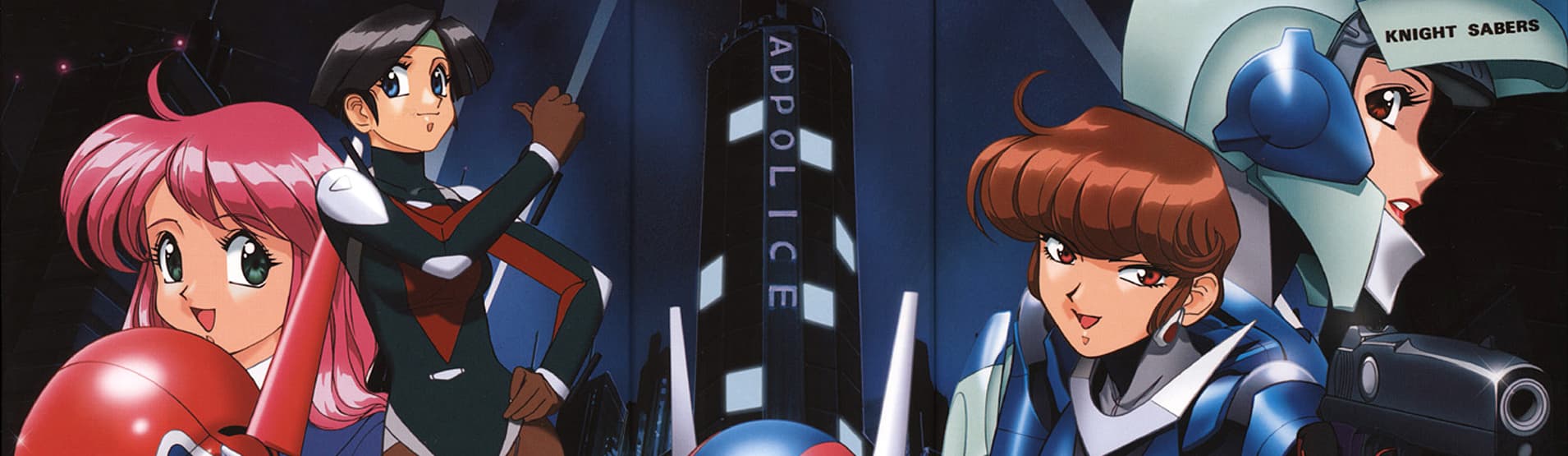
BGC takes place in a true-to-genre “Megatokyo”, a turbulent east-meets-west cyberpunkian metropolis in which shadowy megacorps pull the strings. Murderous Replicants and Terminators prowl the neon-lit streets, kept in check only by a super-sentai bishoujo team and their transforming mecha-motorbikes and acrobatic power armor. Lasers and explosions dance across kaleidoscopic chrome to full-vocal 80s hard rock. It’s adolescent hyper-kitsch fit for an otaku.
What it lacks in taste, it makes up in design-work. The joy of watching BGC today is its now-retrofuture world of chunky appliance-like computers, physical media, handheld gadgetry, toy-like vehicles, colorful fashions, and range of sci-fi-appropriate architectural & interior-design styles from modern to postmodern and high-tech. When it comes to late-80s tech & design, it oozes.
As the creative personalities driving the series grow ambitious, it becomes more apparent when one is watching a Masami Ōbari episode (e.g. #6) with his obsessively detailed mecha animation, or a Satoshi Urushihara episode (#7) with his crisply rendered bishoujo. By the end, it takes another hard turn and resembles Kenichi Sonoda’s Gunsmith Cats. Such hobby-like swings in style are a reminder that passionate people made the series; they clearly loved the stuff.
The OVA’s storytelling noticeably improves with each installment. In its finale (#8), which devotes ample time to the rhythms and anxieties of the bishoujo-hero lifestyle, its previously underdeveloped protagonists begin to take on a new dimension. It’s unfortunate that it ends on that high note. (Bubblegum Crash is a poor followup.)
Bubblegum Crisis exists in a continuum of genre anime, with Akira and (Mamoru Oshii’s) Ghost in the Shell serving as its high points. But where those distilled a handful of genre concepts into profound works of pop entertainment, BGC is the raw, unrefined sludge of late-80s otaku culture. And sometimes, an otaku wants it raw.
43 out of 45 users liked this review
