With Your Name, Makoto Shinkai proved that anime films are getting better, proving worthy of the attention of the masses and the film industry worldwide. This was a huge accomplishment, yet it brings with it a dreadful promise: with all eyes looking, how is he supposed to follow up a critically-acclaimed film praised for its stunning visuals, gripping story, and unforgettable soundtrack?
Weathering with You seems to be a direct answer to that, attempting to create a film that could potentially surpass its predecessor and further generate success for Shinkai. For anyone that has previous exposure to his work, however, I tell you: keep your hopes down. This is a Shinkai film, after all.
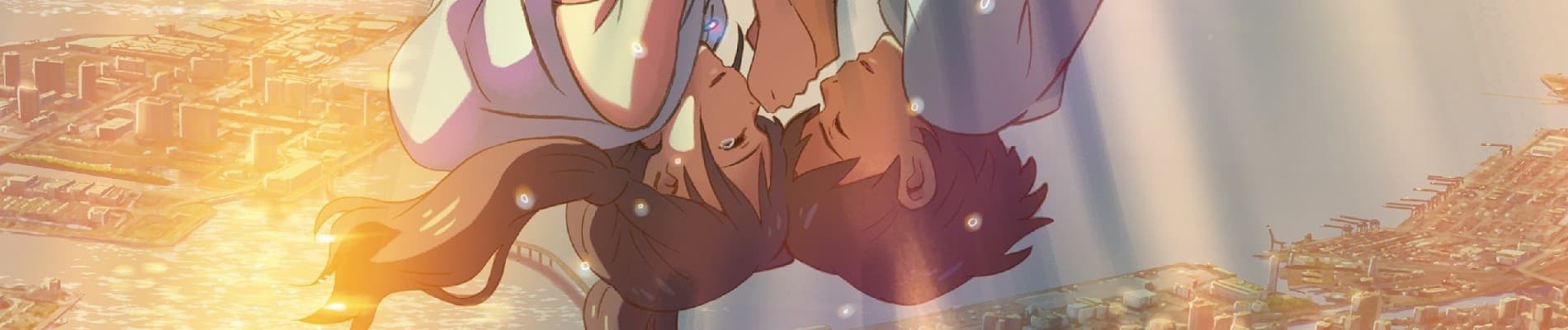
First, let's give credit where credit's due: the animation is fantastic. CoMix Wave Films have kept their identity consistent: the blend of natural colors and attention to detail create a world that feels disturbingly realistic, yet gives an atmosphere that one could describe as 'offsetting'. From the abandoned buildings to the reflections in the water, it's a visual treat for those willing to give it the due attention.
The story is set in the Your Name universe (which we eventually find out after Mitsuha and Taki's cameos), which helps establish that this world isn't normal at all. The supernatural aspect this time seems to be in the weather, and if the constant rain throughout the movie wasn't obvious enough, Shinkai explores themes of maturity, separation, and emotions we all feel when we face the new and unknown. Our main character, Horishima, is a teenager through and through, encompassing all of its best (and worst) traits. The movie never says as to why he goes into Tokyo, which could have given us an insight as to what kind of person he is, but it wouldn't have made a difference, anyway.
Our main character's love interest, Hina, is given the same fate as Mitsuha, being held against her will to the supernatural forces that oversee their world. We are given reason to root for her, as she is genuinely doing her best to be good: she takes up part-time jobs to help her little brother Nagi, she uses her newfound powers to bring good to the world, and she's willing to accept the fate she has been dealt with. Ironically, even though she's younger than Morishima, she shows a surprising level of maturity and calmness.
Together, they sort of cancel out each other's bad traits: Morishima helps Hina have a bit of fun with her youth, while Hina keeps Morishima from doing anything rash or stupid. Of course, the whole story doesn't revolve around them. Other characters, like Keisuke and Natsumi, merely serve as guiding characters that help progress the story forward, but their presence is still impactful when needed. And Nagi... he's actually just there to be cute. I mean come on, teru-teru Nagi is adorable.
We knew that RADWIMPS was coming back to get involved with the soundtrack of the movie, but their presence here is a bit more subdued. Their music contribution still works in favor of the movie, setting the tone for the appropriate scene and amplifying the intensity of emotions on-screen.
The ending of the movie has left many divided as to how they're supposed to feel towards these characters. Some might argue that Morishima might be the biggest simp in anime history for leaving Tokyo to become a flooded mess and disregarding the wellbeing of everyone in the city. Some might argue that the actions of Morishima are brilliant in breaking the trope that favors the common good, showing us that Morishima's a teenager through and through, and it would be unfair that he would suffer for millions to be happy. Either way, I find it interesting how it leaves most divided (people are leaning towards the negative side, though). I unironically thought it was a message of climate change and impending apocalypse, but that's just me.
So did it succeed in setting out what it wanted to become? In my opinion, I knew it was nowhere near reaching it the moment I learned about the plot. And Shinkai fans know what I'm talking about: if you've been watching most of his works, a general storyline is usually followed: it's a love story, yet forces unknown to them keep them away. Whether it's something as simple as distance or social norms, to something as unusual as time travel or space, Shinkai is obsessed in the concept of how far love can drive a person.
But the formula's getting old. After many months, I've grown less rash in evaluating the story after getting a new perspective on it, and it doesn't change the fact that most people will find it good, but consider me the handful of people that find it disappointing simply because it doesn't measure up to works such as The Garden of Words or Five Centimeters Per Second.
It's a movie that has little to no flaws, but remember: it's a Shinkai movie. And that's not a good thing.
Note: This review has been completely revised after the writer's dissatisfaction of its previous iteration. It does not change the writer's opinion, however.
44.5 out of 58 users liked this review