"Watch your thoughts, because they become your words. Watch your words, because they become your actions. Watch your actions, because they become your habits. Watch your habits, because they become your character. Watch your character, because it becomes your destiny."
Let me begin by saying I did not make it very far into the manga before deciding that I am not interested in reading the rest. After 22 chapters or so I could tell that, regardless of how many chapters are left, it will all just end up being more of the same.
Let me just point out a few things that threw me off at first.
Is this supposed to be what adults look like to kids? If so, it's extremely unrealistic and off putting, as some adults really do have their shit together and don't treat children like crap. What is the point of this?
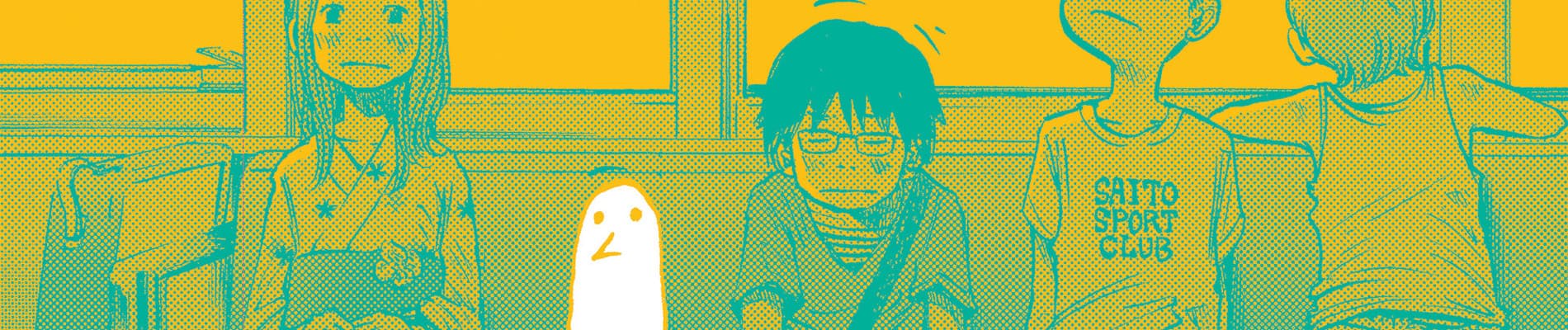
The reason it's so popular (let me take a guess) is because many people are unhappy with their lives and they like relating to a character as unhappy as them. The unrealistic environment of the book makes them feel justified because "life is shit and people are shit and happiness is an illusion". The overall style of the manga is great, but for me it FEELS LIKE it feigns depth and creativity through a weird artistic choices like drawing punpun and his family as bird-like characters (literally just a doodle).
It's not that I don't like a sad story. Nana is one of the most heart-wrenching manga that I have ever read. It deals with
Similarly, many anime that I have watched are sad stories of horrible things that happen to good people. Take Steins;Gate, for example. I've only seen up to episode 17, but what the anime does differently from Oyasumi Punpun that I personally prefer, is that it lets you see the good and the bad side of people and life in general. Plus, the characters actually are working towards something in their lives, and care about people other than themselves.
You see, it's NOT that I don't think the story is interesting, or that it's poorly written or anything like that... but being from Punpun's point of view, it comes across as so... defeatist. "Defeatism is the acceptance of defeat without struggle, often with negative connotations. It can be linked to pessimism in psychology." I wish I could rather read a manga about Aiko or Seki. Regardless of how things turn out for them, I just need the main character to be... less passive?
Maybe it gets better, maybe it doesn't. Sadly, I don't want to spend the time to find out... I have so much manga I want to read and anime I want to watch that I just cannot dedicate my time to a character like Punpun (and the lunatic adults are definitely not making it easy to stick around).
I am aware of how popular this manga is, so I'm expecting this to be downvoted ^^' but I'd rather be honest and disliked for it... Part of me, however, is curious about "what people see" in a character like Punpun. I guess for guys, it might be easier to relate to things like wet dreams and watching porn with your friends, but I think there's more to it than that. I think a lot of people love to self indulge in misery. Allow me to paraphrase some thoughts from an article I read...
People find it hard to let go of things that make them miserable because they also bring them some type of pleasure. It can come in many forms, for example, sympathy. Our society and social etiquette encourages sympathy as a form of virtue. If you complain about being sick, about struggling with a personal problem, there’s always a sympathetic ear to listen and offer “you poor thing” and “awww”s that will make you feel special and indulge your egotistical need of acknowledgement and attention.
"We make mountains out of molehills because the egocentric sense of self doesn’t want to be ordinarily miserable, it wants to be extraordinarily miserable! If your own problems aren’t enough, you look for bigger problems to solve; you watch the news, listen to the radio and read the papers to fill yourself with more worries. Not that you can do anything about a recent war, murder or rape that occurred – but knowing about it indulges your fears about the rest of the world, adds a boundary, and brings you more misery to keep you busy. We need misery because without problems we feel empty, there’s nothing to do, nothing to fight with, and nowhere to go. The emptiness of our inner silence is so frightening, we become conspicuous and create the outlined boundaries of our identity through our problems."
Misery brings you pain which defines you as an individual: “this pain is mine and no others“, “this conflict and tension I’m suffering serves as a barrier between me and the rest“. Happiness takes all of that away and in doing so, you lose your identity, you become nobody.
Not only that, but (arguably this reason is more pressing than indulging in misery for a sense of specialness and identity)... Misery and sympathy allow you to relinquish responsibility for your life. All the shitty things that have happened to you may not be your fault, but your life and what you choose to do with it, the amount of happiness that you create for yourself despite the cards you may have been dealt by god or the universe, is entirely up to you. That can be a very scary thought and people don't like hearing that their happiness lies in their own hands.
"I am the master of my fate, I am the captain of my soul!" - William Ernest Henley
Oh, what I would give to hear that at some point in the story, Punpun takes on this kind of mentality and begins to DO something with his life. I know he's only twelve at the start, don't get me wrong, but just by the tone of the story and looking at the adults we are introduced tp from the very beginning... I have a feeling that Punpun will never really change. He will continue to be the kind of person that life happens to (as opposed to the kind of person that happens to life).
Instead of facing up to the fantastic responsibility we are given for our lives, instead, people often choose to indulge in their misery instead. It's easier to blame our problems and the awful people around us, than to actually TRY. And keep trying. And keep trying. And I don't just mean to try to survive, to try to get by... but at some point, to believe in living, possibility and prosperity. Not because life is easy, and not AFTER you win the lottery or meet the love of your life... Anyone can believe in greatness if it's all around them and money and happiness just falls into their lap. I don't want to read stories about those kind of people, the people who have things easy... I want to read stories about people who believe in goodness, and magic and possibility, despite the harsh realities. I want to hear about those who got up, after being tripped and kicked and spat on, those who have tried and failed and tried and failed and tried and failed and fought on. Danced on. Dreamed on.
"The reasonable man adapts himself to the world. The unreasonable man persists in trying to adapt the world to himself. Therefore all progress depends on the unreasonable man.” - George Bernard Shaw
Summarily, I don't think it's a bad story and I don't think Punpun is a bad character, in terms of being poorly written, or anything like that. The art style, except for the bird-doodles, I actually find very beautiful and that was probably my favorite part of reading the first 22 chapters. I just don't want to devote my time to a story that seems so pessimistic about life and people in general.
My thoughts become my words. My words become my actions. My actions become my habits. My habits become my character. My character shapes my destiny.
I am sure there are many people who need a story like this, and a character like Punpun, at a certain point in their lives to hold on to the idea that life harsh and reality is cruel and all we can do is struggle every day to find a little taste of happiness, which may or may not just be an illusion... I get that. I get that life is cruel.
But it is also very beautiful.
And we only get so much time to enjoy it. I'd like to dedicate that time to people and characters and stories that inspire me, because my thoughts will become my words and... Well, I'm sure you know the rest.
116 out of 158 users liked this review