
Picasso’s La Mort d’Arlequin resides in the National Gallery of Art, DC. The harlequin, widely regarded as Picasso’s alter-ego, is dead. Two spectral figures hover over him. Are they the harlequin’s loved ones come to mourn? Angels come to judge? Or perhaps they are the remnants of his subconscious come to reflect as the harlequin finally surrenders to his exhaustion.


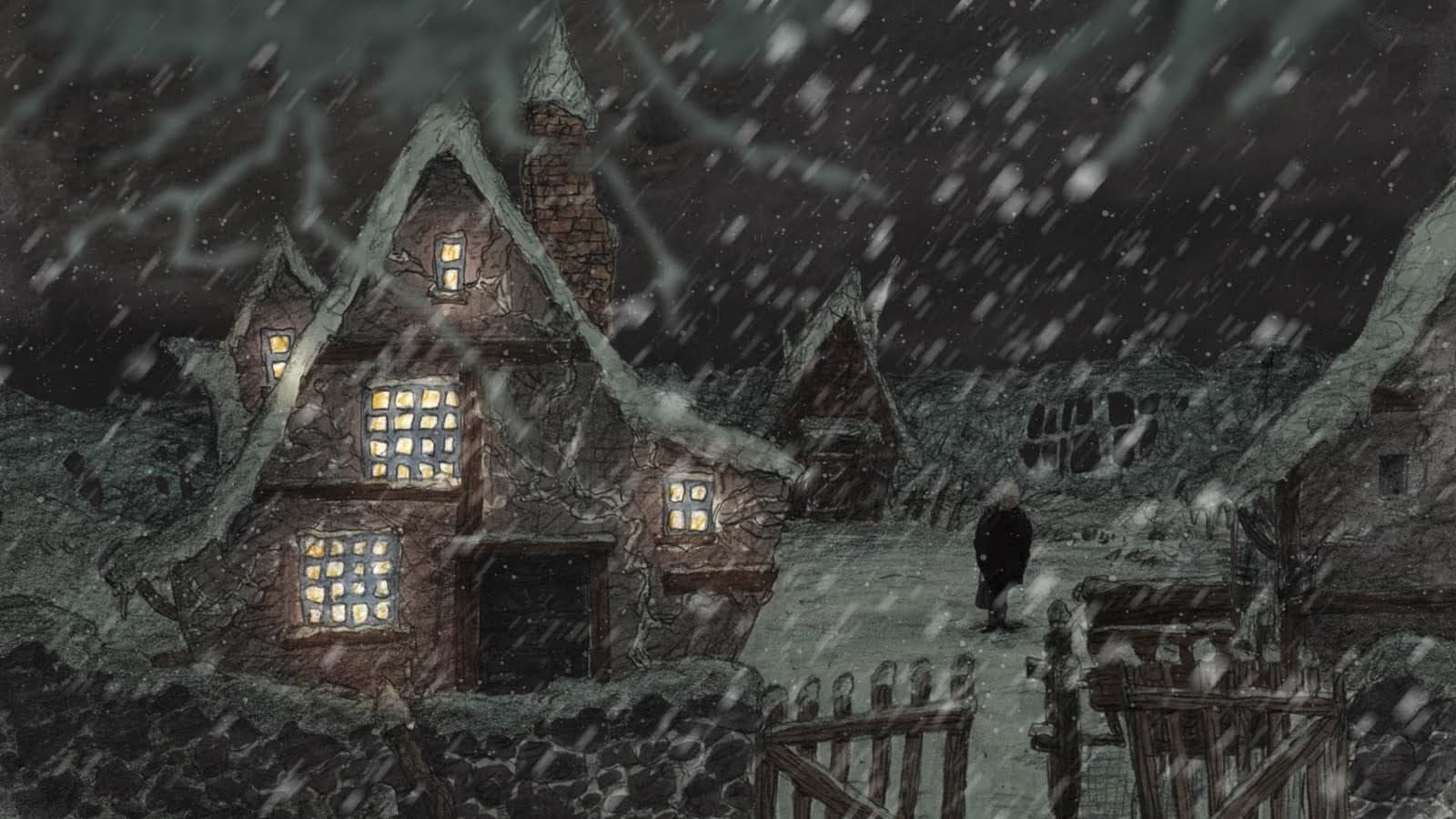
The painting, I decided, bears a striking resemblance to Kōji Yamamura’s adaptation of Franz Kafka’s 1917 short story ‘A Country Doctor’. Obviously, there are the visual parallels. The art in both painting and short film is sketchy and rough and with bled out colours. Both pieces circulate around a sickly figure on his deathbed. And most importantly, both the Picasso and the Yamamura adaptation can be viewed as snapshots of existential dread and nihilistic longing.
They differ tonally, however. Whilst La Mort d’Arlequin toes the line between tranquility and morbidity, Franz Kafka's A Country Doctor is set firmly in the realm of the latter. In short, the titular doctor is called on a nightly excursion, sent to tend to a sickly bed-ridden boy. What ensues is a surreal nightmare of sorts, as a weak and broken man despairs in a bleak and uncaring world.
The visual design is pretty effective. The film includes these neat visual cues and motifs that add quite a lot to the narrative. For example, as Rosa the servant girl implores the neighbours to lend the doctor a horse, she literally knocks on the doors to their closed minds. Or how the character’s body proportions actively shift and metamorphose, as if in a carnival hall of mirrors. It’s really unsettling. Limbs stretch and condense while heads bloat and swivel and are rung as literal bells that mockingly call the doctor into the night.
What is a little unusual (and perhaps another parallel to La Mort d’Arlequin), are the two little spectres that hound the doctor and serve as our narrators. Your guess as to what they represent is as good as mine. Maybe they are the doctor’s subconscious. His id and superego, if you will.
They are soon joined by the two demonic horses that squeeze out of the doctor’s pigsty (the recesses of his neglected, libidinous self?) in Pennywise-like fashion. It is here where we begin to witness the full extent of the doctor’s infirmity. The doctor tries to take control: “I will take the reins.” But he is immediately outdone by the young groom to whom the horses belong, who proceeds to rape Rosa after sending the horses hurtling into the night with a mocking “giddyup”. It is apparent that the old man is as impotent as the barren landscape that surrounds him.
The theme continues as the doctor is literally carried to the patient’s bedside by his family, who emerge like clowns out of an undersized car. “Doctor, let me die,” the boy begs.
If anything, Franz Kafka's A Country Doctor is a little too relentless. It almost seems self-parodying at times and the incessant violin squealing is obnoxious more than unnerving. But it’s bold enough to the point that it’s undoubtedly interesting. And weird. Because what else is Kafka, really?
The film ends as the doctor, broken and defeated, retreats into the wilderness that is his battered consciousness and a spiritually defunct social landscape, littered with fragmented body parts symbolic of the fractured self. There is a ubiquitous malaise, it appears, infecting all things. A sickness the doctor is unable to cure.