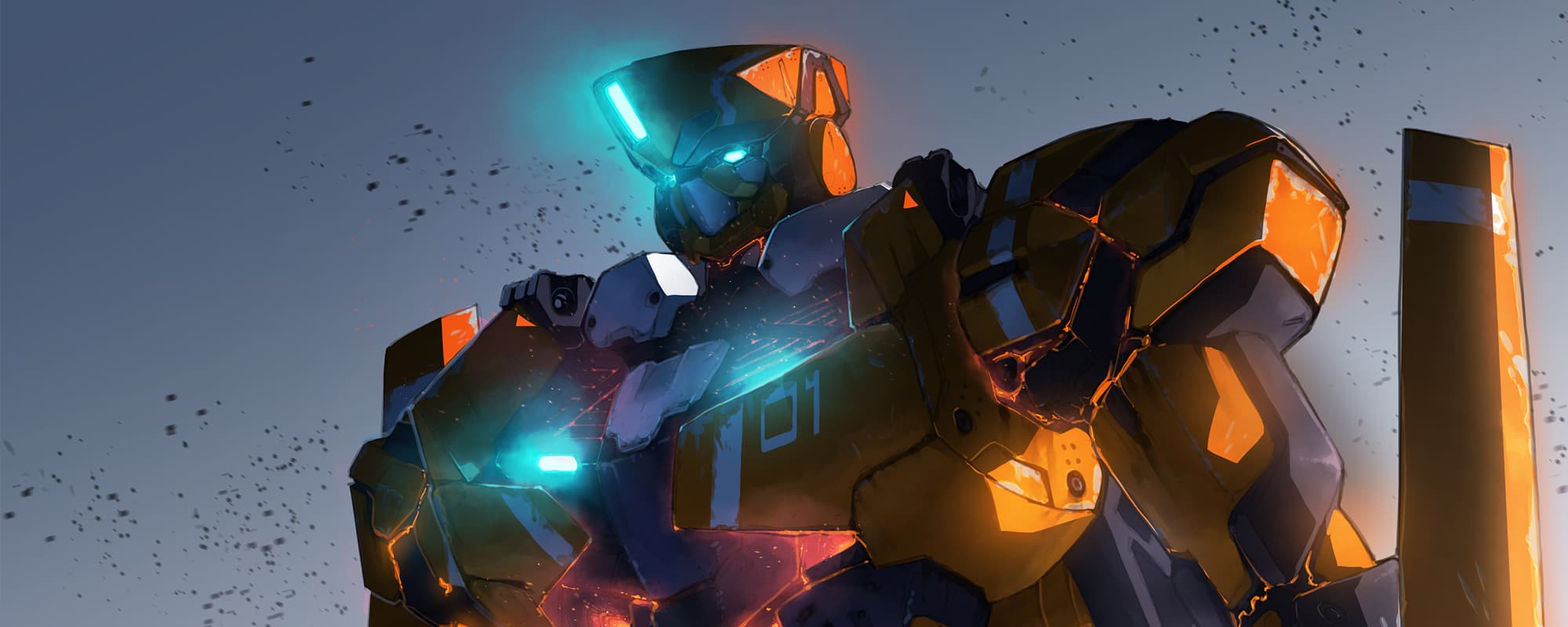
ALDNOAH.ZERO
a review by ChillLaChill
a review by ChillLaChill
From the moment the first episode of Aldnoah.Zero concluded, I was immediately captivated. The series had the makings of the next big hit in the mecha genre, boasting the promising combination of Gen Urobuchi's renowned writing and A1 Pictures' high-quality animation. Urobuchi's reputation for crafting complex narratives and A1's visual prowess set the stage for what appeared to be a thrilling new addition to the mecha anime landscape. However, true to Urobuchi's style, the series does not entirely escape the pitfalls and issues that often accompany his works. While it does not completely fulfill the lofty expectations set by its intriguing premise, Aldnoah.Zero stands out as a well-crafted mecha series with several noteworthy strengths.
The series is set in a future where Earth and Mars have established a tenuous ceasefire. This fragile peace is disrupted when a hyper gate, which previously allowed the Vers Empire from Mars to travel to Earth, is destroyed. This act leaves the Martian fleets stranded in Earth's orbit and sets the stage for renewed hostilities. The assassination of a Martian royal further reignites the conflict, adding an intriguing twist to the narrative. The contrast between the Terrans' weaker mechs and the Vers Empire's superior technology introduces a compelling underdog element to the story. This setup creates a narrative ripe with potential, especially as our protagonist, Inaho Kaizuka, develops counter-strategies to face the technologically advanced Martians.
Inaho's tactical brilliance initially promises a fresh and engaging approach to the mecha genre, showcasing a protagonist who relies on strategy rather than sheer power. This aspect of the show, which emphasizes careful planning and intellectual combat, is one of its standout features. However, this tactical depth often gets overshadowed by more dramatic and less nuanced elements. As the series progresses, the focus shifts from intricate strategy to high-octane boss fights reminiscent of Metal Gear Rising. This transition can feel jarring, as the show’s initial emphasis on tactical warfare gives way to more conventional and less innovative combat scenarios.
The story, while engaging at times, falters with numerous twists and turns that ultimately miss their mark. The series is somewhat reminiscent of playing Russian roulette with a loaded nerf gun—full of predictable fake-outs that eventually become tiresome. While there is one significant death that delivers an impactful plot twist, it is surrounded by a series of misleading or inconsequential events that diminish its overall impact. The constant barrage of twists can create a sense of narrative fatigue, as viewers are repeatedly led to believe in dramatic developments that are ultimately undone or reversed.
The second season of Aldnoah.Zero further complicates matters by reversing even some of the most significant developments from the first season, including Inaho's death. This plot twist renders much of the emotional weight and stakes established in the first season moot. As a result, viewers who continue into the second season may find themselves frustrated with the apparent disregard for the narrative consequences of earlier events. This sense of disillusionment is compounded by the show's tendency to undermine its own dramatic tension.
One of the recurring issues with Aldnoah.Zero is its handling of the kill/death ratio, which often undermines the show's ability to maintain a sense of tension and seriousness. The frequent and seemingly arbitrary shifts in the balance of power between characters can dilute the impact of key moments and reduce the overall stakes of the narrative. Additionally, character development throughout the series is uneven, with Inaho frequently coming across as an overpowered protagonist. This imbalance can make it challenging for viewers to fully engage with his character, as his apparent invincibility diminishes the sense of genuine conflict.
In contrast, characters like Slaine Troyard emerge as more relatable and compelling, offering a more nuanced and human perspective within the story. Slaine's struggles and motivations stand in stark contrast to Inaho's seemingly effortless successes, making him a more engaging figure in the narrative. The side cast, unfortunately, often gets sidelined in favor of major battles, and their backstories are introduced through clunky exposition and flashbacks. These attempts at character development frequently feel like they are simply padding out the downtime between action sequences, without significantly enhancing the main storyline.
Despite these flaws, one of the standout elements of Aldnoah.Zero is its soundtrack, composed by Hiroyuki Sawano. The music offers a high-quality score that significantly contributes to the show's overall appeal. Sawano's work is a clear highlight, providing a powerful and emotive accompaniment to the series' visuals and action. His soundtrack is deserving of a 10/10 rating, as it plays a crucial role in elevating the show's more impactful moments and compensates for some of its narrative shortcomings.
The series excels in its depiction of survival in a post-apocalyptic setting, capturing the essence of humanity's last stand on Earth. This thematic focus on survivalism adds an extra layer of intensity and stakes to the story, and it is here that Aldnoah.Zero shows its potential for greatness. The depiction of humanity's struggle against overwhelming odds resonates with viewers and adds depth to the show's narrative. However, this potential is not fully realized, as the series ultimately falls short of its initial promise.
While Aldnoah.Zero does contribute valuable elements to the mecha genre, particularly through its impressive soundtrack and its initial narrative setup, it fails to live up to the high expectations set by its first episode. The show’s potential is evident, but it is hampered by inconsistent storytelling, uneven character development, and a tendency to undermine its own stakes. The biggest risk for viewers is becoming invested in a world that is significantly altered by the second season, which may ultimately feel like a betrayal of the groundwork laid in the first season. Despite its shortcomings, Aldnoah.Zero remains a notable entry in the mecha genre, offering moments of brilliance amid its flaws.
28.5 out of 31 users liked this review
