Bleach
a review by ChillLaChill
a review by ChillLaChill
Bleach was a show I had disregarded for the longest time, finding it boring. To my surprise, I unexpectedly found myself returning to it and actually enjoying it. It was one of the few shows that introduced me to anime during my early days. However, back in 2008/2009, there were only a limited number of dubbed episodes available, and streaming services weren't as accessible as they are today. Consequently, I put the show off entirely and didn't consider reading the manga either. When the anime concluded in 2012 with little fanfare, I didn't pay much attention. I had only made it so far as the Soul Society arc and had no idea what had happened since. Days turned into years until 2015 when I decided to give Bleach another chance.
As I revisited the show, I scoured the internet to watch the openings, hoping to rekindle that sense of nostalgia. It wasn't until I came across Ranbu no Melody (Opening 13) that my interest truly piqued. I felt compelled to return to the show, if only to experience that opening in its episode. But I didn't just want to watch Bleach; I was determined to dedicate my time and effort to fully immerse myself in it. Was it worth it? Well, to some extent. Bleach follows a standard Shonen plot, with Ichigo, an ordinary high school student, gaining supernatural powers and realizing his duty to protect everyone and everything around him. Along the way, he faces increasingly powerful foes, grows stronger, and confronts challenging adversaries. Bleach strikes a fine balance between comedy and action, often eliciting unexpected laughter from me.
Bleach is separated into larger arcs, that are followed up by smaller ones.
THE SOUL SOCIETY
-Human Realm
-Soul Society
ARRANCAR
-Human Real
-Hueco Mundo
-Fake Karakura Town
The first season, known as "The Substitute," is set in our world and follows Ichigo's journey into becoming a Soul Reaper. The arc concludes with Ichigo's mission to rescue his friend Rukia, from whom he received his powers illegitimately. This leads to the Soul Society arc, which revolves around the rescue mission for Rukia. While it's widely regarded as the pinnacle of the show by many, it's not necessarily the peak of Bleach for me. Despite the consistent quality of the show, the Soul Society arc stands out because it introduces us to new enemies and a fresh storyline. The arc benefits from its stable pacing and the novelty of exploring a new aspect of the universe. It's a captivating twist of events as Ichigo confronts a series of intriguing antagonists, particularly within the unique setting of the Soul Society.
The Soul Society arc shows us lots, but often explanations are so contrived. The writer Tite Kubo has a knack for his stylistic approach. What's often cool to the eye, is never fully translated well when it comes to dialogue. One moment you might understand a concept about the world, and then the next it's confusing you. The more glaring issue is the placement of the arc because it's as if this was written to be the finale of the entire series. In reality, this isn't the case. The Soul Society arc has it's a fair share of problems, partly because of the way it was adapted. The action fit perfectly in the manga, and it resonated with me. The anime adapted it but drew out scenes to an annoyingly boring degree, partly due to its syndicated run on television. The worst part of it all was the included recaps in the middle of fights. Regardless of how epic the fight was in the manga, the Bleach anime likes to dump exposition in order to fill time for their televised viewing. The transition to the Hueco Mundo arc in the manga was terrible as well, but it happened and this was not some easy fix. But where Bleach lacked in pacing, it made up for in strong sequences. The Hueco Mundo arc comes into play right after in the anime and is adapted so well in the beginning. The pacing happens so fast, and things carry on at a reasonably good pace. It was a breath of fresh air for me. Fights didn't take more than a few episodes to conclude, and it's a real shame the rest of Bleach didn't have that noticeably better pacing when it wasn't waiting on manga chapters. It closely followed the manga without losing anything in translation.
Now, let's delve into the issue of filler content. Skipping it can make the difference between experiencing "good" Bleach and settling for "okay" Bleach. Often, filler episodes don't significantly impact the main storyline; they're treated as separate entities. However, in the Bleach anime, this isn't always the case. Filler characters sometimes find their way into crucial plot points, detracting from the significance of certain scenes.
My main gripe arose when a particular character revealed themselves to be a Soul Reaper during a pivotal moment. The reaction of the filler characters present dampened the impact of the reveal. Having read the manga alongside watching the show, I was eagerly anticipating these moments. But seeing these filler characters shoehorned into the main plot was disappointing. While I could overlook it, it added to the list of issues I had with the Bleach anime. The decision to integrate them into one of the battles further exacerbated the problem. I would have preferred if they were entirely forgotten rather than wasting screen time on their inclusion, regardless of continuity.
Some may dismiss this as nitpicking, but for me, it was distracting and detracted from the immersion. Referencing an arc I hadn't seen prior only compounded the frustration, especially knowing these characters exist in the main story.
Moving on, the Hueco Mundo arc introduces visually striking antagonists like Ulquiorra and Grimmjow. While the setting is captivating, the arc overstays its welcome. The repetitive pattern of fights, exposition, and plot progression becomes tiresome to watch. I had hoped the anime would address the pacing issues from the manga, but unfortunately, it falls short in this regard. It's a missed opportunity, considering how evident these pacing problems were in the original material.
Conversely, the Fullbringer arc, though often labeled as the most filler-like, diverges significantly from the typical Bleach formula. Despite being canon, it offers a refreshing departure from the usual narrative structure. Exploring emotionally heavy themes, it provides insights into Ichigo's character, even as his ultimate goal remains unclear. While some may find fault with the development of Fullbringer characters and their relevance to Bleach's world, I found the arc enjoyable for its compelling moments and thematic depth.
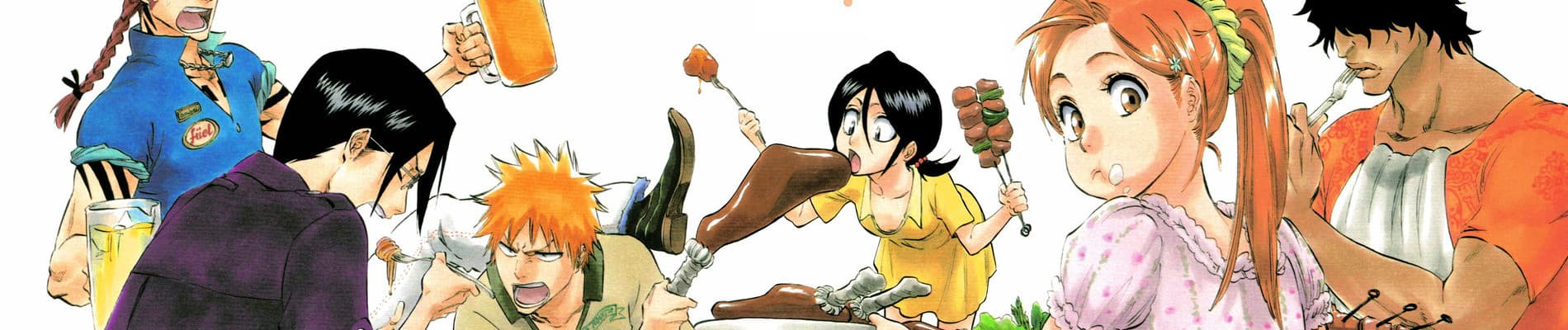
Bleach truly shines in its characters and their distinct designs. The diverse cast of twenty-plus characters each leaves a memorable impression, except perhaps for Don Kanoji, who's a bit hit or miss. The fantastic character interactions and conflicts in the Bleach anime make it worth watching. Now that both the anime and manga have concluded, let's delve deeper into some aspects of Bleach.
Should You Skip the Fillers?
Yes, you should skip them. But there's one thing you should do: finish Bleach and catch up on the manga. If you want more, you can come back to the filler episodes and entertain yourself there without having it interfere with the main plot.
Should I Read the Manga Instead?
I'd say yes if you don't have the time. But if you come to love the Bleach manga, then watch the show. The anime has great openings, and the emotional segments are portrayed to a better degree since it has more cinematic flair. The manga is good, but it suffers from pacing issues, like in the Hueco Mundo arc, which consists mainly of fights for several volumes. I honestly couldn't imagine reading this arc during a chapter release in Shonen Jump. Good lord, there's a whole lot of nothing for entire volumes.
Then Does the Manga Surpass the Anime?
Only marginally, by 0.5 of a star, because of its more faithful execution of the main story, which is a given. The manga lacks filler, making it a breeze to get through the dry arcs. Hopefully, they can do some story fixes with the new adaptation of the Thousand-Year Blood War, but I won't hold my breath.
Is the Show Itself Worth Watching Then?
Bleach is a blast; it's fun, regardless of the smaller problems. It's one of the preferred former "Big Three" that I was so glad to be watching. The show helps to illustrate the awesome action sequences and some of the emotional moments.
What Are the Best Arcs of Bleach Then?
Thousand-Year Blood War, but I'm willing to debate that after the atrocious ending.
Soul Society is about as equal as the Hueco Mundo (for me at least).
Fullbringer, but again, I'm also willing to debate this one. It can be interchanged depending on how I feel.
I Can't Complete It, Isn't It Like 300+ Episodes?
As I said, you can skip the fillers, thus reducing the show's length and making it more digestible. Believe it or not, the actual show is comprised of 49% filler, so don't feel bad about skipping. But if you seriously don't have the time, yes, read the manga; it's good. But come back to the show to see the scenes animated. Seriously, the show does improve some of those parts because it has the music and visuals to really bring the scenes to life. So don't avoid the anime entirely. If there's one thing perfect about Bleach, it's the openings. There are no bad ones.
Closing Thoughts
Now that's over with, I can conclude with my thoughts. Bleach is a great show, but the problems lie in two places: the filler and the source material. A certain female gets stabbed, not once, but numerous times through the chest. Yet, she somehow survives every single time that happens. It wasn't two standard parts either; this happens at very dramatic parts in which you're supposed to feel emotionally invested. When characters are resurrected by Kubo, it's hard to feel like there are stakes. If you want an emotional buildup, just write the characters' deaths properly and be done with it. Don't cater to the fanbase's popularity; it never works, and this is a clear example of fan-pandering that's kept certain characters alive. Bleach has some horribly bad "ass-pull" moments that become more apparent the further along you go. The stakes seem to lower with every new arc, as every "good guy" seems to survive regardless of how they died. All too often, people who should die, just don't, and it's ironically more painful keeping them alive. There's always that sense that they'll just return in the next arc, which leads to some underwhelming tension. This is more the fault of Kubo, who just couldn't be bothered to make a story that shakes up the formula. The final manga arc more than makes up for this to a point, but it feels like petty wish-fulfillment than a genuine attempt to tell a good high-stakes story. There are still many moments in which I felt compelled to put Bleach down and never return again, and finishing it just broke me mentally. I had invested hours upon hours of reading, watching, and fanboying over Bleach only for Kubo to tarnish all my respect for the series within the span of one chapter.
The newest arc, despite feeling great at the beginning, fell back into the Bleach formula. Good guy faces off with a bad guy who shows up, bad guy gets killed but reveals his true power, and then we see the hero's new Bankai; it's the same tired story structure that stretches itself over an entire arc, AGAIN. I will say this, recalling previous characters from past arcs was nice, if a bit fanservicey. Using surviving antagonists was cool too; I just wish Kubo would've used them in an Avengers-style final battle. I could write a whole review of the manga, but I thought it would be more appropriate to put here in my anime review. Bleach is returning, so I'll probably be watching it to see what direction they take it, but I'm past the point of caring about how it's handled the characters. Bleach is worth watching as the character dynamics feel fully realized in an animated format. It's just a shame that Kubo can't seem to write meaningful story arcs because there are some great scenarios that get mishandled that keep it from being anything special.
206.5 out of 228 users liked this review
