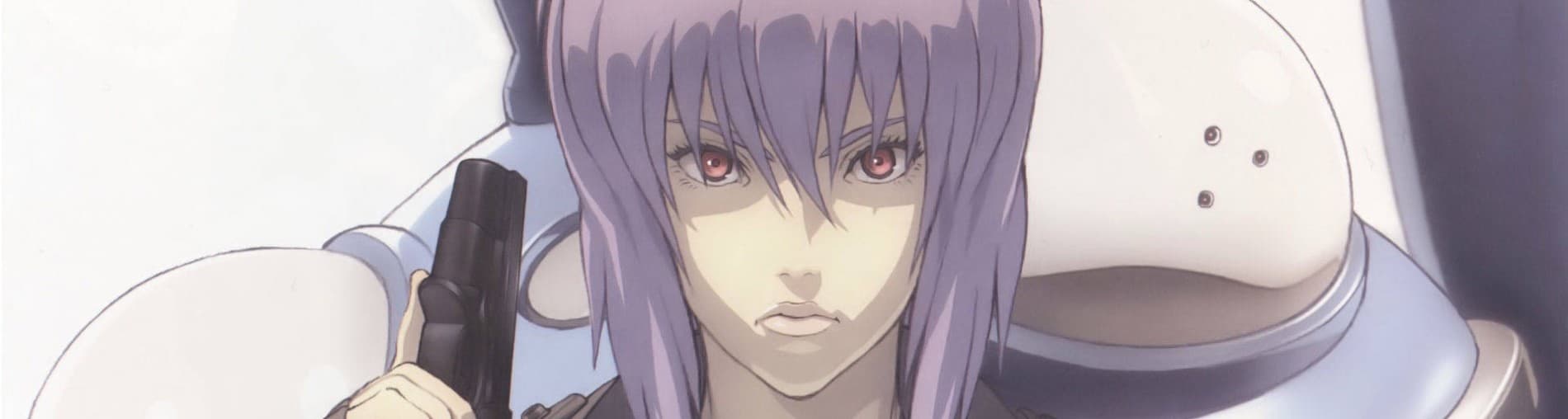
With the new SAC spinoff series coming out, I thought it was the perfect opportunity to revisit this old classic. The original 1995 movie is one of my favorite movies of all time, and back when I first dove into the GitS franchise, I considered this to be right up there with it in terms of quality. Rewatching it proved that this is still the second best adaption of the iconic manga, but it has more flaws than I realized.
What really makes this series special is its story and characters. the central story of The Laughing Man is fully engaging, with twist, turns, action, and political intrigue. It's all around pretty well written. Then you have the "Stand Alone" episodes which often serve as a way to flesh out the world and the characters. And the way it does so is fantastic. For all of its exposition and techno-bable, what I always loved about the Ghost in the Shell universe is that nothing is ever completely explained to you. There's no "fish-out-of-water" character so the writers have an excuse to explain how everything works to the audience. The world of the series slowly reveals itself through the actions and conversations of the characters. Much of the same can be said about the characters of the show. The show never beats you over the head or spoon-feeds you with melodramatic character building.Instead, the show will leave you pieces that eventually fit a greater picture.
For example, in episode 2 Motoko has a line about how as a child, she had so little control over her robotic body that she broke one of her favorite dolls by accident. It's a small line that isn't important to the plot of the episode, but it reveals a struggle within the character. A struggle between the cybernetic being she is now, the human she once was, and the turmoil she had to endure in order to make that transition.Then, in episode 8, Motoko stares at a small watch on her hand before slowly bending and moving her fingers. There's no external dialogue or internal monologue in this short scene, but through the visuals it's communicated that the watch is an object significant to her past, and it reminds her of the little girl she once was; the little girl who broke her doll because she couldn't control her robotic hands. Its suggested that the watch is what keeps her sure of who she was, and possibly, who she might still be. It's fantastic visual character building.
The show also deftly weaves subtle themes about consciousness, death, and technology into its stories. While Oshii's film was primarily concerned with these ideas, and brought them to the forefront, SAC lets these questions sit in the background to add an extra dimension to the story that isn't explicitly addressed, but that sticks in the back of your mind like a thorn.
However, for everything the show has going for it, it's far from topping the iconic original movie. There are a number of episodes here that are utterly forgettable, and a one that is downright terrible. There's an episode where Motoko infiltrates the internet to gather information, and the way it portrays the internet is bizarre and completely inaccurate, even for the time. The internet conversation is portrayed as some sort of talk show with contestants and audience members, rather than everyone being a participant in a large exchange of information. This could be forgiven, however, the episode is nothing but a huge exposition dump. There's hardly any genuine dialogue here as characters recount things we already know about the story. Worst of all, the episode, which is supposed to be about gathering new information, reveals nothing new at all. It's a complete waste of the audience's time. While the other weak episodes in the series aren't as terrible offenders, they often don't offer much beyond passive entertainment.
This show is also held back by the regular flaws you come to expect with the GitS property. Episodes are so exposition heavy with technical jargon, that, unless you're paying attention to every line of dialogue, it can be hard to follow the story. It doesn't help that sometimes the plots to get a little to convoluted for their own good.
Lastly, this first season suffers from a poor conclusion. No spoilers here, but upon rewatch I was thoroughly disappointed in how they resolved all of the conflict at the end of The Laughing Man story. "It was all part of the plan" is one of my least favorite anime tropes because it's often used as a lazy device to explain away any lasting consequences certain storytelling decisions might have had. Unfortunately, that's exactly what happens here. Instead of sticking to their guns and making a truly effective ending, the writers take the easy way out in order to set everything back to a status quo.
Overall, I still hold this series in high regard, even if my views of have changed a bit. For all it's flaws, it still captures the world and characters of Ghost in the Shell better than any other adaption, and is able to weave those elements together with the philosophical questions this series is known for.
19.5 out of 27 users liked this review
