What comes to mind when you think of Kyoto?
For some, they may think of the sui generis tones of the Kansai accent, or the hallowed pagodas of the city’s two thousand shrines; indeed, there is a reason why Kyoto is referred to as Japan’s cultural capital. It is home to ⅕ of the country’s national treasures and seventeen UNESCO World Heritage sites. It is a city that has been immortalized in the world of Japanese literature, having featured heavily in Yukio Mishima’s watershed Temple of the Golden Pavilion and, in addition, is the hometown of arguably the current doyen of Japanese popular literature, Haruki Murakami.
But did you know that tucked away on the lively Sanjō Street, there is an unassuming antique shop manned by a handsome youth whose eye for detail is famed in the locality? That does not sound particularly impressive, but it is in this kind of mundane setting in which our story is set.
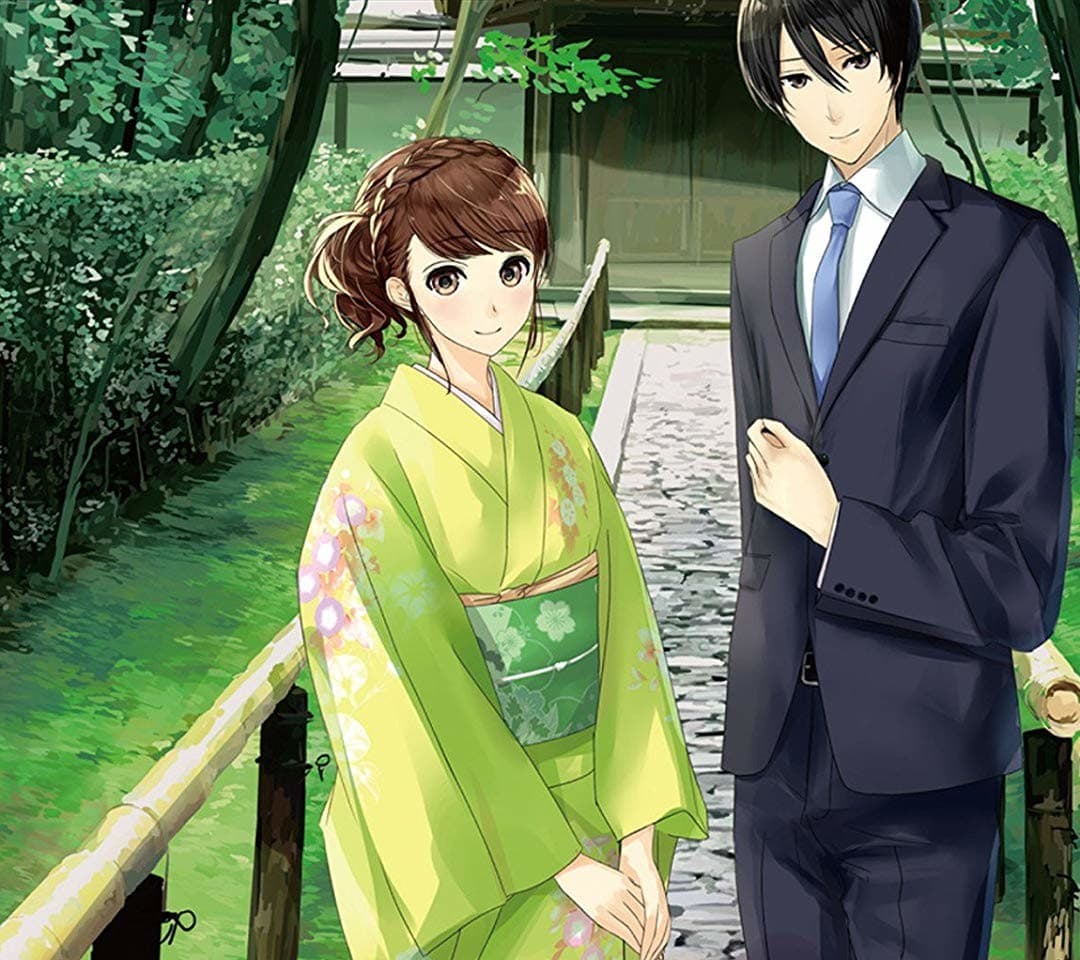
This is the story of an appraiser and graduate student and his straightforward, bubbly part-timer, the budding relationship between them, and the mysteries that they solve. Despite invoking the name of one of the world’s most famous fictional detectives, it must be noted that the mysteries featured in this series differ wholly from the ones tackled by the famed duo of Holmes and Watson. Our Sherlock, Kiyotaka Yagashira, is not a private detective by trade, is not on the books at Scotland Yard and does not get involved in murder mysteries.
The allusions are there, of course: Kiyotaka Yagashira is Sherlock Holmes, his part-timer Aoi Mashiro is Dr John Watson and an adversary for our protagonists is introduced early on who takes the role of James Moriarty. But the parallels end there. The mysteries that our protagonists solve tend to be minute, trivial things that would be of little consequence to anyone not immediately involved. The fate of the world is not in the balance, there is no otherworldly or fantastical elements and no lives are generally at stake; at worst, you might estimate that the majority of these culprits would be liable for civil lawsuits and nothing else.
Does this mean that bona fide mystery fans, fans of Sherlock Holmes in particular, should avoid Holmes of Kyoto? Not necessarily. Those who appreciate iyashikei anime such as Mushishi and Flying Witch will find a lot to enjoy in this show. Those who are seeking intellectual stimulation in the form of a well-crafted mystery may have to look elsewhere; this is not a criticism of the author’s decision to feature “inconsequential” mysteries, but simply because the mystery aspect is not particularly well executed – they reek of excessive simplicity, there is no semblance of fair play and, more often than not, one could arbitrarily solve the mystery just by guessing.
However, I would venture to say that (and I know some will disagree) Holmes of Kyoto, at its core, is not a mystery show. In fact, as we find out very early on, the protagonist’s nickname “Holmes of Kyoto” is merely wordplay on his name and has nothing to do with the famous detective. As mentioned above, the titular character is an appraiser, not a detective. He is often tasked with solving mysteries by virtue of his exceptional deduction, but his primary job is evaluating historic artifacts and discerning fakes from the genuine article.
Throughout the series, our protagonists come into contact with the works of Japan’s various cultural giants: this ranges from scrolls handwritten by Hakuin Ekaku to tea bowls sculpted by the masters of the House of Raku. Rather than a mediocre mystery show (which seems to be the prevalent opinion online, from what I have seen), Holmes of Kyoto is almost like a love letter from the author to the Japanese aesthetic. To those who are curious or who already have a deep appreciation for this aesthetic, I can wholeheartedly recommend this series; for those who don’t, if you choose to watch this show, please do so with an open mind – you will find yourself pleasantly surprised.
PS: Fans of Ryukishi07’s Umineko no Naku Koro ni, I believe I have spotted a familiar face in episode 11 of this show. The episode’s darker tone is poignantly fitting. For further reading, might I recommend the essays of Jun’ichirō Tanizaki?
PPS: This review was originally posted on my blog.
5.5 out of 6 users liked this review