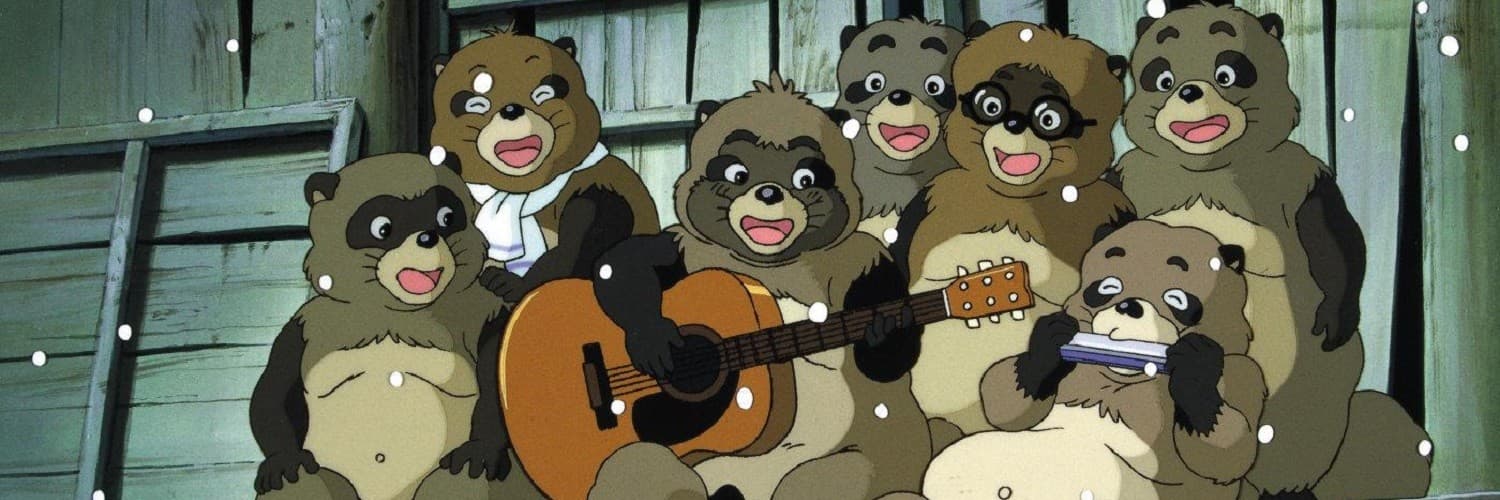

Pom Poko stands out among Isao Takahata’s films with a strong, central conflict driving its animated whimsy. It doesn’t take itself too seriously; it’s chock-full of sight gags and colorful references to Japanese folklore. Reviewers often say that it has a message, but I would argue that it has a zeitgeist and not the garden variety environmentalism that it’s commonly ascribed with. It’s the same zeitgeist that undergirds numerous other Ghibli flicks and by extension their brand; in one respect, it is the truest and most plain-spoken of them, resembling something of a manifesto.
Ironically, it is also the most misunderstood and controversial Ghibli film in the west due to the culture shock barrier — the tanuki of mythology with their big sack energy and the metaphorical role they play in the film which may be lost on western audiences unaware of Japan’s great post-war migration from the countryside to the city.

Tokyo's limitless urban sprawl has reached the distant forests of the mythological tanuki; woodland critters with a latent ability to shapeshift and a penchant for pranks. As construction projects turn their mountain forests into barren mounds awaiting concrete apartment blocks, what remains of the local clans unite and rediscover the art of transformation. With their powers, they spook the humans, sabotage construction equipment and cause worksite mayhem in a series of increasingly imaginative and audacious stunts, drawing on the oni and yōkai of folklore. Contrary to Takahata's trademark anime neorealism, Pom Poko cuts loose with its cartoon comedy and absurd ideas; its deft mixture of laughs, satire, apocalyptic overtones and cultural criticism make it my favorite Takahata flick.
Try as the tanuki might to impede it, the march of progress cannot be stopped. The old men of Ghibli would know. Spending an entire career in Tokyo's concrete jungle, as Takahata, Toshio Suzuki, and Hayao Miyazaki have, may make a person wistful for a simpler, imagined rural lifestyle. Ghibli film after film sells this particular fantasy — an escape to a faraway Japanese or European countryside where its quietude and natural splendor offers something essential to the human spirit that was perhaps lost in the hustle and bustle of city life.
Pom Poko is the most direct expression of this metropolitan claustrophobia — here, the idealized countryside is at war with Tokyo's urban sprawl. The film's full name is approximately "Heisei-era Tanuki War Ponpoko". In this unwinnable campaign, the tanuki undergo stages of grief with the retreat of their heritage to the cold concrete of modernity. They not only wage war, but simultaneously negotiate and adapt, if not succumb to despair.
In one of the earliest scenes, they secure burgers from McD's for their first taste of modern living. They procure a functional television from a roadside dump to study human culture and gauge the success of their supernatural terrorism tactics on the evening news. In various outings, they shapeshift into humans and try taking on menial jobs.

Adapt or die. Pom Poko is not a call to save the (non-endangered) Japanese raccoon dog or the (extremely plentiful) Japanese mountain wilderness. The mythological tanuki’s plight is ultimately “our" plight, and the film emphasizes their unreality by continually showing realistically drawn raccoon dogs in contrast. Instead, the fantastical tanuki are symbols of traditional Japanese culture, values, and a lifestyle “at harmony with nature”, and it’s those things that are endangered by urban life, argues the film. Their shapeshifting pranks force the witless humans to confront the culture they've discarded. At one point they use their collective power to cast an illusion across the urban landscape depicting what once was — an idyllic, Ghibli-esque farming village, entrancing the cityfolk under a spell of nostalgia.
The most skilled tanuki eventually become incognito salarymen, chugging energy drinks to fight off the fatigue inherent in the joyless motions of modernity; their identity and heritage sacrificed on its altar. But after the workday is done, they return to their forests and frolic in the fields. Such probably wasn’t the daily routine for a Ghibli staffer, but they could certainly dream.

Addendum:
Watching it dubbed would spoil the film's essential Japanese flavor. The ever-present voiceover narrator is a rakugo master and not a stock anime VA, for example.
56.5 out of 60 users liked this review
