
Our planet is on the cusp of a radical change in the workings of society as a whole. As the stubbornly Luddite older generations gradually fade into the great abyss of the beyond, what takes their place are a group of people whose occupations, and indeed daily lives overall, revolve around the use of technology to bring the world closer together, one text message at a time. The incoming tide of technology-saturated work also brings with it the advent of technology-saturated play, chiefly in the form of previously-inaccessible media – for example, it would be difficult to say that anime, even in all its animated glory, would be such a hit if it weren’t for the capacity to share in its joys with other people over the World Wide Web.
Of course, just as there are those who might have grander visions for the future of technology, there are also those who simply wish for nothing more than to sit back, crack open a can of beer, and watch their favorite television series or play their favorite video game all night long. They care not for how society looks upon the ways in which they spend their time; all that matters is that they are fulfilled by the media that they love, and the rest of the world can, well, go and die.
This is the story of those forgotten, derided, yet nonetheless blissful people. This is Wotakoi: Love is Hard for Otaku.
Premise (3/5): There can be a surprising amount of beauty in simplicity. At first glance, the premise for Wotakoi is literally summarized in its subtitle: “Love is Hard for Otaku”. Of course, if you’re watching an anime like Wotakoi, you’re probably already an otaku (or even just a decently-engaged fan of anime) who might in some way relate to the story. I’ve certainly been made fun of for my love of anime, and I’m sure that plenty others have had similar experiences – if not for anime, then for some other personal hobby that in any way deviates from the norm. However, if you’re as normal as they come, you might not be able to really empathize with the pain of such a rejection by society – though if you were that normal, you probably wouldn’t be watching anime outside of the mainstream shounen titles in the first place.
The need to keep your less “tasteful” hobbies in the closet, stashed far away from the public view, is a recurring theme throughout the series, and it helps viewers sympathize with the various tribulations of the pink-haired Narumi, especially when contrasted with her lover-on-trial and childhood friend, Hirotaka, who doesn’t really seem to care about matters regarding public decorum. It’s the uncomplicated and straightforward nature of this premise that really allows the anime to get on with what it needs to do, which is to delve into the most important part of a series such as this: the interactions between the characters.

Characters (5/5): A relatively laid-back anime like Wotakoi, with no flashy battle scenes or raunchy fanservice to prop it up, must rely almost entirely on its dialogue and character development to keep the series afloat. In this respect, Wotakoi never fails to deliver. Conversations between characters are snappy and fast, with frequent humorous interjections and straight-man comedy lines that work to tremendous effect in bringing the story alive.
The character development as a whole is spot-on, but what really makes the pacing of such development optimal is not the speed with which the characters change their ways of thought, but rather the obstacles placed in order to hamper such a change – a copious amount of effort is spent on establishing individual personalities, and their capacity to expose themselves to new horizons is slowly but surely unfolded as the characters, as if bumbling about in the darkness of an unlit room, search desperately for the light-switch that will finally make them see with better clarity the inner thoughts of their loved ones and friends (especially in the case of Hirotaka, who normally shows almost no visible emotion).
The characters themselves are immensely likable, and their many flaws only add to the pleasing sight of watching them overcome their respective fears and learn to well and truly love one another. Love is never a simple thing, and it requires a lot of personal responsibility, but our favorite stooges make it work by never rushing the process and simply letting it bloom on its own through regular reassurance and mutual interest.

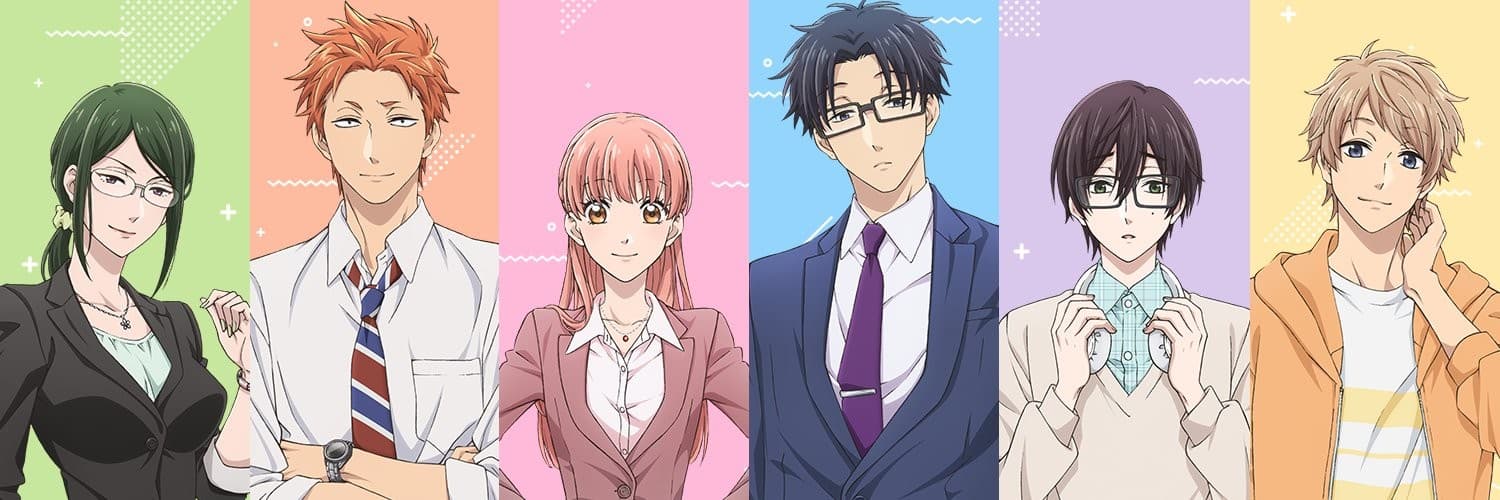
Audiovisuals (4/5): The clearly shoujo/jousei-influenced art-style used for the character design may or may not be appealing to some. I personally found it quite cute, and the painting of each character with a theme color, either through their clothes, hair, or other accessories, was instrumental in communicating the overall mood and complexion of their disparate personalities, from the pink, flowery and dainty Narumi to the blue, nonchalant and cool Hirotaka. The overall art doesn’t allow for much comment, but the facial expressions of the characters in particular stand out in maximizing the comedic effect of the already-hilarious dialogue.
The OP and ED are decent tunes, and the soundtrack is barely noticeable and never seems repetitive – which is a good thing, since there’s nothing worse than an overly conspicuous and incessant background track that plays over and over again during each supposedly humorous scene.

Execution (5/5): The pacing of the story never feels too fast or too slow, which can be a killer in a series such as this if not done right. Move too fast, and you risk running out of ideas that actually contribute to the development of the characters and setting, thus turning the later episodes into a trudge towards the finish line; move too slow, and the entire series in itself becomes a trudge, a mindless wash of meaningless expository that brings nothing to the table and leaves you feeling relieved when the whole ordeal is finally over.
Wotakoi has no need for such considerations. It doesn’t keep you on your toes, but neither does it leave you sprawled out on your chair, waiting desperately for the episode to end. The humor and the dialogue are simply too engaging for such things to happen, which is just as well because the series, in its essence, is really just a lot of talking and not much doing.
But the surest indicator of a good story is the mark it leaves in the hearts of those who bear witness to it. Wotakoi left me with an improved impression of the typically stale romantic comedy genre, especially considering this series was mixed with slice-of-life elements where the sum total of the action involved going to work, going home, and then venturing on a date somewhere from time to time. Fiction, more than anything, ought to facilitate a temporary escape from mundanity, and it’s telling that a series about some of the more boring aspects of reality should prove to be so engaging.
Love, it seems, is indeed hard for otaku – but perhaps that’s why it’s worth the effort.