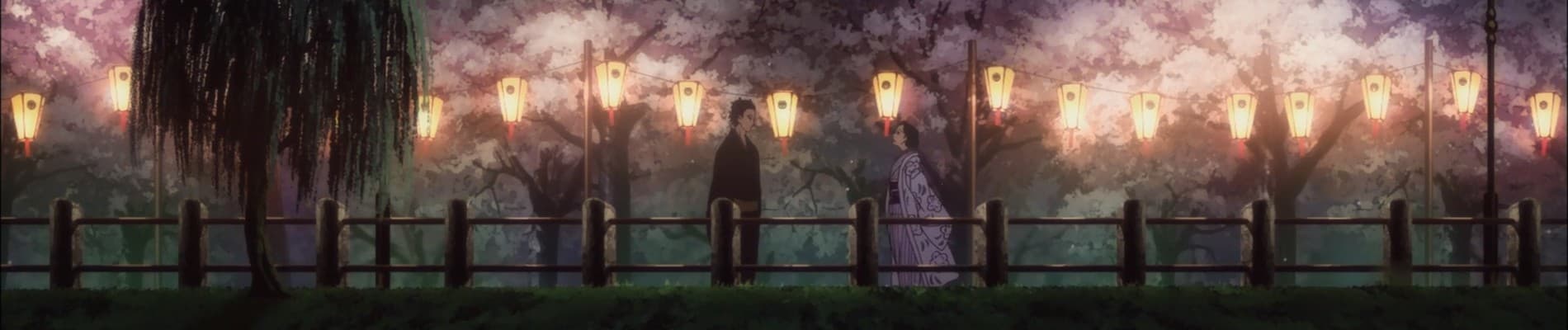
The life of the theater. An actor playing a role for a demanding audience. A presentation told to not only the musicians’ tune but also the environment of the theater. A story is unfolded, characters appear and then disappear, and in what can seem like a few minutes, the act is over. A final bow and then dismissal.
In a year where so many titles were known for their action or supernatural qualities, it’s hard to believe a title like Rakugo became so beloved. The show’s concept is extremely simple – for “Act 1” (or Season 1), we spend a majority of the time learning about the pasts of two men, Kikuhiko and Hatsutaro, entering the world of rakugo. Rakugo could be seen as a minimal sort of theater – a lone storyteller sits on stage and, using only a paper fan and small cloth, tells a long story that is often comical or sentimental. With such a lack of props or other actors to assist the storyteller, the strength of the performer is tested. How can he differentiate between multiple people? How can he represent an object with just his props? Most important, can he entrance the audience within the story? In a way, it could be seen as the ultimate monologue for an actor or, for a looser comparison, equivalent to the silent films of old, where an actor had to master the art of body language to convey emotion. With such a niche and down-to-earth premise, it wouldn’t be surprising to have the anime left to the wayside by more broadly appealing and flashy looking shows. It is, however, this very core that Shouwa Genroku Rakugo Shinju (SGRS) sticks to that makes it as lovable as it is memorable.
The stories of our leads serve as an excellent introduction to the world of rakugo. Set in the 1930’s, where it is seen as one of Japan’s main entertainment sources, we observe Kiku and Hatsu’s rise through the world of rakugo under the instruction of their master Yakumo. Like many shows with dual protagonists, the boys have a contrast that distinguishes them from one another. Kiku’s personality is more formal and introverted and is much more reflective of the current desires and status of the rakugo association. Hatsu, on the other hand, is far more brash and extroverted, seeing the storytelling in a more vibrant way than most are used to. These contrasts extend into their preferred style of rakugo. Kiku’s sly and cunning approach to storytelling make him excel in the more seductive story type, whereas Hatsu’s range and animated approach make him a star at comedic pieces. Despite all their differences, a bond is formed between them that’s deeper than even they realize. As they rise through the ranks of rakugo, both Kiku and Hatsu learn more about each other than they initially thought. This level of humanity is much appreciated and serves as a way to add more depth to each of the leads. This is also quite crucial when in the mix of the supporting characters, such as Yakumo and geisha Miyokichi. Though the setting is simple, the emotions are quite complex as characters try to find their place in this art and make or break connections with one another due to their beliefs. It’s easy to claim that SGRS is trying for melodrama, but the show’s slow sensual nature helps mature rising overdramatics.
Arguably the most important aspect of the show is in its namesake: the rakugo. When not focused on the lives of the co-leads, the anime allows them to show their progress as developing shin’uchi. We are treated to them acting out these stories, from the perspective of both the audience and the storyteller. This latter part is crucial to seeing the storytellers as people and not just as people reciting old tales. The camera can pan to the storyteller’s neck covered in beads of sweat or adjusting their position on stage, a subtle way of recognizing the humanity of the performer. What’s more, the focus on these stories allow the anime to show its sincerity towards its source material. It feels like creator Haruko Kumota earnestly wishes to show his love for the art by letting the characters present these stories. Of course, longer stories cannot be told due to time constraints, but some shorter stories are presented in full to the audience. Tales such as Toki Soba and Shiba Beach are as interesting as the performers make it out to be and seeing what kind of story is found in each episode was just as intriguing as the continuing plot.
But even when not focused on the drama or the rakugo, there is another haunting truth underlying the whole show: the passing of time. As I said previously, the show’s premise is sort of niche. Not many people are involved or know rakugo, much less seek it out of interest. This fact becomes more apparent in the show: as the years go by and major events such as World War 2 transpire, new forms of entertainment and technology become available. What once was prevalent is now becoming outdated or turned away for said new entertainment. A clash of ideals also interferes this art, as talk of what truly is rakugo, or if it could be changed, surfaces. Even if delved in deeper, and even if there is some grand plan to “save” the art, would it even work? As the generations pass by and the characters get older, there may come a time when rakugo will disappear. Despite this, the characters still remain hopeful and persevere in a craft that still has meaning to them. Like any performance, all it takes is one performer and one person to watch.
If there’s any setback against the show, it may very well do with the format or editing of the anime. The beginning episode is twice the length of a normal episode and establishes the characters that will be featured in the present. However, a majority of the anime takes place in the past, meaning the “teaser” doesn’t come to fruition until the 13th episode. Some of the drama, as well meaning as it is, can also be a bit tone deaf. There are times when a character will spark drama with an incendiary line only for no further action to proceed it. In the first episode, for instance, Konatsu accuses Kiku of the death of her father. Tension is felt, but the next scene is quickly shown with no further investigation of the claim. It makes sense not to “give the plot away”, but then again, why show this in the first episode? The introductory episode, while good for setting up the events of the present, is not the focus of the first act and thus feels like awkward foreshadowing for a flashback, if that makes sense. This sparked drama also hints at a show that could potentially be much darker than what is shown, but currently the events are more of everyday realism than a scandalous form of slice-of-life. I do appreciate the more approachable tone but I’d rather the show eschew from its sinister undertones and focus more on its captivating strengths in rakugo. Speaking of captivating, a plus must be given to the show’s use of sound. The soundtrack of the show fits well with a historical drama, whether serving as an introductory theme to the rakugo performers (using the plucks of the shamisen and beat of a large taiko) or building tension with a rapid tempo increase in acoustic guitar and trumpet. Special attention should be given to the show’s opening “Usurahi Shinjuu”, a seductive bit of jazz pop that splashes dramatics with quiet drawn vocals and descending flute lines (perhaps a nod to the anime’s “descending stories”), and the ending “Kawa, Taredoki”, an instrumental trumpet-led jazz piece that somberly closes each episode like the touching ending to a rakugo story.
Overall, I give SGRS a 7/10. Though not as resonant as I wanted it to be, the first season of Rakugo is still an entertaining and meaningful look into the lives of those passionate about the storytelling art. Those that are involved in the dramatic arts, or those looking for a historical tale with more realistic characters, should definitely give this one a watch.
Do you like or dislike this anime? If you haven't watched it, are you encouraged to watch it or not? Leave a comment on my profile telling me what you think of the anime and/or my review.
Thanks for reading and have a blessed day!
31 out of 57 users liked this review