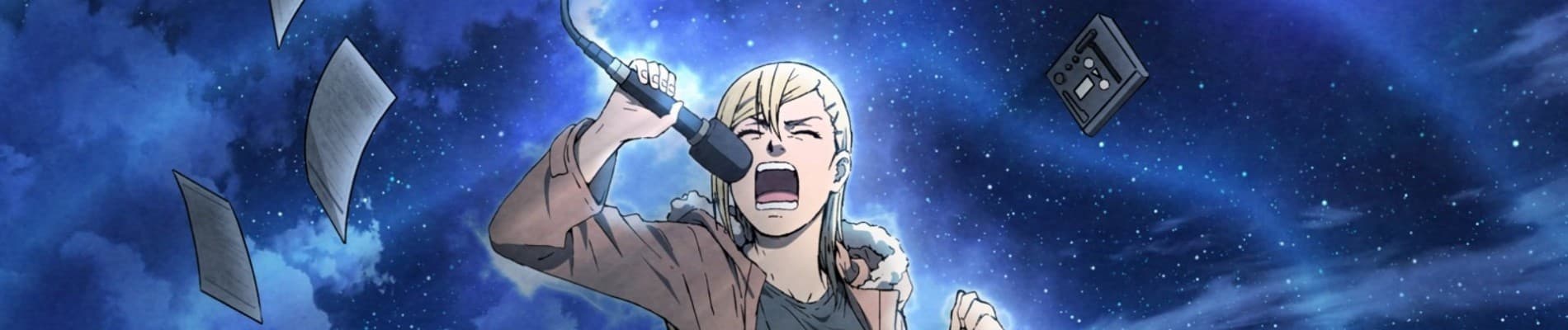

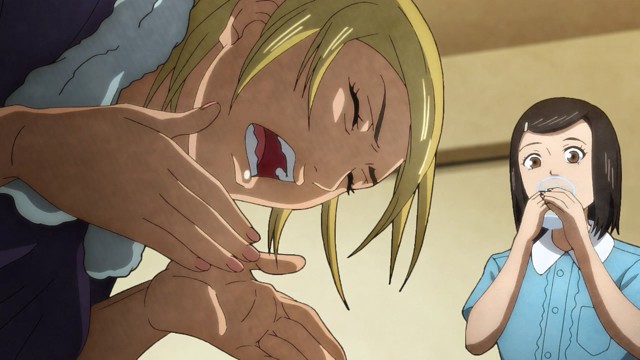
Nami yo Kiitekure, which I’ll be calling “Wave” for short, is quite the sleeper in my books.
If it weren’t for such unprecedented times and the resultant cancellation of shows from Spring 2020’s catalog, Wave could have quite easily fallen by the wayside, hovering under a MAL score of 7 for its first few episodes. And what a sad scenario that would have been, as Wave has been a refreshing experience through and through. Here’s my (mostly) spoiler-free thoughts on Wave and why I think this show is most certainly worth your time.
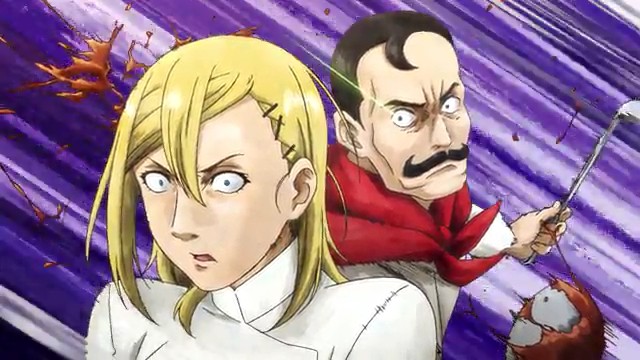
Minimum wage never looked this evil.
Wave is told from the perspective of the fast-talking Minare Koda,
a cynical woman struggling to make ends meet. She works at a curry shop in town with a gay^ manager who’s clearly only keeping her around for cheap labor, has a hard time keeping her apartment’s landlord happy, and recently sunk in a considerable amount of money into a scumbag boyfriend who promptly took off with the cash. A shitty boss, money problems, a bad breakup - all these problems led her to the right bar on the right night with the right man to rant to… or so it seems. As it turns out, the man she met was Kanetsugu Matou, a director of a local radio station in Sapporo. He was so impressed with her stutter-less delivery and abrasive takes on men that he recorded her epic rant that night and broadcasted it all over Hokkaido, to Minare’s shock. Matou-san then offers to sign our stunned amateur on to the station, offering her the opportunity to hone her craft the recording booth. Because she has virtually no name recognition and thus has no backing by sponsors, Minare is roped into improvising experimental sketches in the dead of night, allowing Matou to see how far he can push the limits of traditional radio programming. Alongside this new endeavor Wave continues to put Minare’s experiences front-and-center, showcasing her plights with her day job and zany life experiences. If you’re still unsure of what to expect, I would say Wave is decidedly an adult comedy, full of pop culture references and absurdist humor with some crude material in the mix.
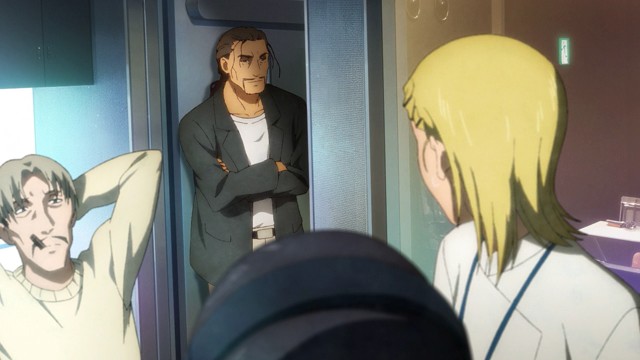
The approach Wave takes is a welcome change of pace from your typical slapstick or slice-of-life
that you’ve probably grown accustomed to. Wave packs in a ton of jokes and references with influences from both Japan and the West. Yes, the localized gags involving stuff like Japanese pop singers and such went over my head, but there’s still plenty of solid material here. I, for one, enjoy comedies that come at you with everything, and Wave does just that by also throwing in some unexpected absurdist sketches that had me laughing my socks off. The radio sketches are a fun opportunity for the series to explore strange concepts and creative laughs, and there’s a sense that the writers are passionate for their love for radio and popular tropes. However, jokes can only carry a show so far, so it’s a good thing that Wave has the perfect vehicle for them. Minare Koda owns this show in every scene she’s in with her raw energy and great timing. This success is in large part due to her voice actor; relative newcomer^^ Riho Sugiyama’s energetic line delivery easily puts her alongside the heavy-hitters from Kaguya-Sama S2 in terms of the best VA performances this season. The jaded Minare jumps to conclusions left-and-right, and her hyperactive monologues invite us into that erratic thought process. Be it in the recording booth or out, a bulk of my enjoyment with Wave comes by watching her sweeping changes in intensity and how they elevate the observational humor in every episode. With her relentless overconfidence, sheepish embarrassment and animated commentary, Minare keeps me coming back to Wave week by week.
Now, as enjoyable as Wave is,
it does have a couple of criticisms that I’d like to share with you. First of all, Wave is very much the Minare Koda Show. That’s by no means a bad thing on its own, I think I’ve gushed over her enough so far. However, the rest of the cast don’t really stand out to me and it’s not for lack of trying. These side characters are present in the narrative but have their conflicts either relegated to the background or in service of Minare’s OTT reactions. While I had a blast watching Minare carry practically the entire show on her back, Wave’s supporting cast needs to be explored deeper should the story receive future instalments. The other aspect worth noting is the overall tone and writing throughout the series. When it’s not busy doing radio bits with exes and/or extraterrestrials (see: Exhibit A), Wave can seem unsure of the kind of comedy it wants to pull off in a given scene. Wave’s curious mix of observational humor and more surreal set-ups doesn’t gel as well as I hoped at times. It is possible to balance out the two elements in a satisfying way and render me LMAO for full minutes (which is does often). But the show has a bad habit of attempting to paint scenes in a realistic light when they would have worked better as comedic moments^^^. Likewise, there were points where Wave undercuts more grounded moments with anticlimactic, throwaway jokes. I feel that this balance of Wave’s two halves is skewed in favor of a more plausible perspective, leading to the show stumbling over itself and over-explaining certain scenes. I’d be glad if the show grows more consistent in working out this formula, ‘cause what we have is already so enjoyable. Before I wrap things up,
Here’s a lightning round covering all the other criteria I missed:
the animation is serviceable, the art and presentation gets some good moments, I think the insight into the radio industry was digestible and fun (reminiscent of Eizouken ni wa Te wo Dasu na! 's many tidbits about animation), the songs and sound design fit the show nicely. I don’t intend to half-ass on these topics; they just didn’t factor into my viewing experience all that much.
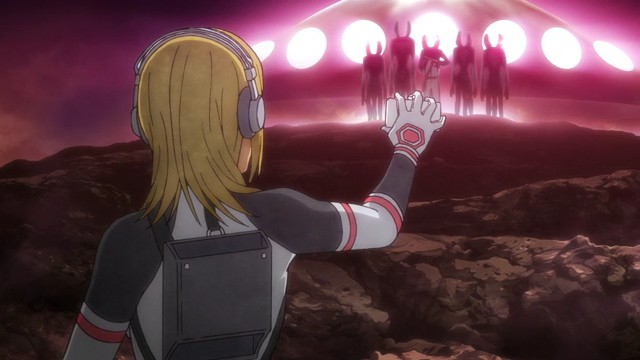
Exhibit A: See, I wasn't kidding.
Tl;DR:
Nami yo Kiitekure is quite likely to have you in stitches. A simply stellar performance by Riho Sugiyama brings our lively lead to life. Minare nails every joke with an energetic, ballsy delivery that would make isekai protagonists quiver in their pants. Not all the comedy works, but the show’s fun take on observational & absurdist humor makes for a welcome change of scenery. Wave, Listen to me! absolutely deserves to be heard. 6/10~
STRAY RAMBLINGS (SPOILERS):
- ^The show sort of gay-bashes the manager, and it’s a recurring gag that never really works. I’m thinking it could be an issue of dated material, as the manga was first published back in 2014. Still, the homo stuff wasn’t made in good taste here, so have this mild trigger warning.
- ^^My jaw dropped to the floor when I caught Minare’s rap edit in Gigguk’s Spring 2020 video. Immediately added Wave to my watch list and found her profile on MAL. Said jaw then proceeded to fall further still when I learnt that she has less than ten VA roles to date! I’m definitely rooting for her to nail more parts in the years to come, fantastic effort.
- ^^^Let me share an example with you. My favorite joke in the entire show was that of the
Spoiler, click to viewclick to hide
crazy coincidence in episode 5 where Minare was doing an improvised sketch from the POV of a woman who killed her partner. Meanwhile, it turned out that the exact same occurrence was taking place as Minare’s broadcast was aired, and the eerie parallels between the two scenarios and the reactions from the killer and hostage were funny as heck. The whole scene was insane but it functioned perfectly as a one-off joke that came and went, and I was happy to leave things at that. Unfortunately, it turns out that the scene is actually a major plot point, as it’s revealed that it was Mitsuo, Minare’s ex, who was tied up that night. The show tries to give a wonky explanation for all this, but it only highlights the contrivances necessary for this to have taken place and lessens the fantastic gag that came before it. Spoiler, click to viewclick to hide
Matou’s seeing Minare as a mirror image of Sissel Komei, a woman from his past, is a plotline that shows up every now and then. I just don’t think Wave really goes anywhere with this? It’s just sort of there, and I’m not sure how this thread plays into the show’s themes. Isn’t the story about Minare being her awesome self and bringing that personality to the airwaves? If so, what good is there in attempting to make her character more artificial by selling this idea that she’s a carbon copy of someone else? The only guess that comes to my mind is that she could show up later on in the canon, affecting Minare in some personal way. Oh well, I guess that might count as world-building, so I probably shouldn’t complain.- BEST GIRL: Mizuho. Just this once, Minare has good taste in romantic interests ;)
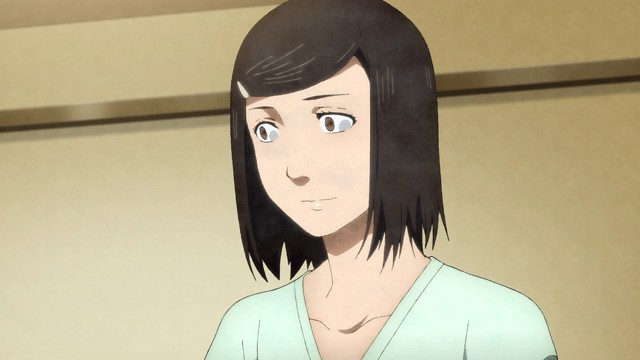
- IN A NUTSHELL: Good Morning Vietnam meets Fleabag (If you’re a fan of Minare, I guarantee Phoebe Waller-Bridge will win you over in the same way).
- Lockdown does weird things to people, so I guess I blog now! Thanks so much for making it this far. If you happen to like my verbose over-analysis, come check out the other reviews I’m putting out this season. Also, feel free to leave any feedback for me; I’m still trying to figure a lot of this stuff out. Stay safe, see you in the next one, peace!