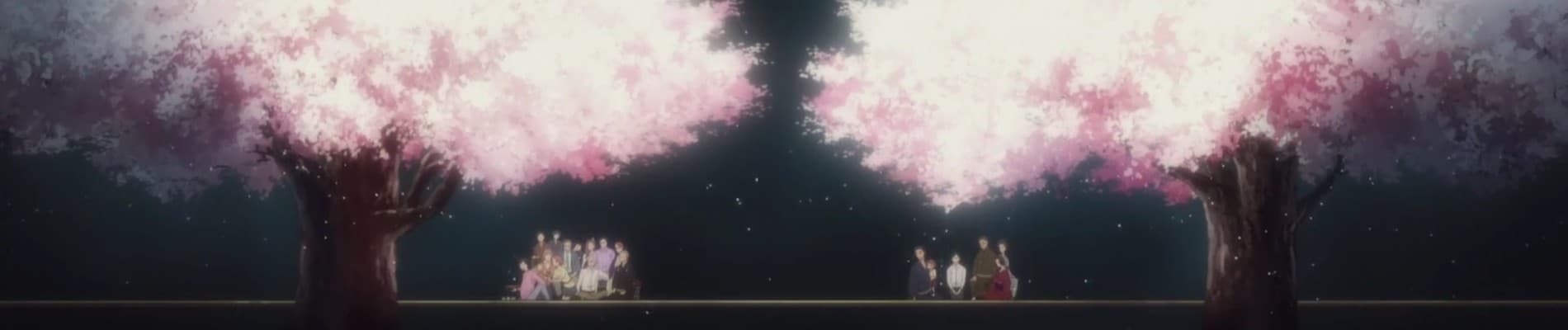
Rakugo was certainly an interesting show when it debuted in 2016. A historical fiction piece about characters loving the art of acting certainly didn’t seem like it would grab an audience, but it quickly became a highly beloved title. One aspect about the show that was undercut was what was happening in the show’s present. Season 1 was mostly focused on the past, so it didn’t really get a whole lot of time to show off the current story and characters. Of course, as Yotaro says at the end of Season 1, the story was far from over and the second act to the “play” was revealed the following year. Season 2 continues the story of rakugo, offering new concepts and ideas wrapped in a bittersweet delivery. Though many have found favor with the season, placing it as equal or greater value judging by the averages, I would have to disagree. Unfortunately, the season simply cannot compare to what its predecessor laid out.
At the end of Season 1 of SGRS, we see Yotaro become a shin’uchi among other important details, such as Yakumo becoming the president of the Rakugo Association and Konatsu announcing her pregnancy. The story starts off from this point in Season 2, refamiliarizing the viewer with the setting while introducing more characters into the central cast. Eisuke Higuchi, who asked to become Yakumo’s apprentice in the first season, has now become a writer and is obsessed with all things of the world of rakugo. Mangestu Tsuburaya serves as a struggling performer and comrade to Yotaro. Konatsu’s child, Shinnosuke, is a bright-eyed boy who becomes enamored with the world of rakugo, naturally as a result of the passion that Yotaro and Konatsu has. The addition of other characters certainly gives credence to that rakugo still strikes the heart of its audience and are important for a few plot points (such as Higuchi’s rakugo research), but they also contribute to a few problems discussed later. For the most part, the story is centered on Yakumo and Yotaro. Having grown older and experiencing the loss of Miyukichi and Sukeroku, Yakumo has become quite forlorn and grows more spiteful of the art he practices. In contrast, Yotaro is a goofier Sukeroku, having a more extroverted nature and playing up to his stage name of being “a fool”. However, he still carries great compassion for others and carries out what he feels is right, such as in the case of being a foster father to Konatsu’s child. Though I feel he does not carry the same charisma that made Sukeroku so enamored, he still serves as a great foil to Yakumo and Konatsu.
As the opening to Season 2 plays, the first thought that entered my mind is that this would be the more melancholy of the two seasons. As if opening theme Imawa no Shinigami’s stop-start instrumentation and lyricism didn’t give it away, the OP is filled with grief. Starting with the characters facing the camera frowning (with the exception of Shinnosuke), it focuses on Yakumo in a number of sad ways, such as rejecting the assistance of others, falling off a cliff in suicide, and having Sukeroku’s ghost reveal the lack of heart/spirit underneath Yakumo’s robe. What’s more, the theme of the passing of time has been carried over to this season. As Yakumo grows older, it becomes more difficult to perform the art he loves and the memories of Miyukichi and Sukeroku still haunt him. Interlaced with this are plot twists and developments that reveal truths to previously known events. Though this is one of the main pulls to Season 2’s story, not every episode or moment is downcast. Though Yakumo delves deeper into his personal despair, Yotaro experiences many wonders as a new shin’uchi, hosting a television show and radio show where he performs his rakugo. Yotaro does face some conflicts of his own, but his side of the story ultimately is a contrast to Yakumo’s. As Yakumo’s story begins to close, Yotaro’s story blossoms with his growing family, friends and rakugo career. It shows the perseverance of rakugo and how it will continue to blossom as long as there are those who care for it.
This begs the question as to what about this season makes it less captivating than the previous season. One minor aspect is in the season’s sound. Compared to the seductive allure of first season’s opening, its funereal ending theme, and the anxious crescendos that were littered through the first season’s key moments, the second season doesn’t carry that same punch either in the music’s arrangement or it’s placement. Again, this is more minor and will be more relative as to the moods of the viewers watching it. If I had to give a single answer, I believe it ultimately comes back to the cast of characters and themes of the show that make it falter. Season 1 of SGRS showed the growth of two rakugo superstars, the complex clashes they had with one another and finding their place within rakugo. While it didn’t go as in depth as I would have liked it, the focus on the Yakumo/Sukeroku relationship and rakugo’s waver over time made it an interesting watch. Season 2 expands this a bit by adding more supporting characters to show how rakugo has shaped the supporting character’s lives. While there’s nothing inherently wrong with characters like Mangestu or Higuchi, they present ideas or concepts that aren’t as explored as I would have liked, resulting in them being less memorable or mostly used for moving the plot along. Higuchi’s love of rakugo makes him want to write new stories for the medium. Mangestu struggles to captivate an audience with his rakugo and wants to inherit the Yakumo name for himself. Yotaro wishes to see Konatsu perform rakugo, but is given resistance from her saying the art is a “man’s field”. All of these ideas point back to Season 1’s big theme that rakugo is being eschewed for other forms of art. These are great opportunities to show rakugo’s need for change as it’s audience was rapidly decreasing by the end of the first season. This statement is hard to be believed during Season 2, where rakugo seems just as big, if not bigger than ever. While it’s true it’s due to these issues being resolved, the lack of discussion/development from problem to conclusion hinders their impact. It’s the equivalent of being given a math problem and it’s answer, but not knowing how to solve it. As a result, big character victories or plot points found in Season 1 feel less sharp in Season 2. Those looking for moments such as Sukeroku’s expulsion from the association or Yakumo’s geisha performance awakening his love for performing will only find weaker substitutes at best.
This may be the overarching problem with the series. There are many explicit moments that show the anime’s darker side, such as the “lover’s suicide” and Yakumo’s haunted visions, but it’s too attached to a “feel good” origin point that the big picture can get muddled. The biggest contributor to this may be the show’s frequent usage of large time skips, showing big moments in time for a character’s life but hurting the overall impact of the show’s core themes. Then again, it is a necessary evil. Processes such as earning futatsume and shin’uchi rankings would take far too long without these big skips and could possibly be seen as repetitive if Yotaro’s story played out similar to the co-leads in Season 1. Still, seeing a more explicit outcome to the show’s questions would be preferred to the emotion it tries to stir in the last couple episodes.
Overall, I give Rakugo Season 2 a 5.5/10. Unfortunately, Rakugo S2 is at best a lesser variation of things seen in Season 1. At worst, it is a few good ideas without proper execution. All things considered, I do think this season will have its fans, in particular if you were head over heels for the first season and are more prone to emotional memories of that same season. If you found the first season a fine show but nothing more, I’d recommend passing on Season 2, as it won’t cement anything you didn’t already love about the show.
Do you like or dislike this anime? If you haven't watched it, are you encouraged to watch it or not? Leave a comment on my profile telling me what you think of the anime and/or my review.
Thanks for reading and have a blessed day!
51.5 out of 85 users liked this review
