In the best way possible: nothing about In My Next Life As A Villainess (also known semi-officially as Bakarina for reasons that we’ll shortly get into) feels like it quite makes sense. The otome genre has its following, but it’s never been a truly huge force in the TV anime mainstream, especially not over here in the Anglosphere. Similarly, it feels like we’re in the waning days of the die-and-reincarnate narou isekai wave. A story that is both of these things seems, taken all this, like it should be both unremarkable and unpopular. Yet, by a twist of fate and strength of writing, Villainess stands strong as one of the most purely enjoyable shows of the Spring 2020 anime season. The question remains though, why is it able to hit so well above its weight class? The series' source material is something of a cult favorite at best, and while its production values are solid, they lack the flashiness of many of its contemporaries. So what's the secret ingredient?

There is, firstly, the obvious: that Villainess’ protagonist is a woman, as opposed to one of the many Protagonist-kun archetypes that permeate the genre. This dynamic inversion alone does wonders. Indeed, if you can praise-slash-accuse Villainess of one thing and be right on the money, it’s that it is in part a wish fulfillment fantasy for women. Our lead, Catarina Claes, has an astounding seven would-be suitors (boys and girls alike, so take your pick) vying for her affections, chows down on sweets with no obvious effects on her figure, is kind, but sees her kindness rewarded in turn, and gets to be amusingly dumb without anyone ever trying to insist she should be wiser just because she’s a woman. It really does seem laser-tailored to the bisexual disaster otaku girl demographic. Something that is by no means a negative. If anything, the TV anime mainstream could use more of this general energy. It helps that the original novels were written by a woman, so there’s not even the faintest trace of projection that there might be from a male author here.

Villainess isn’t entirely an innovator here, but it’s doing this setup better than many others right now. Even as “stuck in an otome game as the evil one” (the game is called Fortune Lover here if you’re curious) has become a viable sub-subgenre of isekai all its own. As we’ll get to, there is actually more going on here than just this power fantasy, but it’s the groundwork on which the series’ more impressive achievements are built, and is its core appeal.
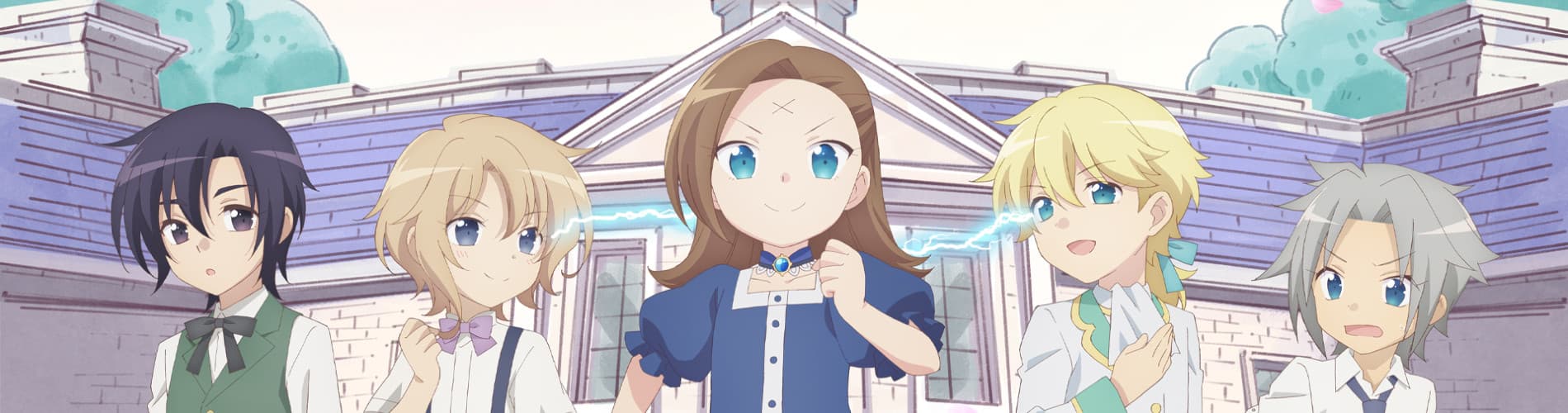
Much of the show’s forward momentum especially in its forehalf comes from the simple joy of just watching its characters play off of each other. Catarina, denser than a neutron star, is the grounding rod, and out from her you have several other flavors of otome-genre personality. Geordo is the shameless playboy. Keith is cute and demure but has a hidden manipulative side. Alan is a bad boy with a sensitive core. Nicol is so comically stoic that that’s the entire joke on its own and it works.

For the girls; Maria’s gentle warmth tempers Catarina’s own more bombastic variety. Sophia is Catarina’s fellow nerd and has a brain that tends to wander into fantasyland. Mary, lastly, shares Catarina’s love of gardening and seems outwardly friendly like Maria, but this is in many ways a facade that hides the shockingly cunning mind of a certified chessmaster.

Much of the characterization has a subtle touch despite dealing in broad archetypes that feels like it may come from the original light novel. It makes all of these characters (even occasionally Nicol!) feel layered and three dimensional. (Although as an aside, the occasionally-brought-up siscon aspect of Keith’s characterization could’ve been written out of the show with little impact. It feels like the one place where the series panders to its audience in a bad way.)

On top of all this comedy, the series dips into more serious territory several times, especially toward the end of its run. Some of the shows strongest turns are when it reckons with the implications of its premise. Two episodes devote screentime to Catarina’s past life, and that of her best friend Atsuko (AKA Acchan. Who was also, we learn, reborn in Fortune Lover, as Sophia). These moments, which briefly explore Acchan’s grief at her friend’s passing as well as her strong desire to one day see her again, are just wonderful. I’m unashamed to say I found them tear-jerking.


But none of this would matter if we didn’t care about these people. The show’s great strength is that Catarina’s personality, her deep, genuine kindness, is the sole tool in her arsenal. What starts out as simple self-preservation instinct as she strives to avoid her own demise eventually turns into her befriending each and every one of the game’s “love options”. Sophia’s case is the most remarkable, as the link between her own past life as Atsuko and how she feels now is the most explicit. But it’s true of the entire main cast. What Catarina provides in these relationships is love. The kind of love that’s easy to under-write and over-look. The kind of love that inspires people to be their best selves and love themselves for who they are.
In anime without strong dramatic plots, emotional hits that resonate well and feel meaningful are everything. Villainess, put simply, excels at this. And that is what pushes Villainess over the edge from merely pleasant to being among the best shows of the first half of 2020.

If the series does have a pair of fairly noticeable writing flaws, it’s that it doesn’t actually spend enough time on this aspect. More episodes dealing with Catarina’s past life directly (or with final arc character Sirius Dieke, who, goodness, what a name), would’ve helped. The other is that it does have a tendency to explain itself a little too much. Often spelling out things that are obvious in-context. Still, while you can certainly see these flaws while watching, they feel more mildly annoying than catastrophic. Room for improvement, at worst.
It feels as though this review should conclude with some acknowledgement that Villainess is a hidden gem or overlooked seasonal highlight that more people should check out. But it isn’t those things. Perhaps surprisingly, My Next Life As A Villainess has stood up in popularity alongside peers with far higher-profile source material, bigger budgets, and flashier adaptations. A second season is on the way, and why shouldn’t it be? Simply by being herself, Catarina Claes has taken the anime industry and snapped it over her knee. If we get more of this, all the better.

And if you liked this review, why not check out some of my others here on Anilist?
52.5 out of 58 users liked this review
