
Yesterday wo Utatte (henceforth YwU) sets itself apart from other anime romances thanks to its focus on adult life. This, together with it being an adaptation of an 90s manga, grabbed people's attention. However, despite being a pretty show to look at, it fails at giving an honest and believable portrayal of adulthood and romance.
 I’m tired of you being in love too, Morinome-sensei.
Although romantic relationships are the focus of romances, few romance anime have no other themes. YwU is one of these: the plot could be summarised with the romance among a handful of characters. There is nothing else of interest in the show. Even if some secondary theme is presented, it is always accessory to the romance.
An example of this could be Rikuo's job. Our main character is a guy who is so scared of failing and destroying his already frail self-esteem that he has trouble trying. At the start of the series he works part time at a retail store (normal for high-schoolers, not so much for a graduate), but later he manages to make a decent job out of photography, one of his passions. However, even if finding a job to realise one’s talents is a major goal of adult life, it always stays on the background, as the entire anime is completely taken over by the romance. The supermarket is the place where Haru gets to talk to Rikuo, and the fact that he is a "failure" is important for Shinako, who feels compelled to take care of him. When Rikuo finds a new job, the most important change presented is that he has less time to spend with Haru. The moments we get to see Rikuo working are refreshing, when they are not an excuse to talk about the romance (almost never?).
A theme that tangles with that of work is friendship. Rikuo, Haru and Shinako interact with their colleagues or bosses just to talk about romantic relationships. Other types of friends follow the same rule and do not provide anything new or distinctive to the show.
This strong focus on romance is made heavier by the extremely slow pacing and repetitive nature of the romance itself. All four main characters cannot let go of their unrequited feelings, which they have grabbed onto for literally years. While romances like this can certainly exist, it feels strange and even boring for all the main characters to follow this trope, especially since two of them are still teenagers. Sometimes their stubbornness can feel tiring, or even straight out stupid.
 Exactly what anyone would say after their crush told them “I will never see you as anything more than a little brother”.
 As already mentioned, one of this anime selling points is that it portrays adulthood. Unfortunately, this portrayal ends up looking very fake. Mentioning what was written in the earlier section, adulthood is made up of many important things beyond romantic relationships- finding your purpose in life, defining your role within society, finding a job and managing money, creating bonds with people... Any work that focuses solely on one aspect of adulthood will feel very narrow and limited.
Another important theme of adulthood, if not the most important, is death. I feel like acknowledging life is not eternal, not ours nor that of our loved ones, is what really marks the passage from childhood to adulthood. Death is one of the earliest themes in YwU... And also the most misrepresented one. Death is addressed through Shinako's story. She was forced to confront death early in her life, as she cared for her terminally ill classmate. This was what made her grow up fast, into a dependable but melancholic woman. However, it gets progressively clearer that even this theme exists uniquely as a plot device to shape and move the romance forward. YwU doesn't care enough to properly develop the ill classmate character and his relationship with Shinako. His face is never shown, and Shinako’s relationship with him comes down to something we can call “maternal care”, her main personality trait.
 Since you can never see his face, I imagined him as Tuxedo Kamen.
Watching several similar scenes of Shinako seated by the sickbed, while her classmate almost disappears in the darkness, the viewer doesn't feel like a real person has died. But this is okay, because the anime's goal was not to adequately portray death. The goal was to give a believable reason for Shinako's reluctance to correspond Rikuo's feelings, as well as to give Rou-kun (i.e. ill classmate’s little brother) an environment in which he could develop feelings for Shinako. The ill classmate being used as a plot device does not come as a surprise: several other characters (e.g. the photographer in love with Haru, Rikuo’s ex-girlfriend) appear for one or two episodes with the only goal of moving the romantic plot forward. However, ill onii-san’s case is so much worse because of the seriousness of the topic. Properly talking about death could have grounded this anime in reality, giving it a sincere reason for its sad and melancholic atmosphere. Treating this topic with superficiality, on the other hand, made the whole show feel fake and pretentious.
 Even if the protagonists didn’t screw, at least the anime screwed up.
UST (i.e. unresolved sexual tension) is an important ingredient of most romances, but at one point it does have to come to an end, otherwise all the waiting ends up being pointless. After eleven episodes of awkward pauses, nervous laughs and melodramatic noises, the viewer has to be rewarded for their patience, faith or whatever you want to call it. YwU betrays these expectations with a very weak ending that never reaches a true climax, plateauing instead. No matter their preferred couple, YwU’s very flat ending can hardly satisfy anyone. The relationship between Rikuo and Shinako always feels forced and sometimes almost unpleasant; moreover, the two do not even kiss or show affection. When Shinako and Rikuo end up with the -supposedly- “right one”, the anime ends. The viewer is not given the time to adapt to this shocking conclusion, nor to see the couple that was “meant to be” (although for eleven episodes we were told the exact contrary).
 The ending is like waiting nine months for your best friend’s pregnancy to discover it was just air.
- What this show did right -
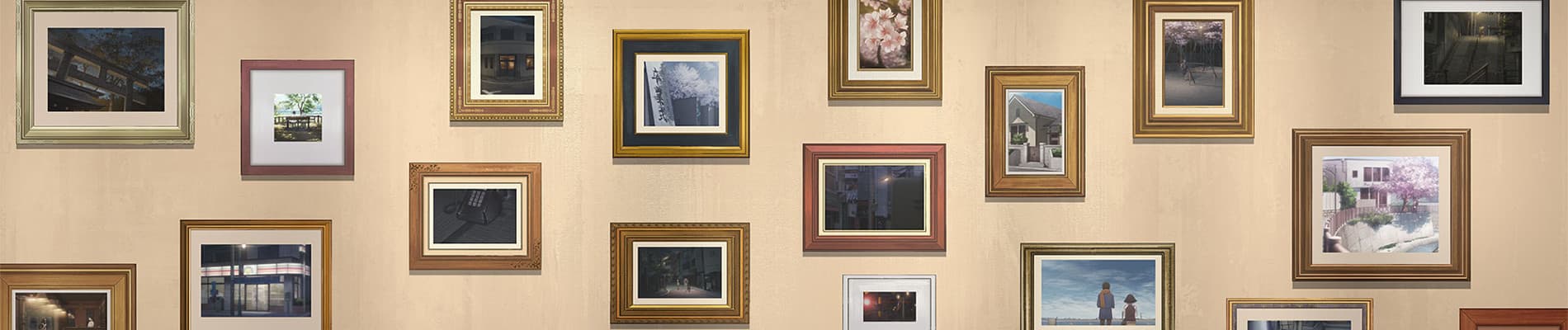
Among its merits YwU looks very, very lovely. Characters adjust the kotatsu, wash dishes, gesture naturally, shake their hands to remove dust after cleaning, fix their hair and so on. In doing this, they show their personality and emotions. Despite being anime characters they don’t merely exist, talk and, sometimes, move. They look like real people doing everyday things. The animation is very good in portraying this, and the direction gives these little but meaningful details enough space to shine. Sometimes, but rarely enough it keeps feeling special, the visuals will be a little over the top to stress the entrance of an important character or an important moment.

 Everyone working on this wanted to make clear who best girl was.
The attention to details is omnipresent in this anime. From streets and location that faithfully reproduce urban Japan to interiors and even food. The best part is that the story is set in the 90s like the manga is, so viewers can experience this charming decade or feel some nostalgia.


 Everything is so pretty, but it doesn’t matter if you’re sleeping.
Sound, soundtrack, voice acting and everything technical will not disappoint. But maybe it is because there are so many excellences that what is bad (the things mentioned in the other sections) looks even worse. Wasted potential is always a pity and will leave you wondering how good this would have been if things had been done differently.
YwU starts as an exciting romance with distinctive features but ends up being slow, monotone, repetitive and at times superficial. Despite the pretty visuals and some good characters, even the ending falls flat, making it hard not to be disappointed. If one is a fan of slow romances and does not expect an accurate depiction of adulthood this show can still be worth watching. But the good technical department cannot save it from mediocrity.