

THE GARDEN OF WORDS (REVIEW)
- About “The Garden of Words” in general;
- Plot
- Beauty and problems of main heroes’ relationships
- Music
- Picture
- Grace of this anime
- Summary of advantages and disadvantages
- Conclusion

“The Garden of Words” is Japanese anime drama film of Makoto Shinkai, famous animator and filmmaker who directed such great works as “5 centimeters per second”, “Beyond the Sky”, etc. This anime is about complicated love between 15-years old student Takao and 27-years old literature teacher Yukari.

When it is raining, Takao skips the first lessons in the garden where he learns making shoes. One day, he meets mysterious woman in the garden who drank a lot of beer and ate only chocolate. Days are passing, they meet each other on the regular base and socialize, Yukari helps Takao with his future job through buying expensive tutorial about shoe making. Although they do not introduce each other formally, they’re relations are getting better from one meeting to another.
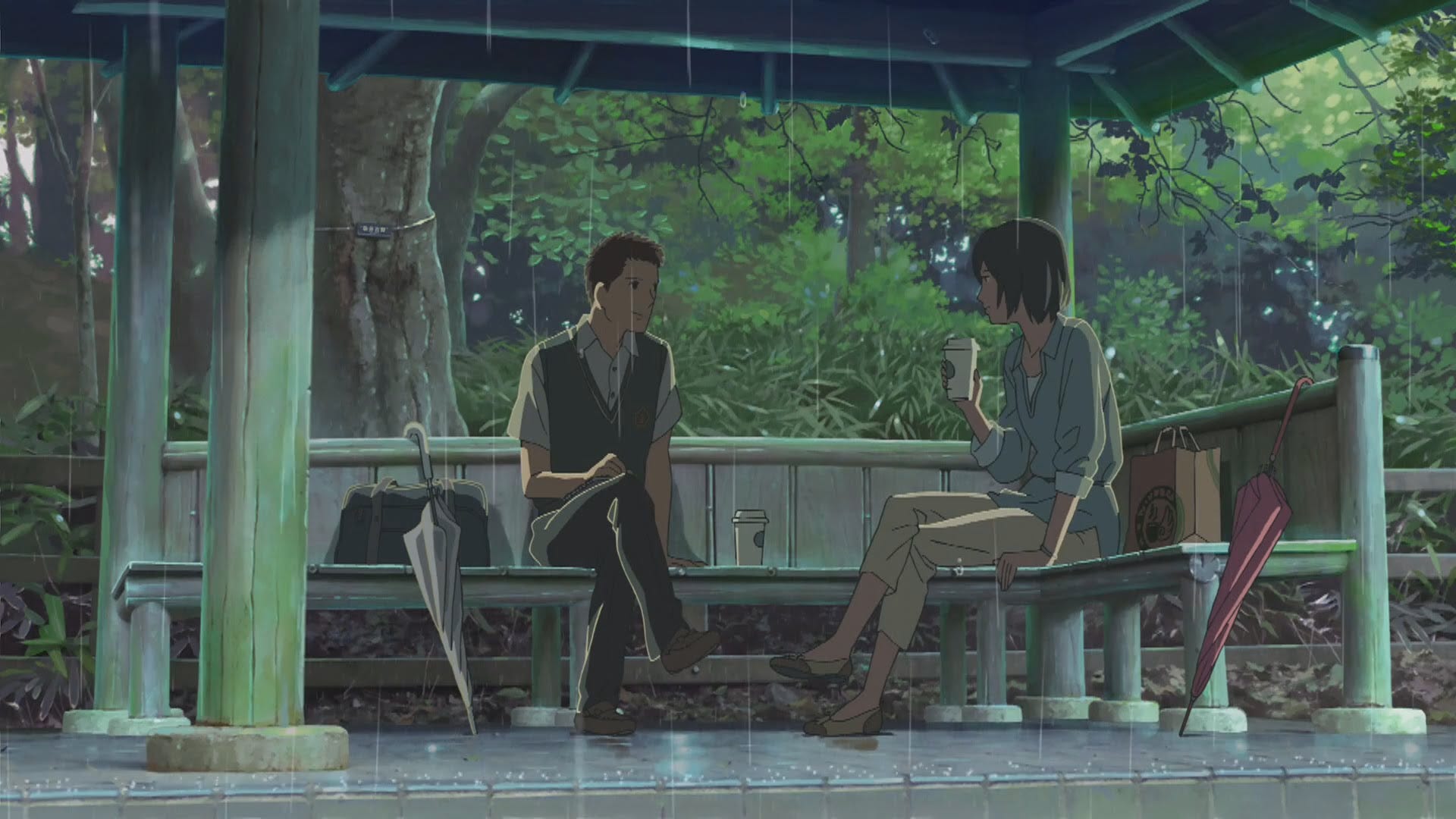
Following summer break, Takao returns to school and knows out that Yukari is a literature teacher who has lots of problems on her job connected with one student who fell in love with her. It became the reason of public bullying and forced to leave her job which leaded to long term depression. Therefore, Yukari started drinking a lot, eating majorly unhealthy food and felt like she didn’t go ahead from the point she was 15 years old. But communication with Takao slowly, but surely changes her mindset and everyday life. She tries cooking which is improving through the plot’s development, decides to go to the new work and etc. One day, when heavy rain started, Takao came to Yukari’s apartments where admitted his love towards her, but she reminded him about the difference in their ages and tells him about her moving to another town and school. Takao leaves her apartments and thinks about all the mornings in the garden he spent with her. When Yukari found him on the stairs, he started hate speech towards her, but Yukari’s crying and hugging opens his eyes on this lie…
Days are passing, Takao badly passes his exams, but finishes shoes for Yukari and thinks about her. He promises that will find her no matter what, and Yukari, in another town, looks to the window like felt something special. In 2016 anime-film, they appear as cameo-characters in the end…


Strange, but the biggest beauty of their love and the biggest problem of their love is the difference of their ages. Of course, the idea that love doesn’t care about the ages and all people have moral right to love someone despite age is good, but the difference of 12 YEARS between them cannot but lead to either a small or a big stupor. When the anime ended, I started thinking “When Yukari reaches 40, Takao reaches 28, when Yukari reaches 60, Takao reaches 48, etc.”. Maybe it could be better if the difference was taken smaller, but anyway, the existing difference was used to clearly show the meaning of real love no matter what. How would it influence the viewer, if Yukari was, for instance, 24 years old and Takao was 17-18 years old? All that we can is to predict and think. Nevertheless, this detail doesn’t badly affect on the amazing plot and moral of the film.
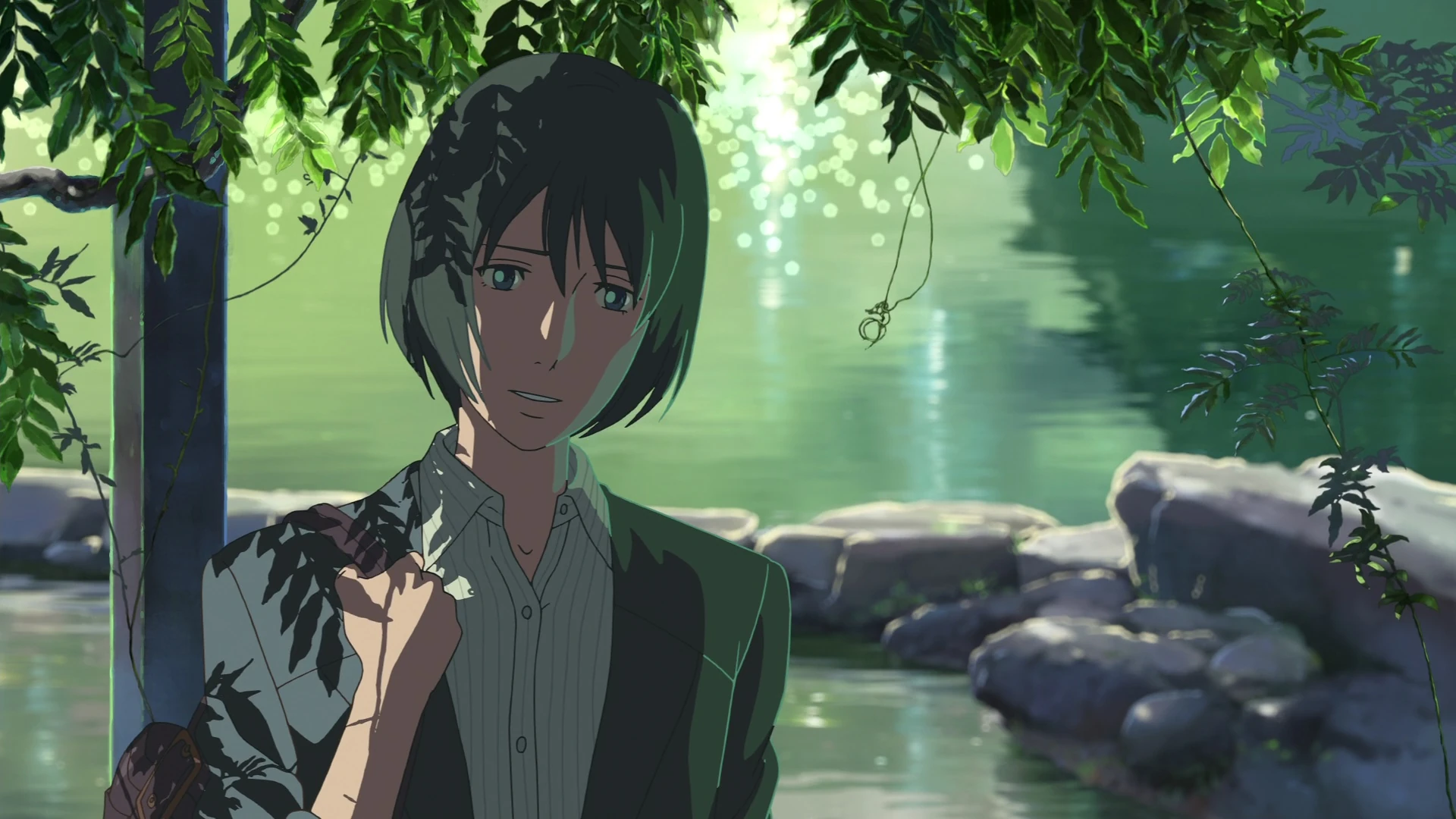
Also, it is kind of strange that Takao has never seen Yukari at school before all this time. Again, this detail is very inconsiderable and doesn’t spoil the general positive rate of the movie.
After "Kanae's Feelings", "kasho cherry blossom extract", "Distant Everyday Memories", "Your voice" and other compositions by Tenmon, Kashiwa Daisuke's music, of course, was accepted unusually. Nevertheless, there are times when director needs to use something new in his art, and music is not an exception. Daisuke's such compositions like "Greenery Rain", "While hearing the sound of the rain" and "A rainy morning" organize graceful harmony between characters' dialogues and nature in the garden.
Also, I enjoyed "Rain" sung by Motohiro Hata in the end of the anime, it is quite elegant, emotional and ideally combined with real rain. It was raining all the past week in my hometown and Motohiro's "Rain" described thought-provoking sentiments while watching at raindrops which fell very fast. "Rain" made me download other songs by Motohiro Hata like "Girl" and "Kotonoha"
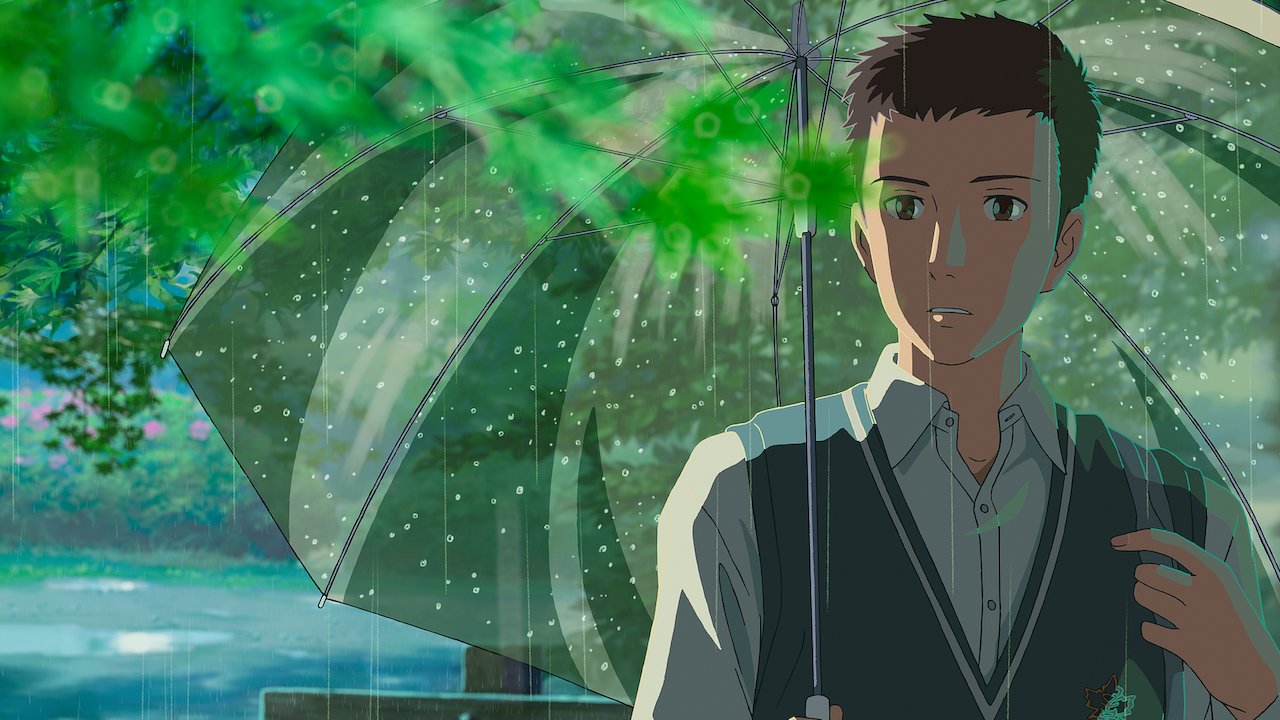
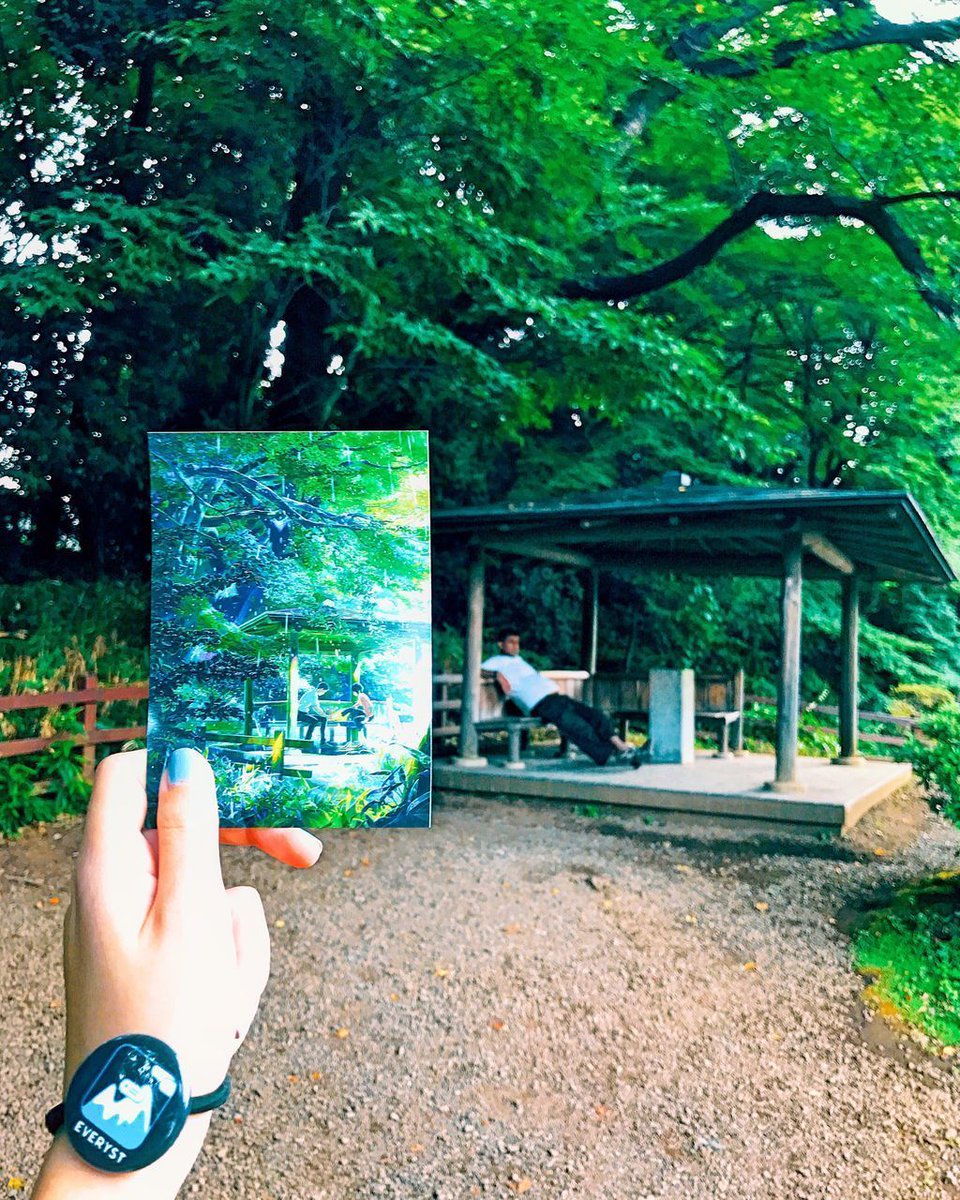
Again, Shinkai shows us his scrupulous work on the picture of the film. His drawing style opened itself from another side in this anime, it demonstrated how picture of reality can be "copied" not only through photographing, but also by drawing. Making pictures of real places also make anime more real, it seems like author lived or saw the story firsthand in real life and just told it with some art receptions. I need to read more about Shinjuku Gyoen and one day, I dream to visit this park.




I love when anime and other types of creativity are connected with classical music (for example, "Your lie in April"), science (Beyond the clouds), literature and other spheres. In this case, "The Garden of Words" is a song of love and Japanese poesy.
A faint clap of thunder
Clouded skies
Perhaps rain comes
If so, will you stay here with me?
(from Man'yōshū, Book 11, verse 2,513)
The usage of such methods to make the story more graceful and beautiful is kind of best habits of Shinkai. We can see letter writing in "5 centimeters per second", nature and magic of dusk in "Your Name", planes and beauty of science in "The Place Promised in Our Early Days". These details are something great that makes Shinkai's work not only excellent, but a real masterpiece.

+:
- Graceful plot
- Emotional music
- Perfect backgrounds
- Connection with poesy
- Catching characters
-:
- Difference of ages between main characters

“The Garden of Words” is catching and emotional anime-film about loneliness, love and life where adults can be not mature in their age, but close people can change it.
