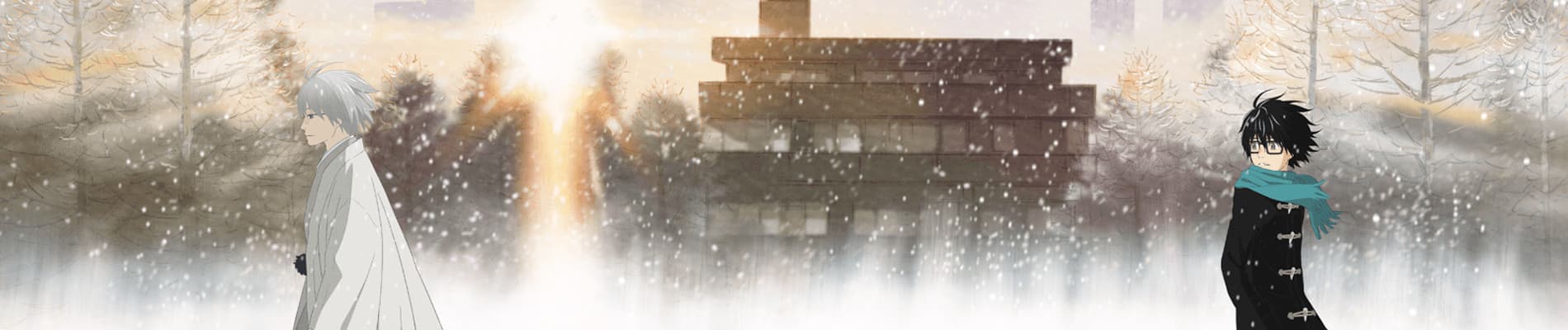
With the conclusion of Season 1, I felt March Comes in Like a Lion was a charming show with strong characters but ultimately felt dissatisfied with its tone and comedy. It had the typical Shaft qualities with its art style and visual direction, but I often felt like it dampened the heart of the message rather than accentuated it. Still, I believed that there was something special about the show, in particular with its characters and psychological elements. After watching the second season, I am happy to say the show has embraced its strengths and has blossomed into a fine drama series.
Season 2 of March Comes in Like a Lion shifts its focus slightly from some of the core elements of Season 1. While Rei is still ultimately the protagonist, a lot of attention is also given to its supporting cast, in particular the Kawamoto sisters. In the first season, we see their soft struggles in maintaining a happy home life despite the deaths of their mother and grandmother and the disappearance of their father. In the second season, these feelings are far more explicit. Arguably the biggest moment of this season is found within Hina’s character. The result of recent bullying has caused her dear friend Chiho to move away, causing a swirling torrent of new emotions inside of her. Anger, sadness and shock are at constant battle with one another as Hina confronts a cruel internal system that continuously perpetuates the bullying. The discussion of bullying has been in many TV shows and movies, with mixed results due to representation and understanding of the issue. March Comes in Like a Lion handles this near flawlessly, showing the impacts and people involved in an honest and realistic fashion. Fear and confusion clouds the thoughts of those involved, ultimately pointing to a flaw of conformity that renews the cycle. Solutions are not easily obtained or practically applied due to the social pressures and anxiety that serves to impasse the mind. Most important in this arc is the central character of Hina. As a young girl in her last year of junior high, key choices now become more important than ever. The decisions she makes now could shape her life in high school and even adulthood. It’s an arc that can be tough at times to view and, with such a focus on emotion, even borders on the melodramatic. It is perhaps these very reasons that contribute to such an impactful arc and make even the littlest of moments of acting in good conscience feel extraordinary.
What makes this moment even stronger isn’t just the fact that it develops Hina – it in turn also develops Rei. Despite all the small steps Rei has taken thus far, Rei still feels bound internally by the very game he plays. Shogi has always been a means of survival, even at the cost of further isolating himself away from others and learning the price of victory. Hina’s character arc gives him a new sense of foundation, her actions and beliefs giving him a new sense of reason for the game. Though Rei isn’t actively fighting alongside Hina in her quest to seek justice, his decisions stemming from that sense of empathy give Hina more power to continue her fight. It is a symbiotic relationship that allows them both to mature. Additionally, it is a catalyst that helps Rei remember the love that’s shared from those around him. Events and memories of the previous season resonate within Rei’s head with a new impact, allowing him to find answers to problems he normally couldn’t overcome. It also helps give the show a sense of progression, seeing moments that felt more like a day in the life to have weight and shape the identity of Rei. That’s not to say that Rei has become less introverted but more so open to those around him, finally finding a family amongst his peers.
A final story element that makes the show work wonderfully is its passage of time. Littered throughout Season 2 are discussions of characters growing older and the weight it carries. Whether used as a joke or in the use of soliloquy, it helps the show retain a sense of organic motion and realism that makes me look forward to each new episode. The show’s most powerful moments can only happen during a certain character’s age or time in their life, so seeing it so well executed makes me look forward to the future of this show.
Rei and Hina are the main characters to focus on in Season 2, but there are still good moments from the supporting cast to maintain the show’s characterizations. Nikaidou, Rei’s extraverted buddy, had touched on health concerns in the previous season but it’s seen on a more personal level here, adding to his driving force as not only Rei’s rival but as an aspiring shogi player. New characters such as Yanagihara appear as a humorous senior on the surface but has personal reasons for continuing to hold on to his Shogi Maestro title that are reminiscent of the best moments of shows such as Shouwa Genroku Rakugo Shinjuu. Not every supporting character is given this level of depth, but their sensible reactions and dialogue can more than make up for it, especially if it ties back to our central characters such as Rei. Some viewers might feel disappointed that characters such as Kyouko and Ayumu are still fairly in the dark, but their influence on the characters/story is not as crucial as of this season and will be better suited on an arc focusing more on the Kouda family than the Kawamoto.
One of my problems with the first season of the show is that I didn’t really care for the zany artistic moments as much as other viewers. Compared to last season, I feel they are executed a lot better in showing the anxiety and sporadic emotions of the characters. Even the show’s more humorous moments feel a lot stronger. This could be because of a stronger use of dynamics from the show’s more explicit drama or perhaps I’ve gotten more accustomed to Shaft’s style of handling the show. Regardless, those who liked Shaft’s artistic flair of closeups, alternate color palettes, and exaggerations will be as happy as ever with Season 2 of March. The music in the show doesn’t move me as much as others do, though one piece that’s composed for flute and piano used in the show’s more dramatic moments added extra “punch” to the scene. OP 1, “Flag wo Tatero”, is a much better opener from YUKI than last season’s “Sayonara Bystander”, with a melancholic rock verse that leads to an uplifting pre-chorus and semi-shouted chorus. ED 1 “Kafune” is even more melancholic, accompanying visual imagery of a distraught Rei with a string section and falsetto break in the chorus. OP 2 “Haru ga Kite Bokura” is my preference of the two, utilizing a clever octave vocal harmony in the pre-chorus and a fast beat with string section in the chorus. ED 2, “I AM STANDING” by RUANN, is visually interesting with the introduction of color to the gloomy black-and-white drawings at the beginning but the chorus’s melody change makes me not appreciate the performance as much. The seiyuus of the previous season are just as strong as before in this one, possibly more so with Kana Hanazawa’s more emotional delivery of Hina. It’s as much as anyone would want from such a drama, giving the characters meaning behind their words.
Overall, I give March Comes In Like a Lion S2 a 7.0/10. I feel March handles the drama of its characters in a wonderful way, showing complexity and weight behind decisions in handling each character’s personal issues. Though it could easily have gone off the rails, solid writing and character motivations kept the hysterics in check and made the show a strong representation of well-executed drama. Even if you do not care for those elements, there is still an otherwise good shogi story that continues to progress for each of the players and makes for an entertaining sports/game series. I definitely recommend this season and I will look forward to what else occurs for the future of this series.
Do you like or dislike this anime? If you haven't watched it, are you encouraged to watch it or not? Leave a comment on my profile telling me what you think of the anime and/or my review.
Thanks for reading and have a blessed day!
54.5 out of 88 users liked this review
