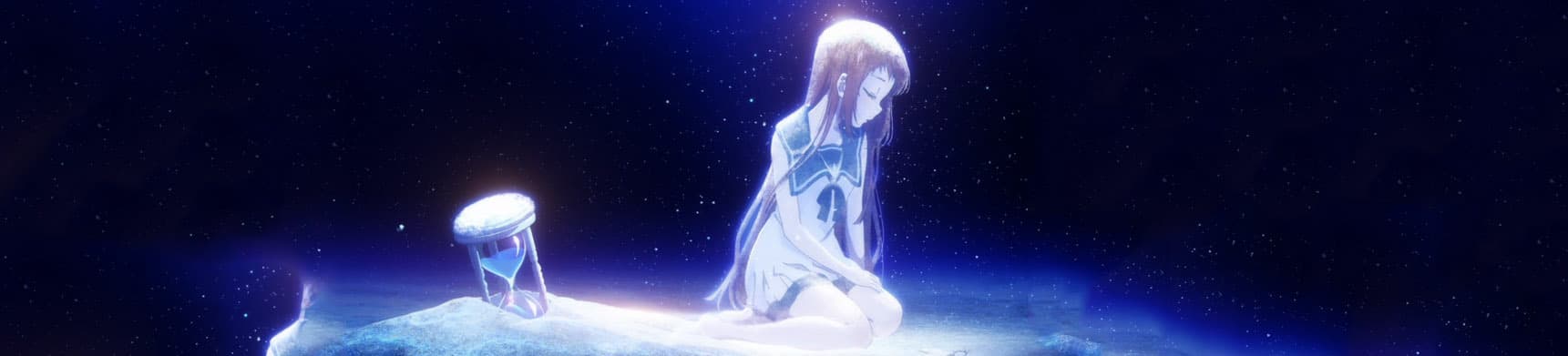

The show has both good looking visuals and good writing. The visual design and artistic style looks 70% as good as a Shinkai film, which is a genuine complement for a 2013 TV series. It falls a bit short of hiding the CG feel, which gives it a slightly synthetic feel at first. The eyes of the character designs also felt a bit reminiscent of the more exaggerated art style of the previous decade. It's nothing much to complain about, and it was consistently pleasant to look at once I get over that. The writing is the best Okada Mari has to offer, who is known for her script of Ano Hana. Despite having a love heptagon plus multiple parent-child conflicts, all the characters feel believable, and their relationships feel real while not repetitive. The 26 episodes had no waste, everyone of them filled with character development.
The world in A Lull in the Sea is very much a character of its own. Like the abyss in Made in Abyss or Hellsalem's Lot in Kekkai Sensen, the sea in this series influence the decisions of the characters and establish an atmosphere to the universe. The audience is constantly reminded that the characters in this story live underwater, and this setting has ramifications throughout the plot. It serves as a primary contention between the main characters and those who don't live under water. It shapes the characters' sense of identity and motivations. As characters speak of "love is like the sea," the environment functions as a metaphor that combines the visuals with the narrative. The power of this kind of storytelling is its ability to create a subtle yet omnipresent mood and atmosphere.
There is another way to do environmental storytelling. By having a world setting that reacts to the actions and emotions of characters, a story can amplify the significance of personal feelings to the fate of the world. As an incident results in the mind and relationships of characters to be metaphorically frozen, the sea also physically freezes over. Many of the major events in the series either happen in the sea or by the seaside, and how the sea responds to what the characters are feeling is integral to the story. However, this is a double-edged sword. Because the atmosphere is something intangible and undirected, it can only focus on one thing at a time. Most anime that use this technique (sometimes called the sekai-kei genre) either focus on one character or their relationship with one other character. Being aware of idiosyncrasies of having an ensemble cast, the series staggers the resolutions of different relationships across the last couple episodes to allow each each character to get their own moment to shine.
Nevertheless, conveying emotions through the environment can only act as a broad paint brush, and the series' over-reliance on this technique visually limits the viewer's ability to invest in the characters. The primary way for the viewer to know what a character is feeling is for them to say it out loud to another character. Amid confrontations, characters most often cry, run away, or a combination of the two. When a character confesses their feelings to another, they all speak with a stern face to show how serious they are. For a series with such diverse portrayals of love, the way it is displayed feels monotonous. Frustratingly, there are occasional glimpses that show the staff can do better with the character animation. The first half a minute of the second opening shows the audience exactly what the characters are feeling without a single line of dialogue. Another example is when Manaka talked to Tsumugu on the boat.
Spoiler, click to viewclick to hide
She reached out her hand, saying "you're like the sun, bright but ..." And the (figurative) camera focused on her hand, blurring Tsumugu, and I finished the sentence "... unreachable" while the show cuts off and doesn't come back until many episodes later.Spoiler, click to viewclick to hide
the series shows Tsumugu and Chisaki's intimacy with each other after living together for five years by the way the navigate the house around each other.
I want to shout out for how excellent both OP and ED were. Particularly the endings had lyrics that fit the show thematically. The first ending even had foreshadowing for later plot. They provide more cohesion between the animation and the story that I found lacking above.
Lastly, I want to touch on Okada's use of fantasy elements in her stories. She plays very fast and loose with the setting of people living under water, and it's hard to ignore people drinking beverages from a cup at the bottom of the sea. Nevertheless, I think she is using the fantasy setting to do what it does best: to explore abstract concepts by giving them concrete example without any real-world cultural baggage. As a Cantonese speaker living in America, there are many moments where I relate to the sense of fish out of the water. Tsumugu's fascination with the underwater yet unable to go down himself reminds me of my struggle to maintain a cultural lineage living outside of China. Hikari trying to stick to the traditions of the undersea people that seems to be couple generations from extinction reminds me of dread I feel about the shrinking usage of Cantonese in my home town Guangzhou under the name of cultural unification. The way how sea people living on land need to wake up in the middle of the night to pour salt water over their skin reminds me of how my family drives half an hour to a Chinese grocery store every week even though there's a Safeway five minutes away. Although these aspects shifted out of focus as the romantic drama was ramping up, I appreciate what the beginning episodes had to say about traditional culture as Japanese towns are facing the same challenges under the continuing trend of urbanization.
When I first finished this show, I felt a bit unsatisfied about not being able to emotionally connect with the characters despite how written they were. It was not until I got deeper into trying write this review until I found what wasn't clicking with me. I then watched Sing Yesterday to Me right after, which filled the hole that I had with this show (and I also wrote a review for it). Objectively, I think A Lull in the Sea is a better show, but I still like Yesterday more.