
When I imagine post-apocalyptic settings, I usually think of either a global total war escalating into nuclear war or a pandemic. The resulting landscape is composed either mainly of wastelands, with arable and fertile land making for a miniscule percentage, or by dystopias and/or dying cities with crumbling infrastructure within a collapsed or even semi-thriving natural environment.
Of course that is not to say there are not original interpretations of such settings; examples include S.T.A.L.K.E.R, the Tiberian series of C&C and Nausicaä of the Valley of the Wind, showcasing radical concepts for an already spicy genre.
However, there are also settings that truly deviate, such as A Wind Named Amnesia, Yokohama Kaidashi Kiko and the current object of this review.
Unlike his ensuant manga Nausicaä of the Valley of Wind, running between 1982 and 1994, Conan is not too dark/heavy and its narrative is quite simple and straightforward. It's a sweet and digestible adventure story but by all means also remains a post-apocalyptic work. Each episode begins with an opening sequence on the preceding apocalypse: during a total war in 2008, magnetic super-weapons disrupted the Earth’s structure and caused cataclysmic earthquakes that culminated in billions dying and in submerging the five continents, leaving scattered islands as their remnants.

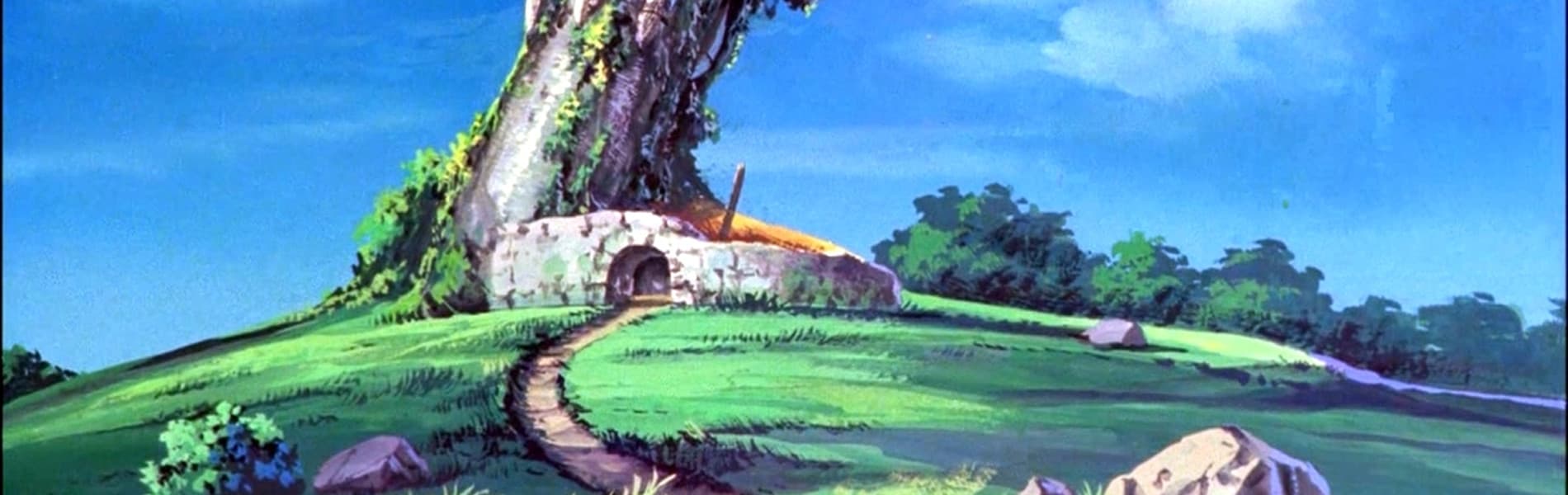
[b.] The tale begins in 2021, with 11 year-old Conan living alongside his grandfather in a tiny remnant of the continents. The adventure is initiated after a “boy meets girl” circumstance, with Conan embarking in order to save Lanna from Industria, the remnants of a belligerent power during the total war.
Throughout this journey, he encounters new friends/allies and antagonists in equal measure, and he acquires first-hand experience with the broader world, but also become one of the seeds towards a brighter future for the remnants of mankind. Themes of sustainable living and condemnation of rampant industrialism persist throughout the narrative, as do of rebirth.
One of the most notable pros of its narrative is direction, with very smooth pacing and scene transitions, feeling neither stagnant nor too forced; sound direction is also connected to this, more on section [3].

Others are a mixed bag. For example, the female lead Lanna is in my opinion limited to a damsel-in-distress, whereas Lepka falls flat as a megalomaniacal villain without complexity and most supporting characters serve limited roles, I could not invest to or empathize with many.
I do understand this was a work meant to cater to children and quite some roles served as archetypes for later Miyazaki works (e.g. Conan, Lanna and Monsley), but I would expect somewhat richer characterization from a 26 episode series.
From action sequences to special effects (all hand-drawn, nothing computer-generated), the quality is consistent and smooth yet dynamic, be it a seaplane soaring the skies, Conan throwing his fishing harpoon or a boar chase scene. To be fair however, the show sacrificed in character designs as a trade-off for greater quality of animation; main character designs can be simplistic in models while missing key details, whereas supporting actors' have it worse, being unremarkable and too similar.

[b.] As for sound: the music is sweet and nostalgic without sounding too juvenile (including OP, ED and background music) and sound direction is solid, with sound effects and voice acting matching well the action or scene in question.
More unique sound effects could have been used occasionally (e.g. during gunfights), but at other times I enjoyed hearing an earthquake or Conan operating underwater. Voice acting is decent. My favorite seiyuu was of Jimsy, whose “burly boy” voice contrasted well with Conan’s softer and Lanna’s more feminine voice. My favorite aspect of sound direction however is its balance between silent and dialogue-heavy moments. Occasionally, dialogue may be kept to a minimal or halted, in order to allow characters’ movements and/or nature do the talk.
I'm not sure whether I would characterize certain scenes as employing "negative space" as is the case with the Ghibli filmography, but those more quiet and "show, don't tell" moments allowed for the narrative to maintain a steady pacing while not overwhelming viewers between intervals.