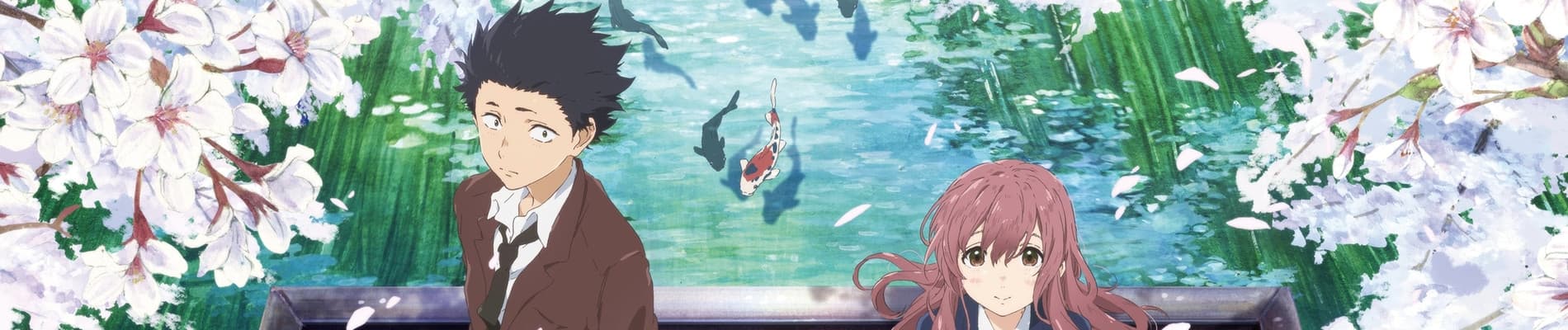
Kyoto Animation is my favorite anime studio of all time. Especially in the aftermath of the unfathomable horrors they endured last year, it feels more important than ever to re-iterate just what an incredible group of artists they are. They’ve consistently lead the industry on spectacular, high-quality animation. They’ve proven you can crank out profitable masterpiece after profitable masterpiece while still treating your employees with respect and dignity. They’re the rare studio that can actually make real life feel as magical, meaningful, and massive as it honestly is. In an industry that’s too often bound by its worst vices, they represent everything about what makes this medium so goddamn special. Kyoto Animation is a god among men, a shining beacon that defines the best of what anime is capable of. And while A Silent Voice isn't the best work they’ve ever put out (hell, it’s not even the best thing its own director has spear-headed), that only serves as further evidence of just how fucking high they’ve set the bar. For any other studio, this film would be a crowning achievement; for Kyoto Animation, it’s merely one stellar A-tier accomplishment among many. That, my friends, is why they get to be the King.
The story centers around the relationship between two high school students: Shoko Nishimiya, a deaf girl, and Shoya Ishida, who bullied her back in elementary school. To be fair, many of Shoko’s classmates used her disability as an excuse to bully her; Shoya was merely the first and most prominent among them. But when the teacher caught wind of what was going on, the rest of the kids were content to let the crimes fall on Shoya’s head alone. Suddenly, HE was the one being ostracized, picked on, isolated and left behind. And the stigma stuck with him all throughout elementary and middle school, to the point where he grew scared to even look his fellow classmates in the eye. Flash-forward to high school and Shoya’s grown up into a depressed, reclusive kid, riddled with guilt over the harm he caused and starting the film by almost jumping off a bridge. Suffice to say, he’s in a bad state. And more than anything, he wants to make amends for all he’s done. So he seeks out Shoko, who’s since transferred to a different school, and offers her the one thing she always wanted from him back then: a friendship. Thus begins a tale of reckoning and redemption, as Shoya brings together all their old elementary school classmates- those who joined in the bullying, those who simply watched from the sidelines- to find closure for the lasting scars they’ve all carried with them all this time.
From that description alone, you can probably get a sense of how powerful this film can get. Bullying, ostracizing, living with disabilities, depression, suicide… there are all topics that most anime don’t dare touch except to exploit them for maximum shock value. But there’s no exploitation to be found in A Silent Voice, just a tender, often painful reality. It peers into the ways people can hurt each other, especially at such young and vulnerable ages, and how seemingly meaningless acts of cruelty can leave lasting trauma in their wake. None of Shoko’s former classmates are truly free from sin, whether they bullied her themselves or just sat back and let it happen. And as they’ve grown up, the full weight of what they did to her, and what they subsequently let happen to Shoya, has left them all scrambling for some justification or defense mechanism to avoid facing the full weight of what they’ve done. Even Shoya, for all his sincerity, can’t help but grapple with the question of whether he’s reaching out to Shoko just to selfishly assuage his own guilt, and not for her sake. It’s far from a tragedy or misery porn, and there’s plenty of light throughout thanks to the lovable camaraderie of the central cast (Shoko’s tomboy little sister in particular is frigging incredible, god bless Aoi Yuuki as always), but it’s steeped in a very real sense of melancholy and anguish
And the film takes its time getting you invested, building its emotional tapestry over the course of a lengthy slow-burn. In a way, it’s almost like a movie-length remake of Anohana, with a depressed loner protagonist bringing together all his old childhood friends so they can reckon with the memories of a wronged girl they haven’t been able to leave behind them. It lets you live with these characters, understand the ways they’re all suffering, see how much they’ve grown and how much they’ve stayed the same. It’s almost too much at points, which is the film’s one real fault: some scenes and sequences go by so abruptly that you can really feel them trying to squeeze the manga’s entire story into a deliberately paced two-hour package. But it’s a testament to the talent on display that they even pull it off as well as they do. For all its shortcuts, no character really feels shortchanged, no idea given the short shrift. It just lets you simmer in the complicated feelings the characters share, the ways they try to absolve themselves to hide from their guilt, how incapable they are of addressing their own hurt without hurting everyone around them all over again. It’s messy and uncomfortable and difficult in the way life so often is, and almost everyone has their own inner darkness to confront. It’s not always easy to like all the characters, but you can never not feel sorry for them.
But it’s the ending that truly pulls A Silent Voice together, that justifies all the densely packed character drama and slowly rising tension that dominates its lengthy second half. I wouldn’t dare spoil any of what happens, but suffice to say, when all that pain and desperation finally bursts to the surface, there won’t be a dry eye in the house. It’s gut-wrenching, heartbreaking, utterly devastating, but also beautiful, sublime, achingly hopeful. It tore my heart right out of my chest and left me a puddle of tears on the floor, and I wouldn’t have it any other way. Christ, this is what makes Kyoto Animation so fucking spectacular. Their work is so human, so empathetic, so capable of reaching into the deepest parts of your soul and awakening your ability to feel. And their staggering talent is on display all throughout A Silent Voice, with stunningly nuanced character animation, evocative direction from the eternally amazing Naoko Yamada (her passion for displaying character through leg acting is on full display), breathtaking scenery and environmental storytelling, and a consistently captivating sense of place that grounds you in the reality of the world in all its watercolor wonder. And you can tell so much thought was put into how sign language and writing allow Shoko to speak when her own voice is too haphazard, how Shoya sees shimmering Xs across the faces of his classmates that keep him from connecting with them, all the myriad ways communication can succeed and fail when you’re speaking in such tentative, mismatched voices. This film is beautiful in so many different ways that I can’t even begin to quantify them.
And that’s really a perfect descriptor of Kyoto Animation as a whole isn’t it? This studio is beautiful is so many different ways that you could never list them all. All you can do is marvel at how consistently, and how extraordinarily, they let that beauty propel them to greatness. So while the truncated story beats might be enough to keep A Silent Voice out of the true upper echelon of KyoAni classics for me, they’re not enough to keep it from being yet another masterpiece from a studio who’s earned my love a million times over. It’s a heartbreaking, heartwarming, utterly breathtaking testament to the power and terror of forgiveness, and I know I’ll carry it in my heart for a long time to come.
66.5 out of 70 users liked this review