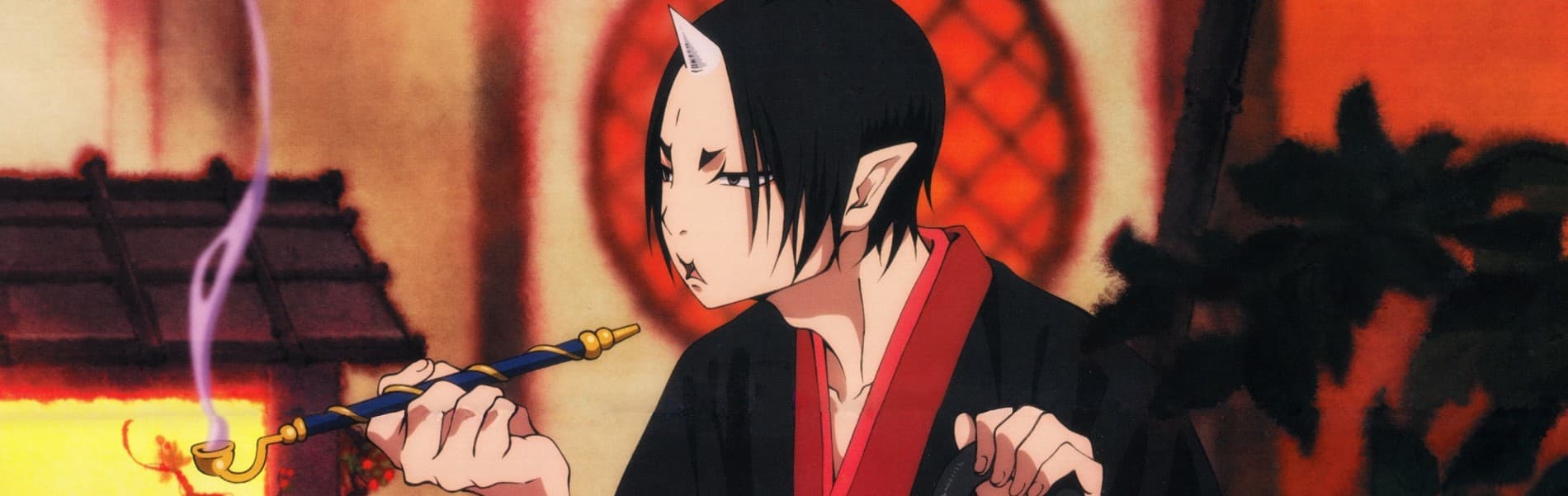
There was a time when both anime and manga were niched forms of entertainment, even in Japan. That changed over the past two decades and anime have since incorporated much more universal themes and even western or American styles that would appeal to non-Japanese viewers. However, there are still one or two anime and manga out there that are more appealing to Japanese viewers because of their historical references, such as "Hozuki's Coolheadedness", a slice of life comedy about the eponymous aide to the King of Hell and the many other colorful employees working their 9-to-5 in the underworld.
Unlike a comedy like "Gintama" or "Nichijou", Hozuki's Coolheadedness' form of humor is more low-key and dry, kinda like if "The Office" or "Dilbert" were set in Hell. However, I found that most of its humor doesn't work for me because it often makes fun of characters extracted from traditional Japanese folk lore like the prideful Momotarō still seeking his glory days, the herbal expert Hakutaku whose real life counterpart is often worshiped as a spirit of herbalism, or the flying taxi Oboroguruma (who has a human face on the front) taken from a Japanese bestiary collecting many similarly spooky creatures from Japanese folklore. The fact that I inadvertently stumbled onto such an anime shows just how niched anime can still be in spite of their diverse genres and themes.
Oftentimes, its brand of comedy also involves the mockery of the Japanese culture like the workaholism in Japan or how bureaucratic the system in Hell is in the anime. There's a playfulness in its writing where the normal expected traits of Hell and its elements are subverted or played for laughs, such as the famous Lilith who's portrayed as an adulter that left Adam because they argued over whom should be "on top" in bed, or how the European Hell is far more subdued than the more cruel and punishing methods of the Japanese one, with Satan himself even becoming shocked at how the residents of Hell are being punished for their sins. The anime's worldbuilding in particular is quite extensive, showing the other unusual parts of Hell you wouldn't expect like the existence of paparazzies chasing after the latest pop star idol or holding sports day events and obon festivals (Buddhist event to commemorate one's ancestors) in Hell. Evidently, this can sometimes lead to the humor being too random and not having any real point. That's usually the main trait of slice of life, I suppose, though I personally find it difficult to see the appeal of watching characters doing random things just for the fun of it.
In all fairness, Hozuki's playful parody of Hell and its punishments has a charm to it. In the final episode of the second season, for example, Hozuki breaks the fourth wall by addressing the audience, "So, what did you think of daily life in Hell? Should you find yourself here one day, in accordance with your crimes, you can rest assured I will give you the treatment you deserve." Even the opening theme of the anime feels like a corporate video promoting how fun and positive the company of "Hell" really is. The anime would often show the punishment of the sinners in a comedic light, with Hozuki flamboyantly preaching about how they should repent for their sins while the minions of Hell indulge in their own vices (be it alcoholism or adultery). To them, working in Hell is just another job.
But ultimately, Hozuki's Coolheadedness feels like an acquired taste, one which you would get more enjoyment out of if you actually grew up in Japan listening to these folk tale bedtime stories. Its unique aesthetic style is arguably its strongest point, bearing striking resemblance with ink wash paintings of East Asia. The humor might not always land, but its animation is often beautiful and distinctive from your run-of-the-mill anime. And yet, that's another thing that you would have greater appreciation for if you grew up in Japan where such a traditional artstyle is an essential part of their culture, even today.
17.5 out of 21 users liked this review